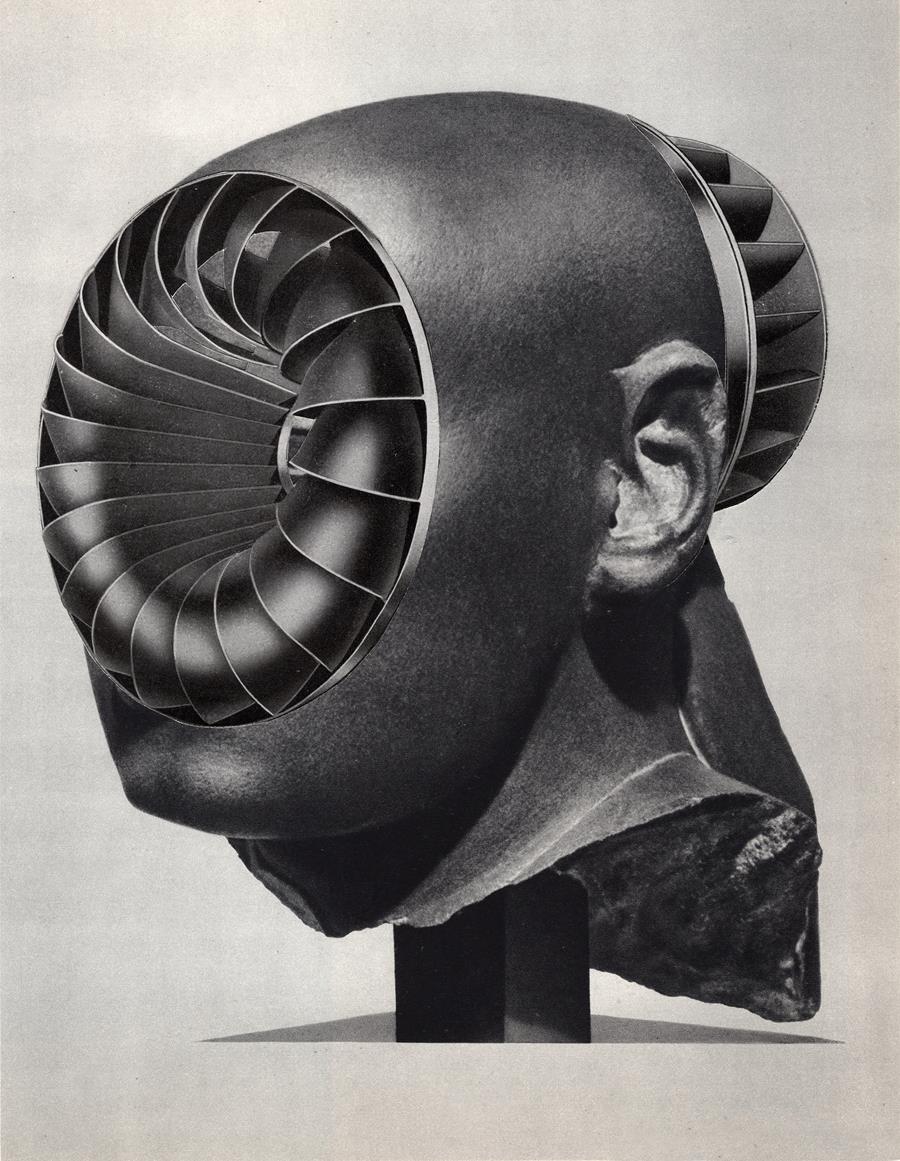
Analog Collage, Images of turbines and drains juxtaposed with Egyptian iconography
25 x 19 cm
Andrés Gamiochipi
Andrés Gamiochipi works like a visual archaeologist, cutting and recombining scientific illustrations, vernacular photographs, and obsolete print to test how images shift in relation to one another. He calls this practice science f(r)iction, where nature, humanity, and technology meet and the mythic returns as a tool.
In the Words of the Artist
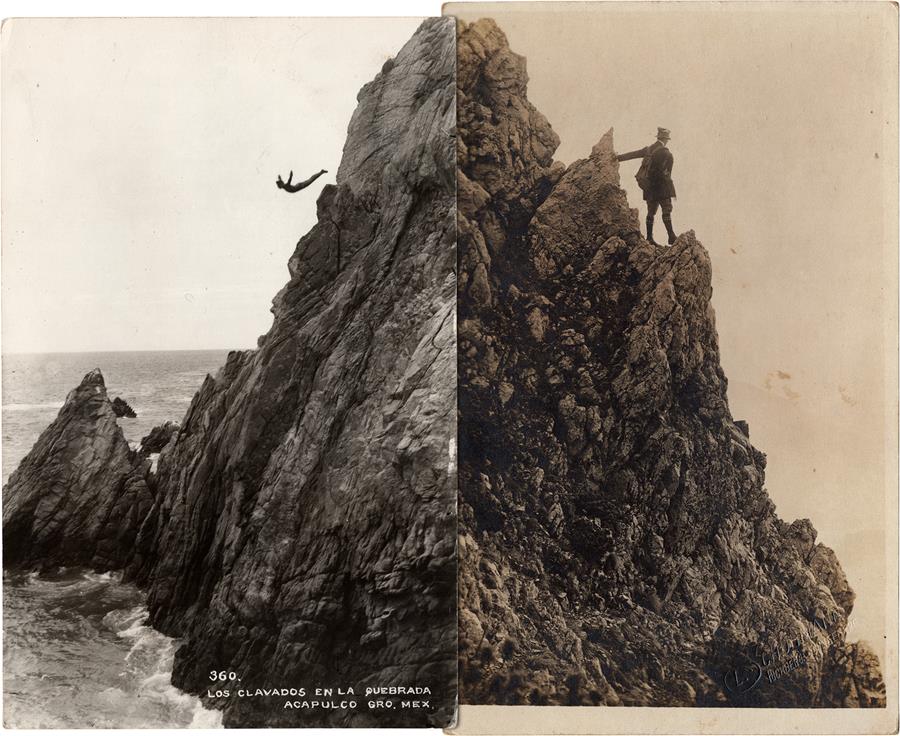
Analog Collage, Vintage postcards
18 x 15 cm
For me, collage is a radical way of perceiving reality — a mode of thinking through images. It is a concatenation of fragments, remnants, and temporal dissonances, where meaning emerges through friction: between what is seen, what is remembered, and what resists recognition. It opens an open field of multiple possibilities — encounters, future memories, and relations yet to take shape. In this space, collage becomes a different way of being with the world.
There is a recurring thread in my work, although it has evolved over time and is never exactly the same. I relate it to the questioning or recurrence of mythological figures — ways of opening new perspectives on the transcendental and the archaic.
Through scientific illustrations, I often explore the tension between nature, humanity, and technology, as a critique of the order and classification of the world — a space I call science f(r)iction. My practice moves between archaeology and the future, where obsolescence and emergence coexist.
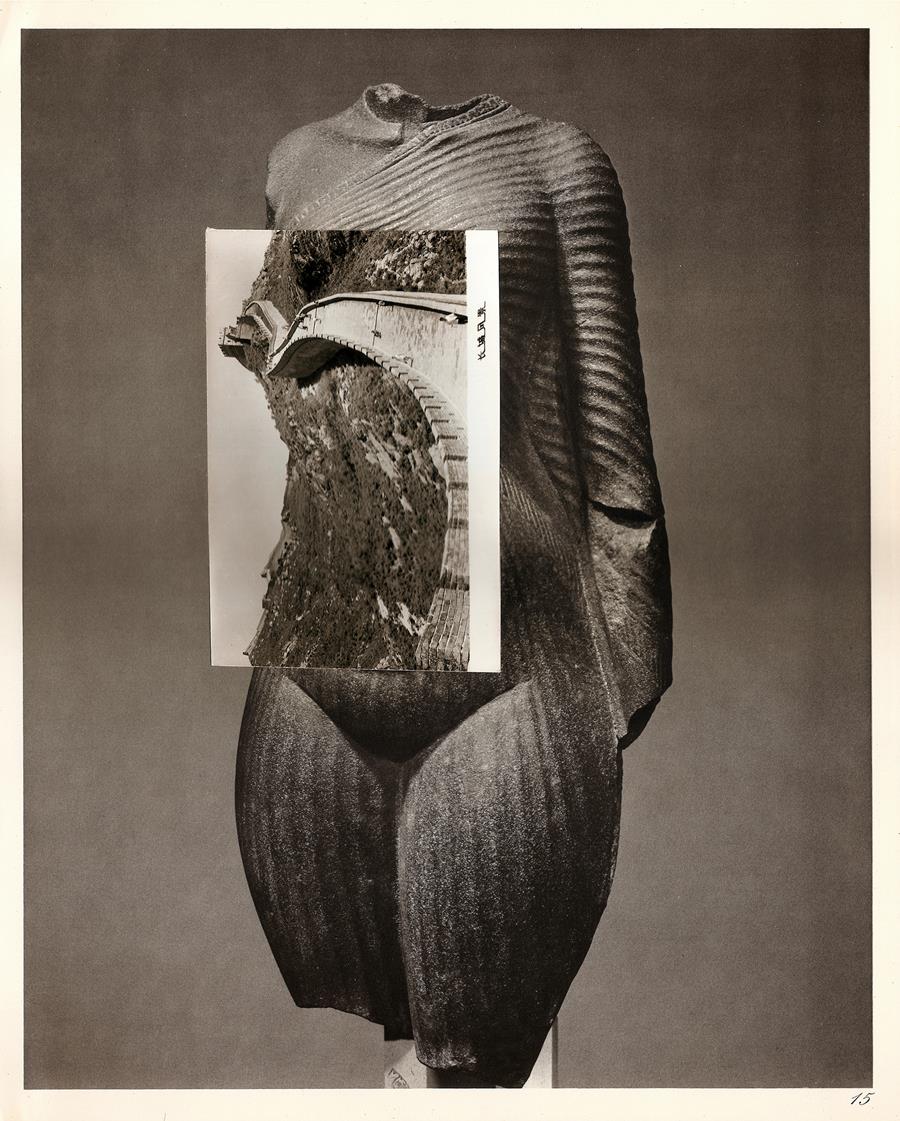
[Torso de la Reina Nefertiti, Egipto, 1370 A.C./ Muralla
China, 770 A.C.], 2017
Analog Collage, Postcard with Egyptian iconography
38 x 31 cm
I tend to work in series that emerge from research and conceptual exploration, grounded in the materials I find and the ideas they activate. I don’t usually begin with a premeditated intention for a piece—not in the sense of representing a specific idea through an image, but rather discovering how each work unfolds through careful attention to what the images themselves demand: their edges, textures, and the ways they resist or invite connection. I believe no image exists in isolation; its potential unfolds through relation, in the way one fragment resonates with, provokes, or complements another.
I can spend weeks cutting fragments, then organizing and classifying them into a kind of personal taxonomy—boxes and folders filled with categories, notes, and labels. That structure becomes an extension of my thinking, a way of tracing correspondences, contrasts, and tensions between images, as well as the affinities that emerge through their material and aesthetic presence.
When I’m working, I usually put on instrumental music and spend long hours moving images around, testing how they respond to one another. It’s not a linear process, but a state of focused attention, where reflection and decision happen through looking, handling, and touching. I observe how certain juxtapositions can challenge or transform one another, generating new pathways of meaning and subtle displacements that emerge from their tactile and relational play.
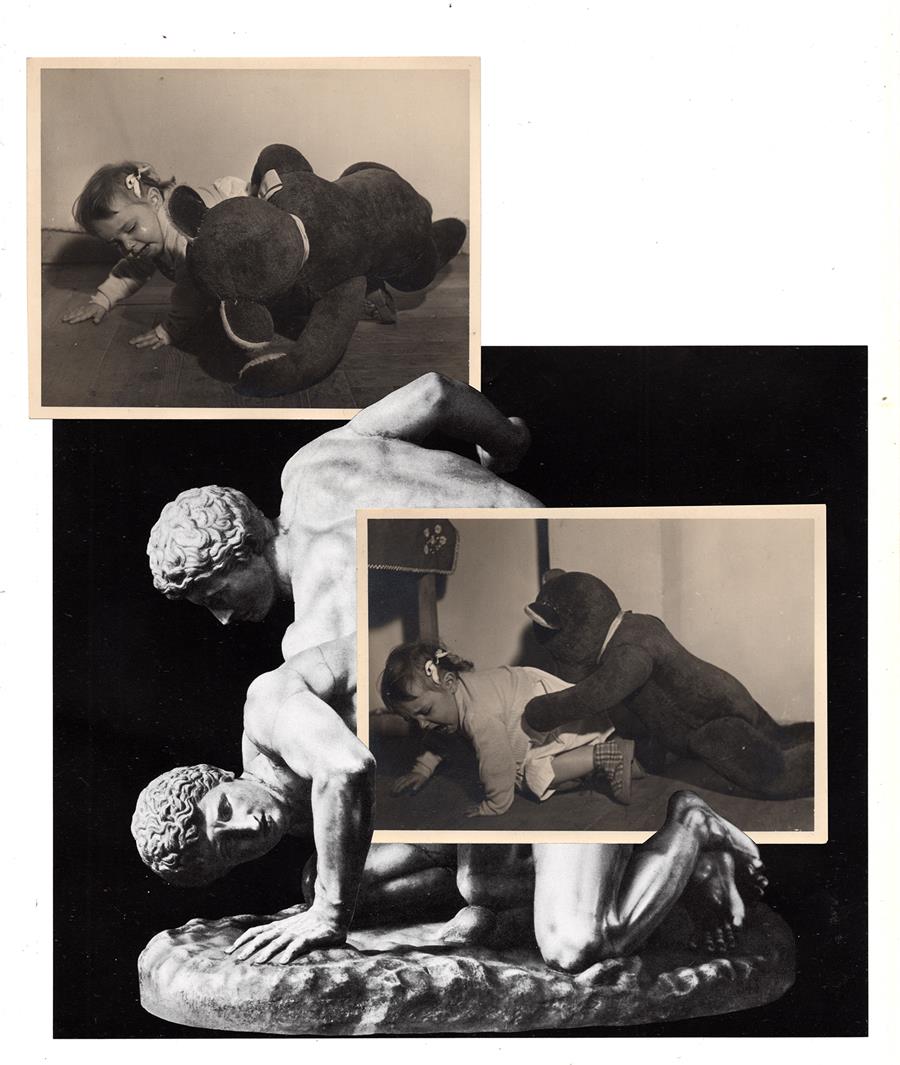
Analog Collage, Found photographs juxtaposed with ancient olympic iconography
25 x 21 cm

Analog Collage, Images of turbines and drains juxtaposed
with Aztec goddess iconography
20 x 17 cm
I tend to favor older materials — those that still bear the imprint of their former uses and meanings, that speak of their own obsolescence and of the functions images once fulfilled.
In recent years, I’ve expanded my collection and archive with books rich in illustrated images for scientific study: encyclopedias of natural sciences, codices, technical and pedagogical manuals on mechanics, anatomy, flora, fauna, and anthropology. Alongside them, I gather volumes on ancient civilizations, art history, archaeology, and sculpture — fragments of a visual lineage that persists through time.
My search for images often becomes a kind of wandering, an expedition through secondhand bookstores and flea markets, on trips to other cities, or through books passed on by others. Each encounter feels like a quiet diagnosis of my own obsessions and of what I believe holds conceptual or poetic potential — but above all, of what reveals a certain material beauty in its printing, paper, or slow decay.
I also collect lots of pictures, vernacular photographs, portraits of strangers, old postcards, trading cards, museum catalogues, and a variety of found objects: shells, rare stones, frames, etc.

[Perfil Real, modelo de escultura, Dinastía XXX, Egipto / Valencia, España,
Palacio de la Generalildad. Patio y Escalera.]
Analog Collage, Old postcard with Egyptian iconography
31 x 25 cm
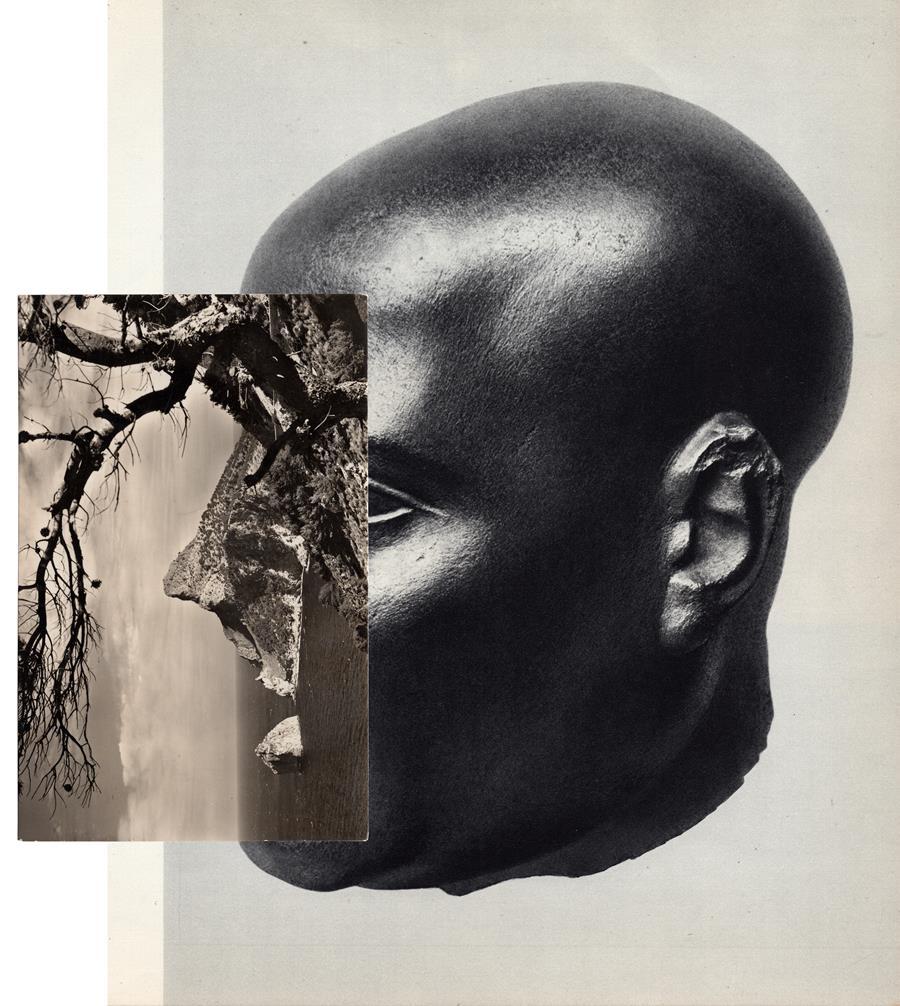
Analog Collage, Old postcard with Egyptian iconography
31 x 29 cm

About the Artist
Andrés Gamiochipi is a multidisciplinary artist from Mexico City whose practice spans collage, painting, muralism, photography, and design. Through acts of juxtaposition and displacement, he treats images as material—fragments of a visual archaeology—reconfigured to question meaning and suggest new relations between form and imagination. His compositions bring together the immediate and the distant, the possible and the impossible, the real and the imagined, forming a space where perception and time fold.
He studied art in Florence, Italy, and has exhibited widely across Mexico, Europe, and the Americas. Gamiochipi is co-founder and director of Paste Up!, an international collage festival, and of Mexicollage, a collective dedicated to analog collage since 2012. Outside the studio, he plays drums in No Somos Marineros, a post-hardcore band rooted in Mexico City’s independent scene.
For Your Viewing Pleasure
What to watch, read, and experience, as curated by the Collé team.
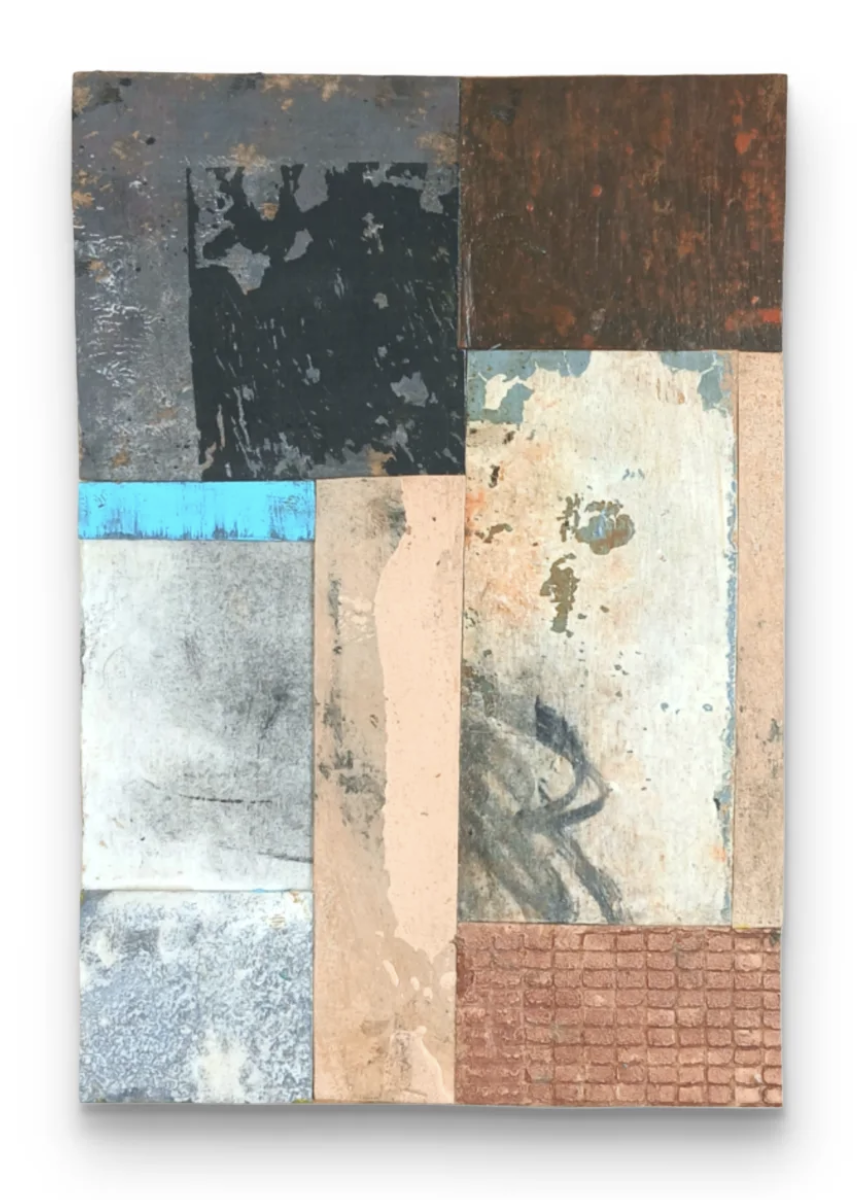
SEAN PARRISH is a self-taught artist from Tampa, Florida, shaped by a childhood immersed in oversized art and history books. He treats art as refuge, ritual, and medicine, ultimately a means to re-enchant a disenchanted world, a pursuit he began in earnest in his early twenties.

SARAH EYRE is a Manchester-based artist working with photography and collage to examine gender, identity, and the body. She is the Course Leader in Fashion Photography at Leeds Arts University.
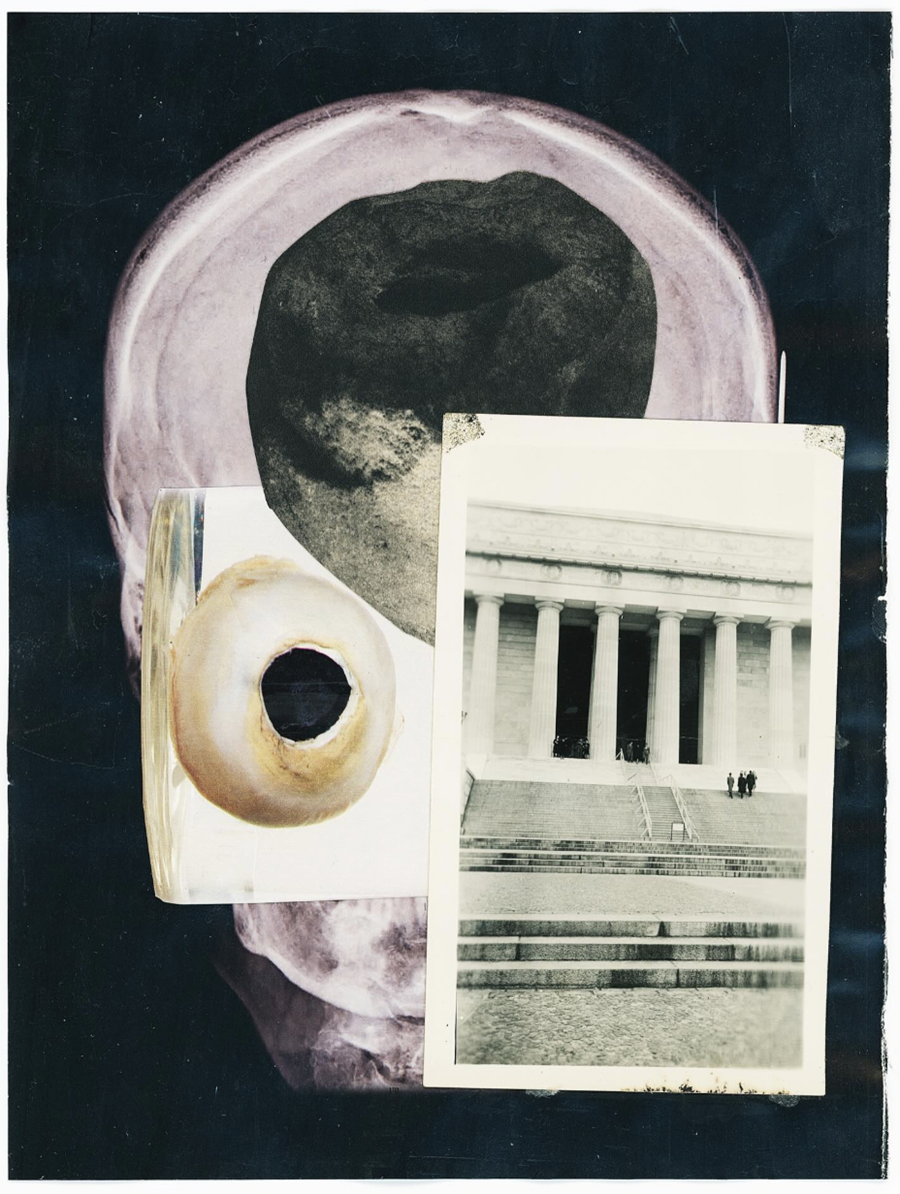
LESLEY FINN is an American-British writer, artist, and educator in Connecticut, with a background in medieval and early print culture, book arts and publishing, and teaching in English, writing, and gender studies.

PAUL LOUGHNEY is a New York-based collage artist who hand-cuts magazine imagery into layered compositions that probe how media shapes identity.

CURT HARBITS is an American artist who builds sharp, hand-cut collages where geometry meets landscape and art history.
Out and About
What to watch, read, and experience, as curated by the Collé team.

▼ VISIT
Yoko Ono: Music of the Mind
Museum of Contemporary Art Chicago
One of the most comprehensive exhibitions to date of Yoko Ono, the trailblazing artist, celebrated musician, and formidable campaigner for world peace. On view until February 22, 2026.
▼ READ
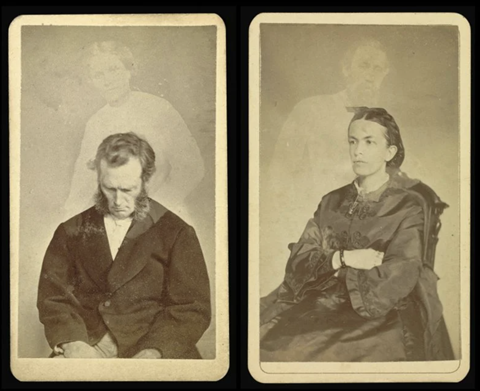
Meet the Man Who Snapped the World’s First Photograph of a Ghost (Or So He Claimed)
This edition of "Eureka" goes into the darkroom of spirit photographer William Mumler on Artnet by Min Chen.
▼ LISTEN
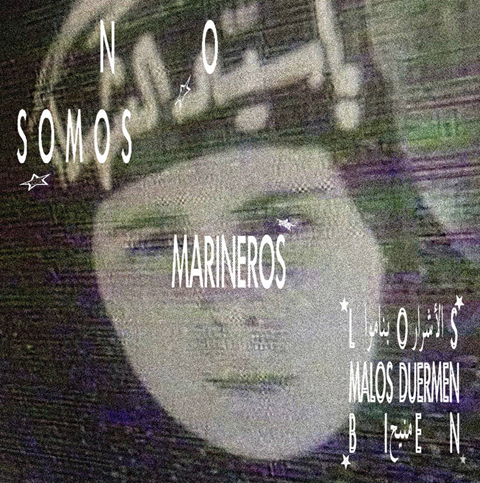
Los Malos Duermen Bien
by No Somos Marineros
A post-hardcore single from Mexico City: clean guitars, shifting time, and straightforward vocals without theatrics. It’s shoegazy, restless, and well arranged. Drums by today’s featured artist, Andrés, drive the track.
