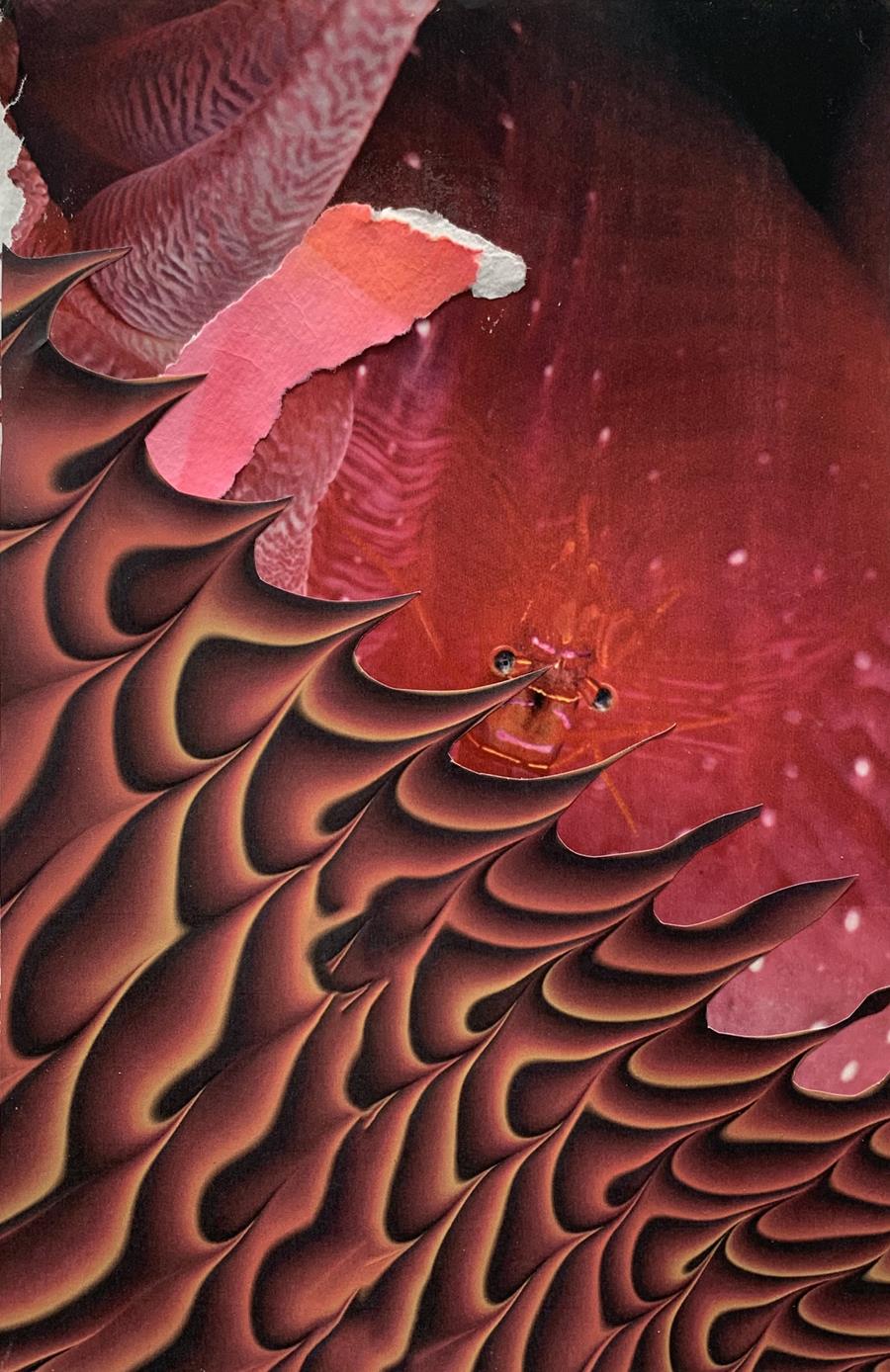
Collage on paper
5.3 x 16.3 cm
Melanie Smith
Melanie Smith’s practice unfolds through a logic of fragments, where painting, film, sculpture, and performance articulate an ongoing negotiation between forms. Her work treats collage less as a technique than as a mode of thinking, a way of holding incompatible materials, histories, and temporalities within a single, unsettled plane. Based in Mexico City, she draws on the city’s density and layered visual culture as a generative field for recomposition. We awarded her the Collé Prize at Estación Material in Guadalajara for the most innovative collage at the fair.
In the Words of the Artist
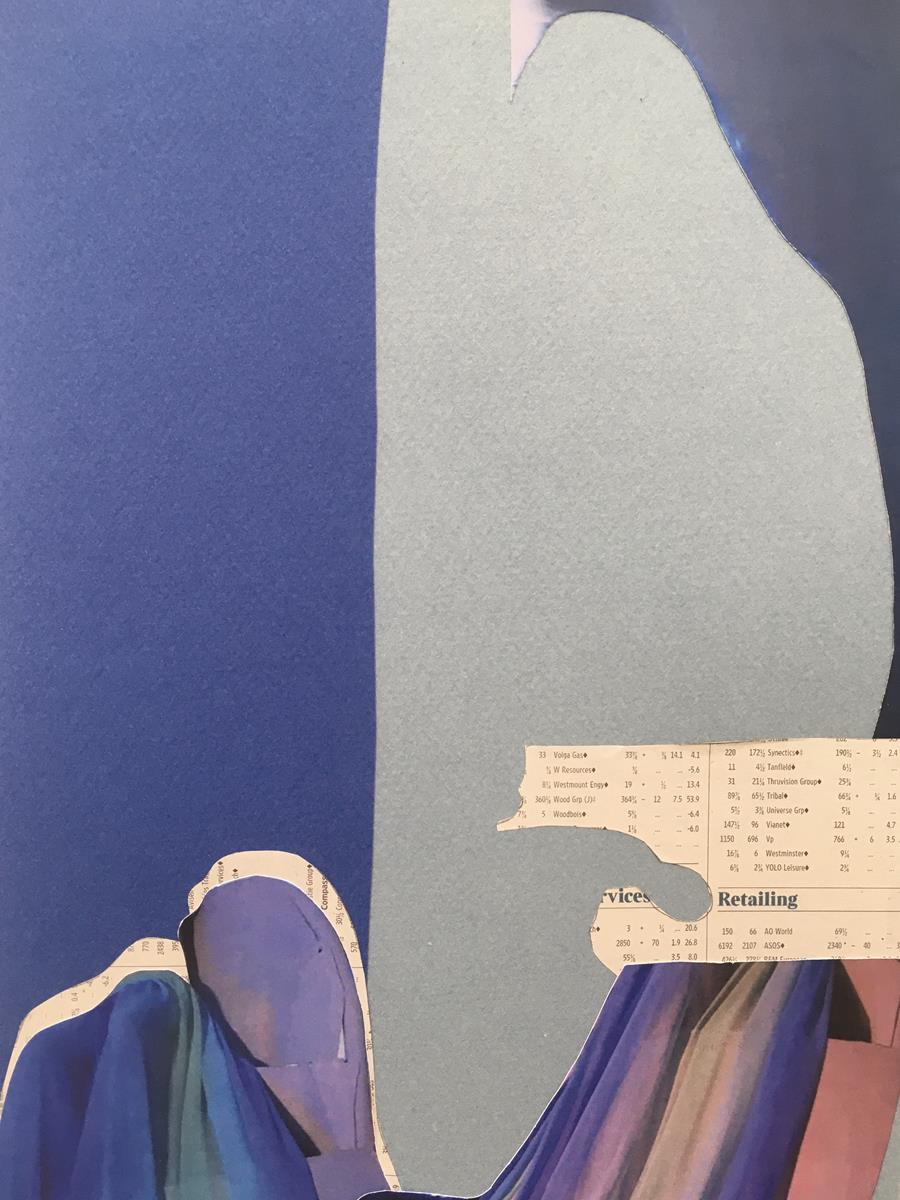
Collage on paper
11.59 x 8.25 in.
I think all of my work is some kind of collage, in whatever medium I use; it tears fragments from here, there, and everywhere. In some ways, I think collage is a state of mind, some kind of mash-up of heterogeneous remains that float around in space or in your mind.
Sometimes when I can’t think of expressing an idea any other way, I go back to collage, because it has an immediacy that other mediums, which are much more process-oriented or considered, don’t have. It has a weirdly central and lateral role in my work. It helps me to think through incongruent forms that don’t necessarily go together by putting them on the same plane or 2D space. It’s something you can do in half an hour and has an immediacy which I like. Collage can switch up perspectives and textures in a way that 3D space, for example, can’t.
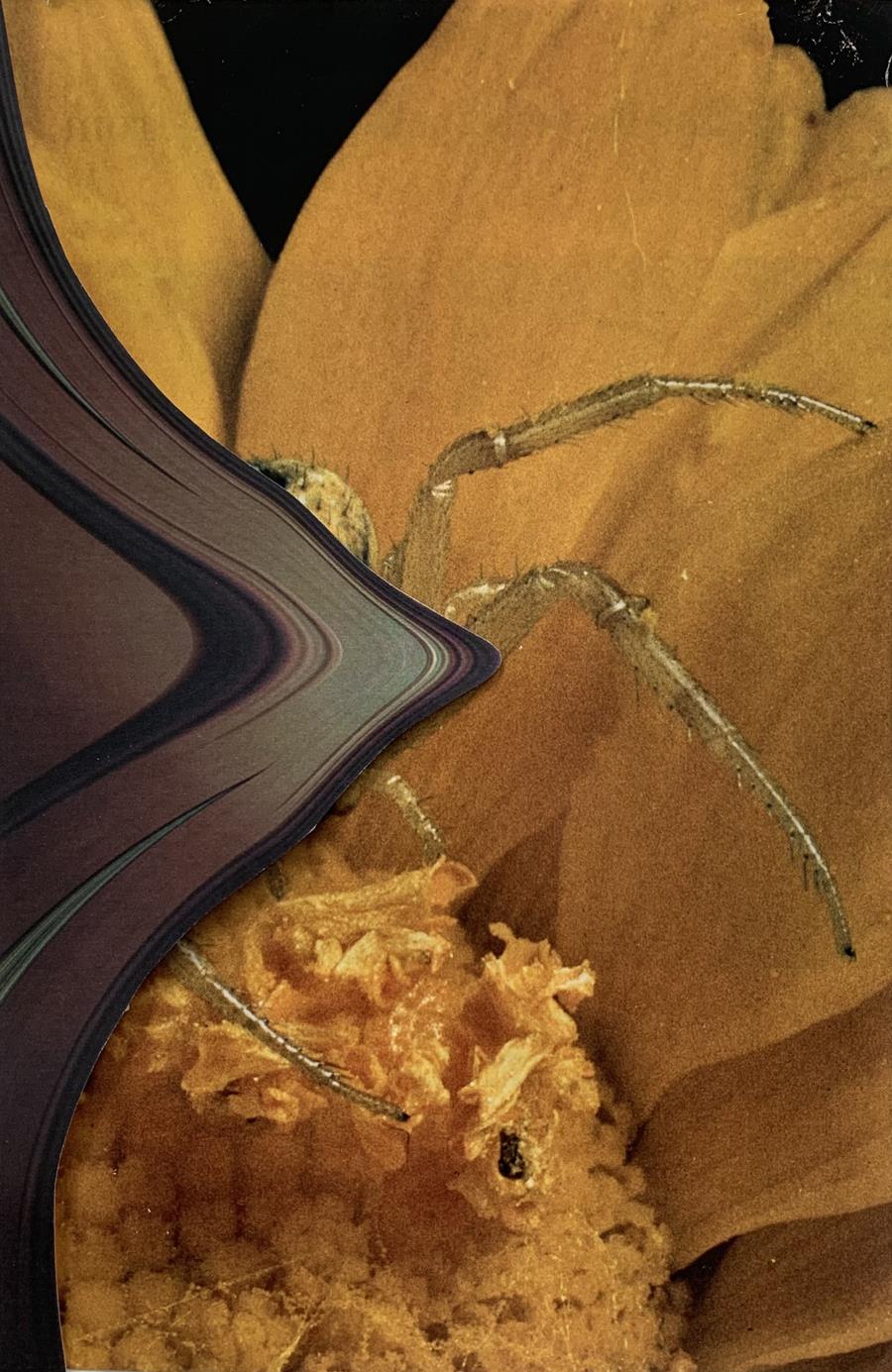
Collage on paper
25.5 x 16.6 cm

Sources of my collages vary. Sometimes it can be from prints or photocopies of my own work which I’m working on, or has happened as a performative act, and then gets incorporated into 2D work, as in Vortex. Other times it can be magazines, solid coloured paper, tracing paper which I have already drawn on, or newspaper cuttings. Each project has its own logic, and so there is never really a formula for the way I select the bits and bobs; it really depends on what the other components are in video / performative or painterly works. I think the fragment becomes mine in the minute you place something else alongside it. Any new gesture switches up the meaning.
In some ways, yes, Mexico City is so baroque and multifaceted that it would be hard not to see it as a collage. Of course, in the beginning, when I moved here in 1989, the street became part of my work. I was always collecting found objects and incorporating them into assemblages, but it has taken less and less of a part in my work, the further my projects have moved to non-urban sites.
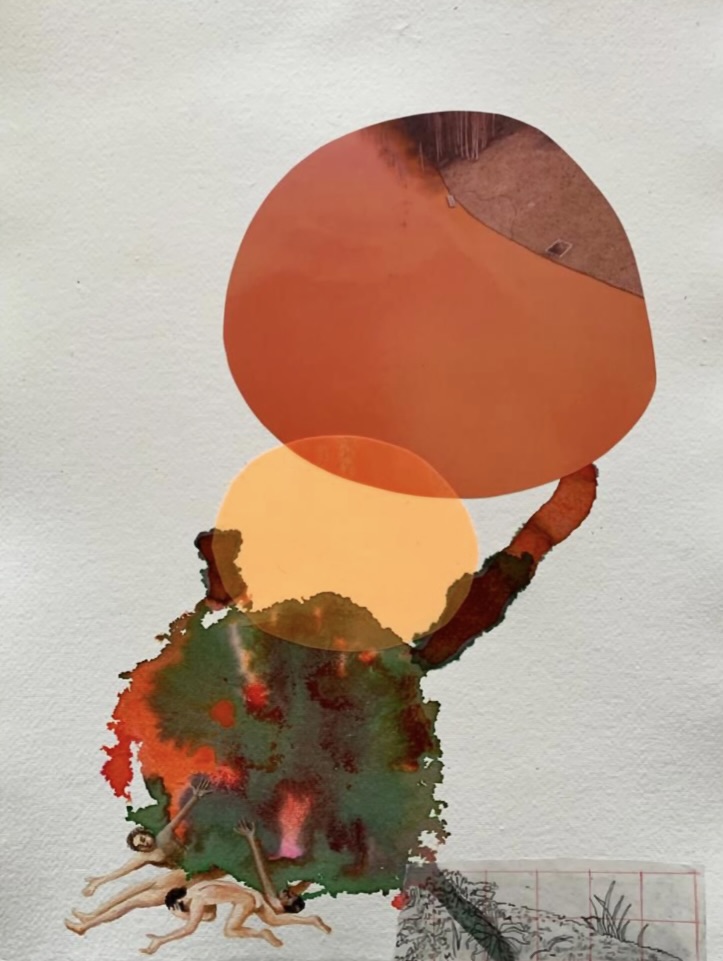
Collage on paper
52 x 43 x 4 cm
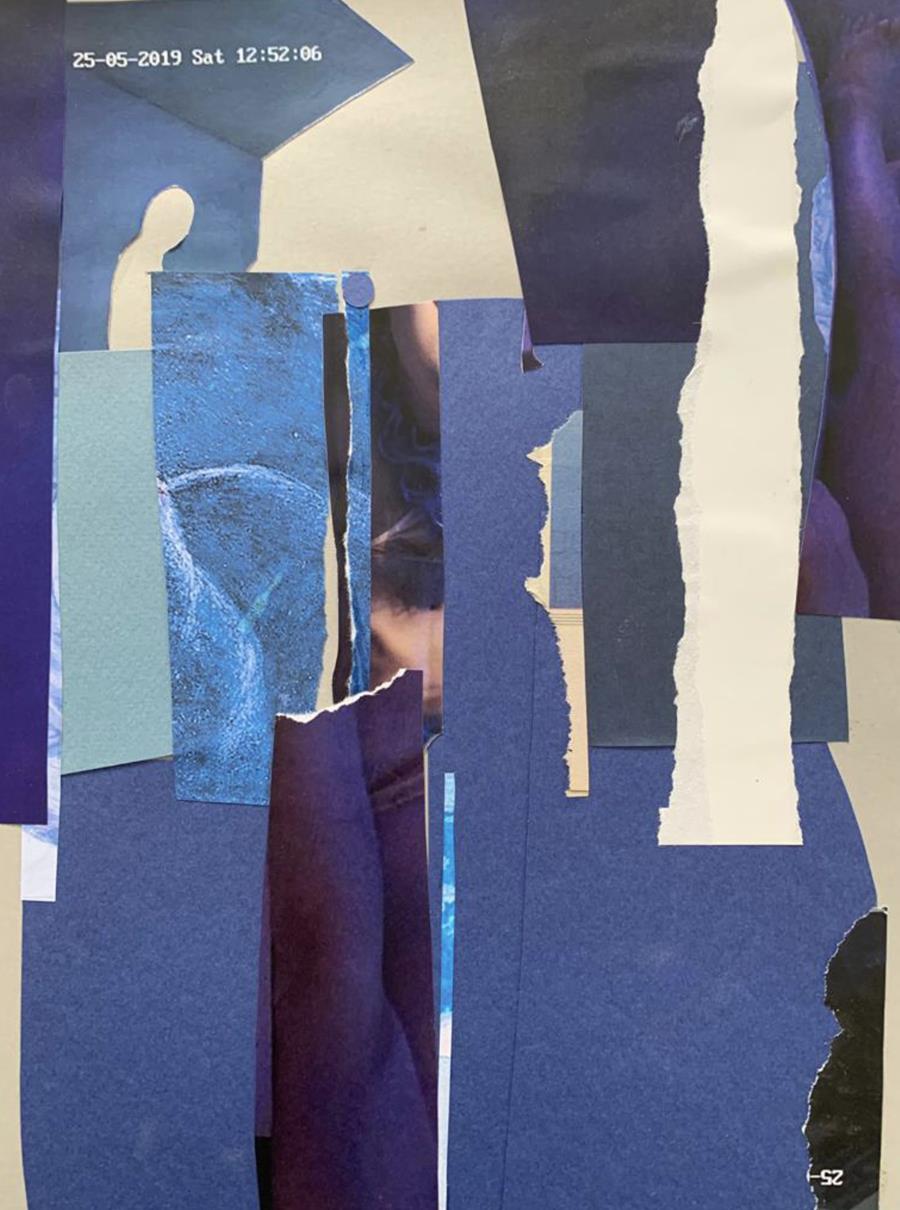
Collage on paper
11.59 x 8.25 in.
Most of the time, I think the art historical references are quite clear in my work, so in a way, it’s not even necessary to make the citation. I think there’s a connective tissue and affective intensity that connects different moments in history onto a single surface. Sometimes the naming can be in the title of a work, or, as in the case of the Aztec Stadium piece, where Malevich is inferred as a red square made by a mosaic of stunt cards in the middle of a football pitch, it’s used as a shift in perception or reading of how the original work was read. That image is so iconic, I don’t feel it necessary to shout it out.
Art is made of references from others; we’re all doing it all the time. The anonymity of referencing remains on an unconscious level; what we’ve seen, where we come from, and how we churn it all out as a new form, that remains for me one of the allures of art: we all know more or less where things come from, it’s an unspoken given.
Can’t say too much as yet, a big commission that is still in my head. It’s that torturous moment when you can’t quite work out what something will be, but I’ve been doing some animation recently that really captivates me, as it’s a way of combining drawing and painting into time-based works, so yeah, I’m intrigued to see where it goes.
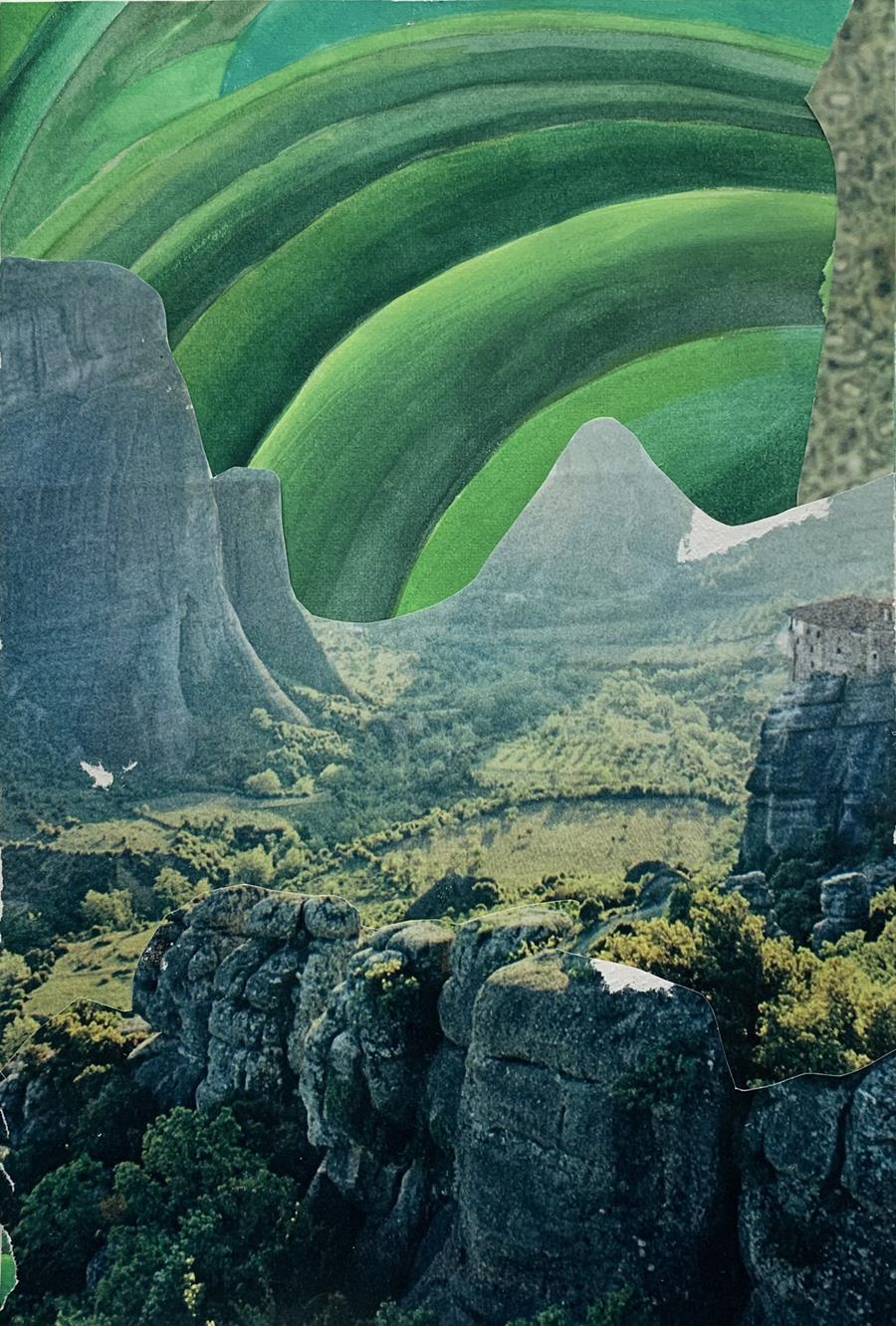
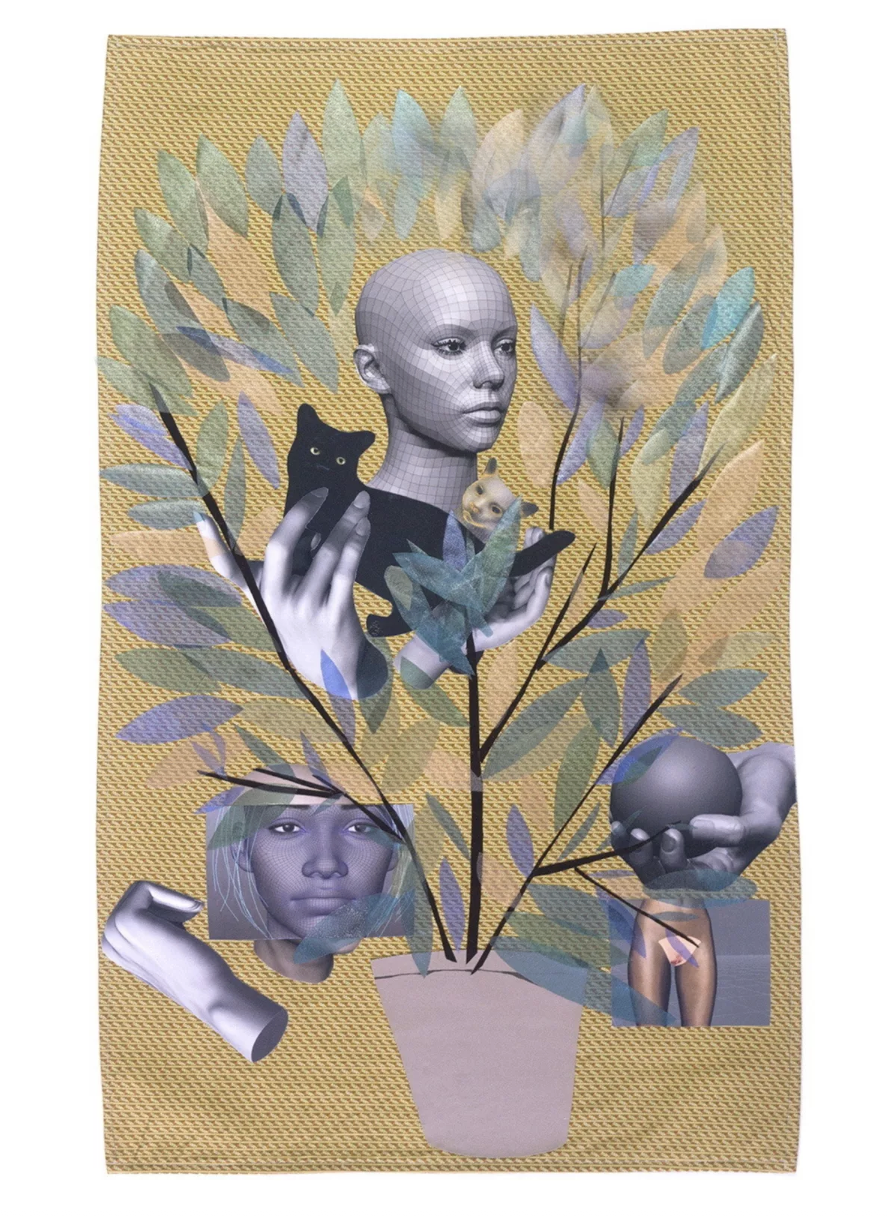
Collage
2.08 x 6.4 in.
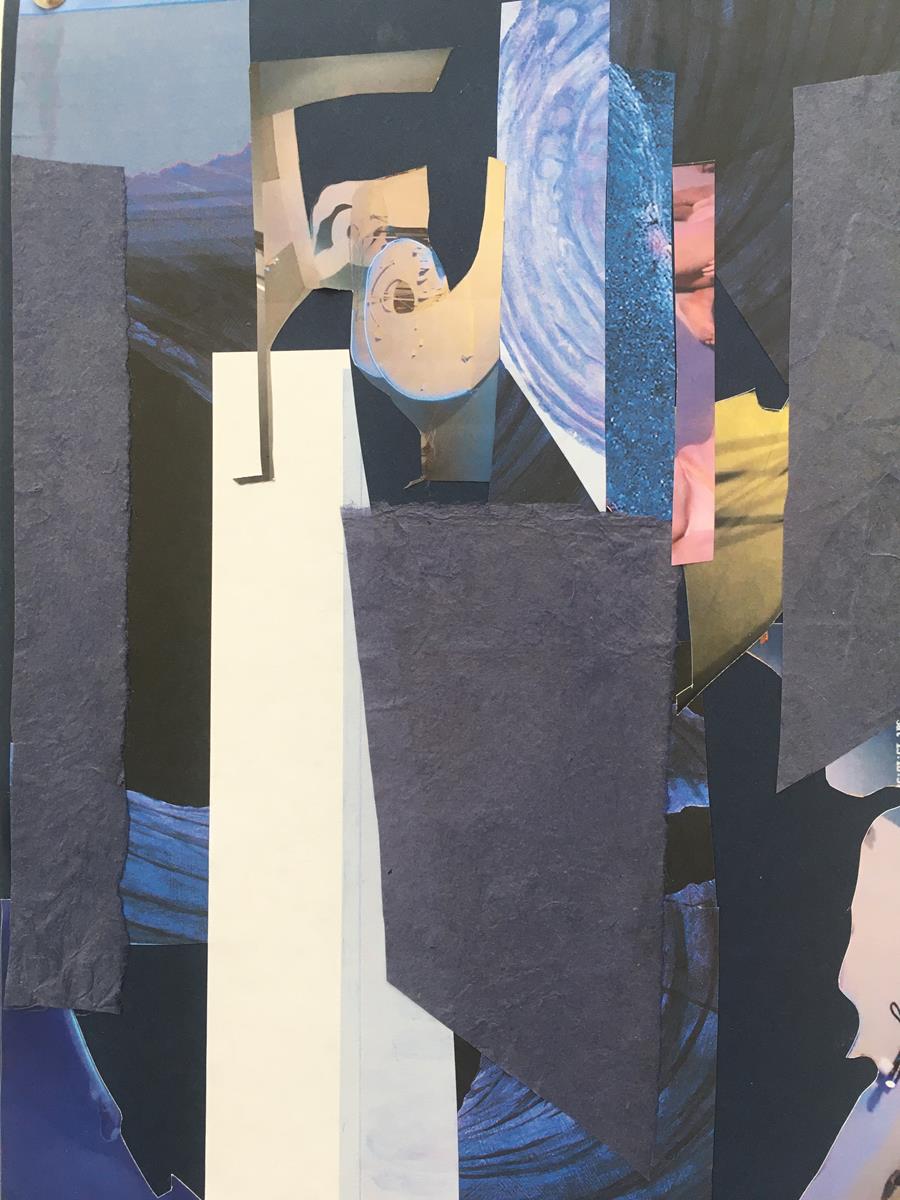
Collage on paper
29.5 x 21 cm

About the Artist
Melanie Smith was born in England in 1965. She lives and works between Mexico City and London. Her work, in diverse media, has reflected on the extended field of painting within the history of art and its entanglement with moving image. In earlier pieces, she illustrates the idiosyncrasies of multitudes, chaos, and aberrant forms within urbanism. Later works extend towards the effects of extractivism on specific ecosystems and environments in Latin America.
The spiral and the palimpsest are recurring forms of thought mode, working as double helices that entwine relationships between industrialization, nature, body, archaeology, and scale. She is interested in fragmented montages and creates filmic and performative experiences that often allude to behind-the-scenes productions and political farce. Mostly, her work shatters any rational significance as a way of thinking through contingent forms and being.
She has exhibited at numerous institutions, including PS1 and MOMA, New York; Hammer Museum, Los Angeles; Tate Britain, Tate Liverpool, and Tate Modern, London; Hamburger Bahnhof, Berlin; Museo Tamayo, and MUCA Campus UNAM, Mexico City; Museo Amparo, Puebla; The Modern, Fort Worth; and SITE Santa Fe Biennial, Santa Fe.
In 2011, she represented Mexico at the 54th Venice Biennale. In 2018, she was included in the Liverpool Biennial. Melanie Smith: Farce and Artifice, a panoramic survey, was presented at MACBA Museu d’Art Contemporani de Barcelona in 2018, and traveled to MUAC Museo Universitario Arte Contemporáneo, UNAM, Mexico City, Museo Amparo, Puebla, Mexico, 2019, and MARCO Monterrey in 2020.
For Your Viewing Pleasure
What to watch, read, and experience, as curated by the Collé team.

OMAR BARQUET is a Mexican artist working across collage, painting, installation, and sound. Using cut paper, found images, and geometric structures, he builds rhythmic compositions that test how images can be fragmented and rebuilt. He lives and works in Mexico City.
DANIEL ALCALÁ is a Mexican artist working across collage, drawing, and sculptural intervention. Using printed matter as his primary material, he isolates, cuts, and recomposes images into new visual structures that reveal unexpected depth within the everyday.
GALA BERGER is a Mexican artist working across installation, image, and text to probe power, myth, and the cultural afterlives of objects. Drawing from archival and media debris, she stages precise constellations where absence, distortion, and narrative slippage unsettle established histories.

TENANTS OF CULTURE is a Mexico City-based studio working at the intersection of image, archive, and text. Their practice moves through found photographs, printed matter, and everyday ephemera, recomposing cultural debris into tightly constructed visual arguments.

FELIPE BAEZA is a Mexican-born, New York-based artist whose collage based paintings imagine the body as a site of transformation. Layering paper, pigment, and organic matter, he constructs hybrid figures shaped by Indigenous cosmologies, migration, and queer experience, where identity appears in continual states of emergence and disappearance.
Out and About
What to watch, read, and experience, as curated by the Collé team.

▼ READ
NYC Restaurant Ads: 1981-1998edited by Nikki Igol
This publication reconstructs a vanished downtown New York, when East Village restaurants and nightlife formed a porous, unruly scene documented through everything from DIY flyers to glossy, artist-collaborative campaigns. The book shows how food and parties functioned as fleeting cultural laboratories in the 1980s and 1990s, and suggests they might point the way toward a future revival.

▼ READ
Fever Dream as Archive, Archive as Fever Dream by Sabo Kpade
Edward George’s Black Atlas at the Warburg Institute traces how images, histories, and migratory routes intersect to form a shifting cartography of Black experience. Kpade’s review follows this movement closely, showing how George turns archival research into a meditative, conceptual journey.

▼ LISTEN
Wah!!! by Chinese American Bear
This is the second album by Seattle duo Chinese American Bear, released in 2024 on Moshi Moshi. It is a bright, DIY pop record: 11 short, hooky tracks built from synth pop, bits of psychedelia, and light funk grooves.
