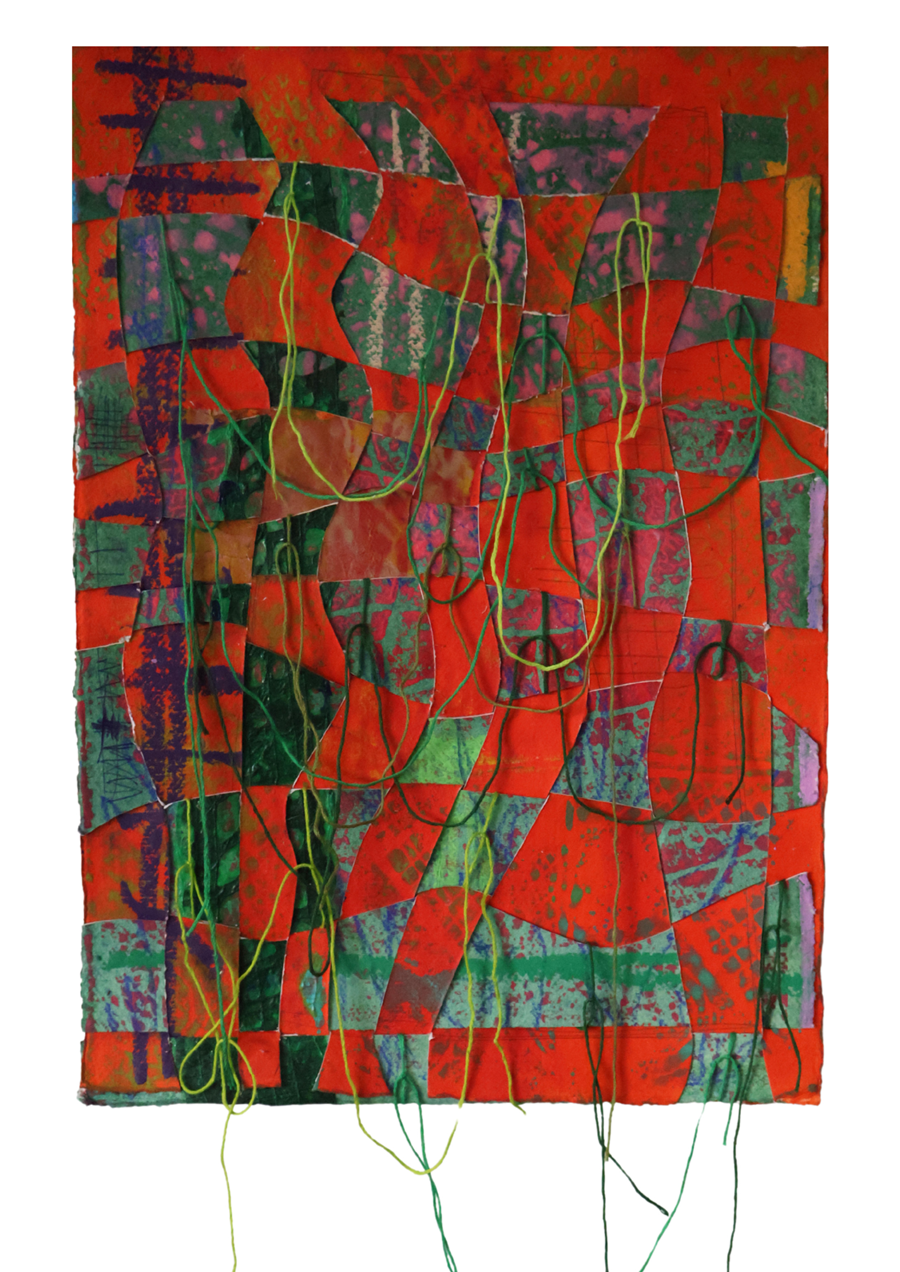
Archival paper woven, acrylic, pencil, collage, oil pastel, spray paint
16 x 12 in.
Nola Ayoola
Nola Ayoola treats memory as something you can touch, letting color, texture, and rhythm carry lived experience into layered, tactile worlds. Working between Lagos and New York, she builds sensory terrains where personal history, Yoruba heritage, and everyday environments weave into charged surfaces. In her hands, collage becomes a way of feeling through material, holding rupture and repair together so that a different kind of shared space can appear.
In the Words of the Artist
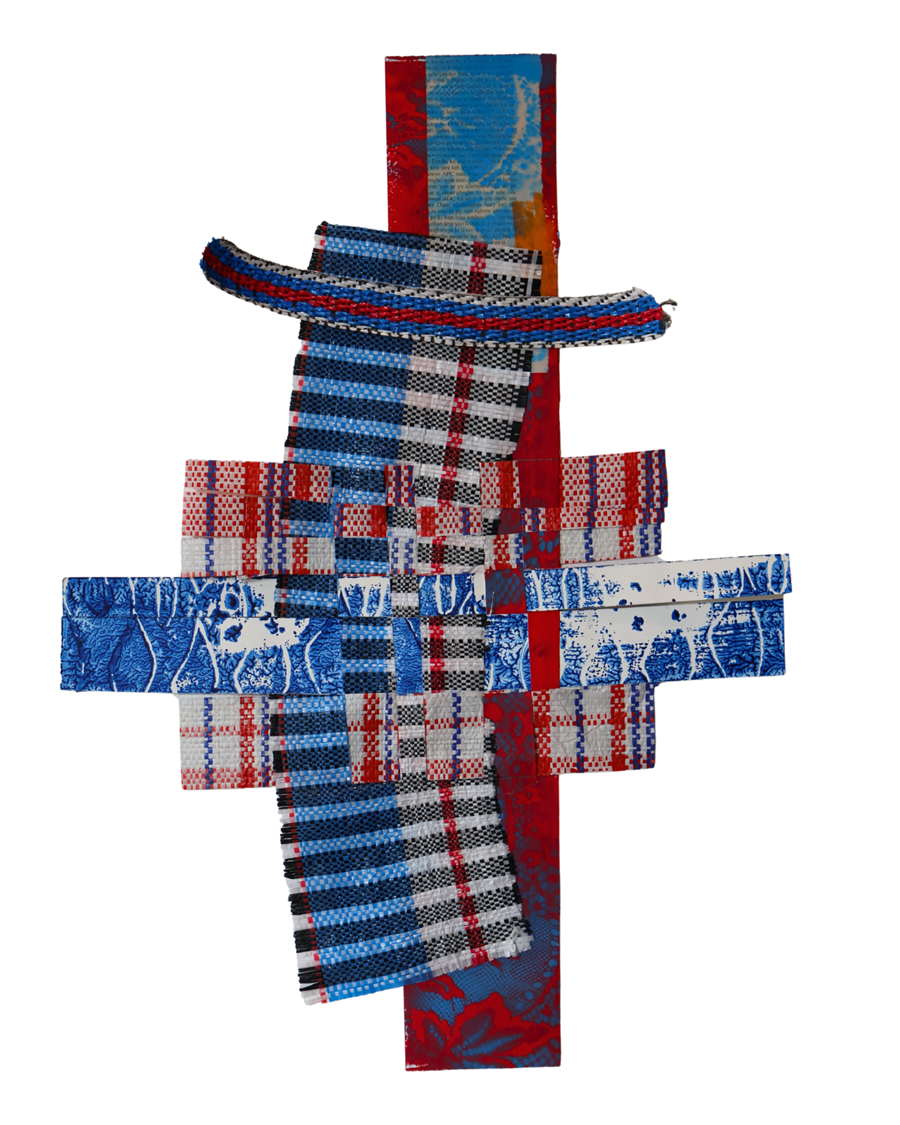
Woven - deconstructed woven bags, collage, acrylic, oil pastel, archival paper, spray paint
20 x 26 in.
My work functions as a kind of visual journal and portals where emotion and memory take on physical form. I use colour, movement, and tactile techniques like weaving, hand printing, and collage to build layered, sensory compositions. Each piece begins intuitively and often grows out of environments, personal experiences of rupture or transformation. I’m interested in how materials can hold feeling—how texture and gesture can translate emotion into something both intimate and expansive.
Collage, to me, is about pulling from memories - those geographical and emotional moments that hold movement and time - and piecing them back together in new ways. It’s a process of taking things apart and rebuilding, finding the connections between the past, the present, and what’s still unfolding. I see my work as a kind of map of dreams and experiences, where different fragments come together and shift. It’s really about creating beauty out of chaos, embracing the ebb and flow of life, and making sense of things that aren’t always linear.
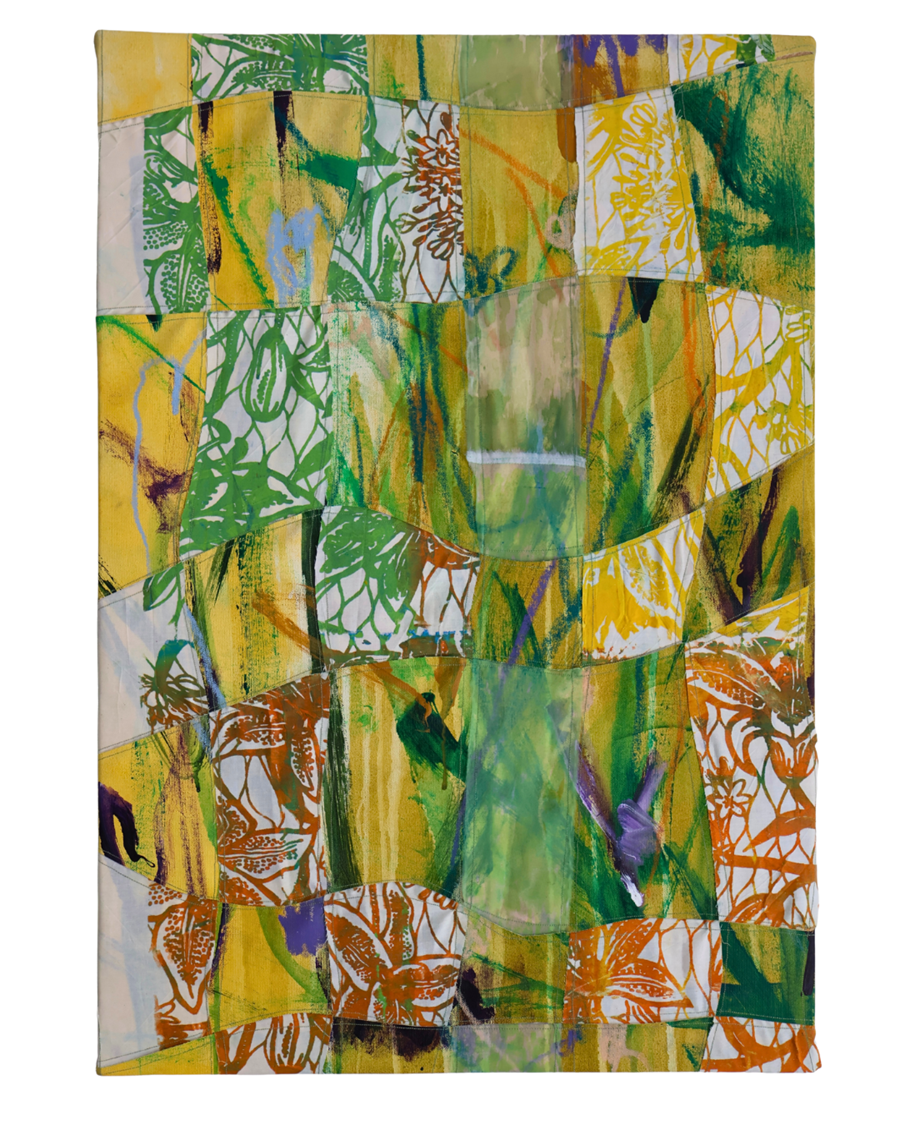
Woven - canvas, cotton, organza. Oil pastel, silk screen ink, pencil, dye, acrylic
32 x 22 in.
I don’t really have a fixed routine, but there’s definitely a kind of rhythm that happens when I’m making. I usually start by gathering things that draw me in—textures, colours, or materials that carry a certain memory or feeling. I like to be really in tune with my senses; it’s a very reflective process, especially because I have synesthesia. I tend to tap into memory and emotion a lot—it’s almost like following a sensory roadmap. Colours, textures, and sounds blur together and guide where the piece wants to go. It’s less about planning and more about responding to what I’m sensing in the moment or particular moments/ stories I'm trying to convey.
I tend to collect a mix of materials that carry texture, history, or emotional weight - things found like textiles, paper fragments, everyday-use items deconstructed, or natural elements from my environments. I’m drawn to materials that already have a story in them - something weathered, layered, or imperfect. I also hand-print patterns and create marks, reimagined motifs, and symbols that often become the basis of the backgrounds that I deconstruct and layer. In terms of imagery, I work a lot from memory and personal archives, blending those with abstract forms and tactile processes like collage or tapestry. It all becomes a way of building a dialogue between what’s found, felt, and imagined.
I think there’s a consistent thread in my work around memory, emotion, heritage, and environments. I’m really interested in how personal and collective histories overlap, and how fragments of experience can be reshaped through different materials and processes. A lot of my work looks at how emotion moves through these layers - how something deeply personal can also touch on shared memory or cultural heritage. Whether it’s through collage or other tactile, layered processes, I’m always exploring connection through a reimagined personal lens, looking at how our inner and outer worlds flow into each other.
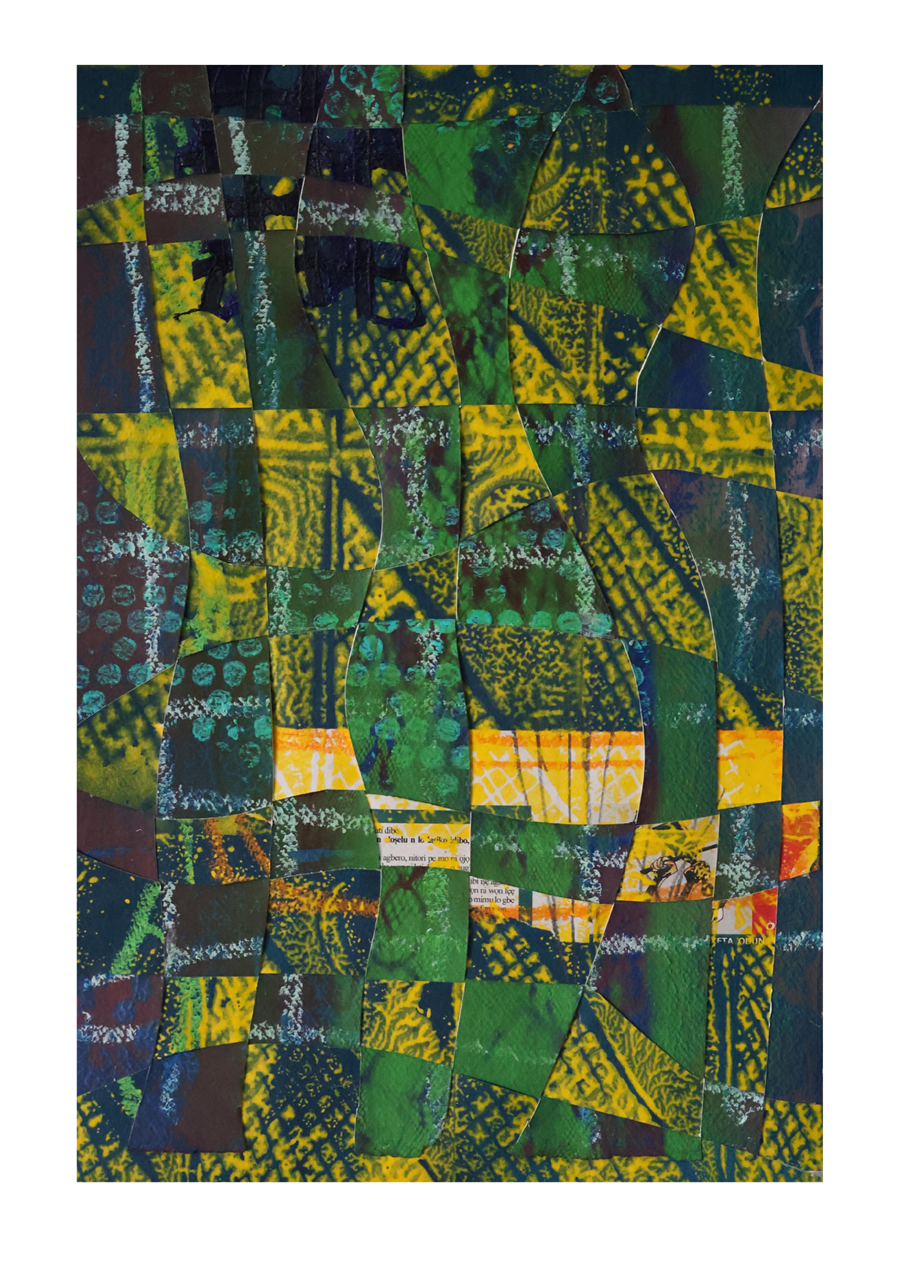
Archival paper woven, acrylic, pencil, collage, oil pastel, spray paint
17 x 12 in.
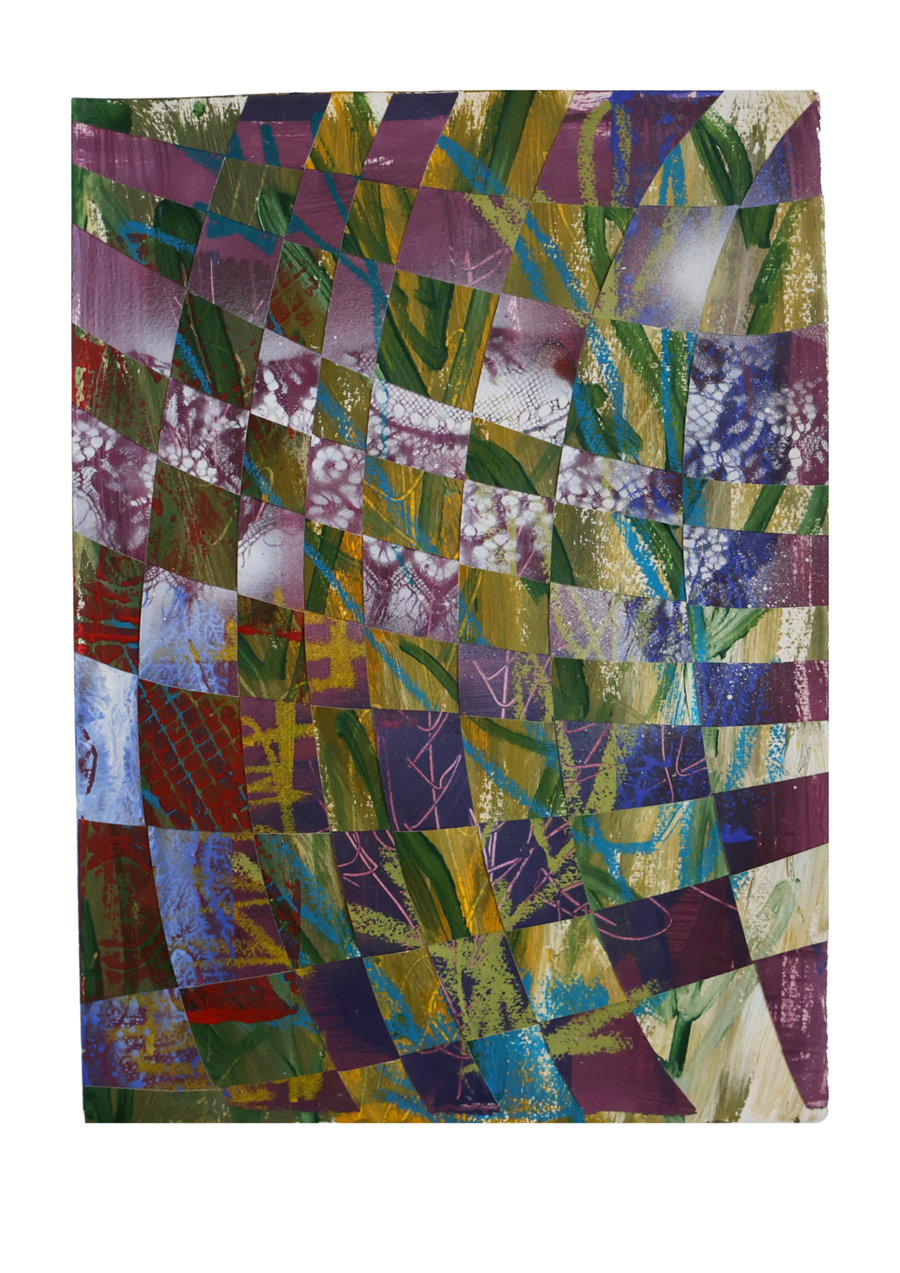
Archival paper woven, acrylic, pencil, collage, oil pastel, spray paint
16.5 x 11 in.
I’ve always been inspired by the traditional artisans I grew up around in Nigeria - basket weavers, Aladire’s (dyed fabric makers), and wood carvers. They’ve had a huge impact on my practice; I would watch them for hours, taking in their techniques and speaking with them about how they learned their craft, often passed down through generations. There’s something sacred about that kind of knowledge, and it has informed the way I carry and reimagine these traditions in my own work.
Artists like Simone Leigh and Sam Gilliam have also impacted me. When I first encountered Simone Leigh’s work, it shifted something in me - the way she merges form, history, and material around Black womanhood really resonated. It made me think differently about how emotion, heritage, and lived experience can be embedded into material, while Gilliam’s compositions, use of colour, and movement often inspired by the free spirit of jazz music, affirmed how much my senses guide my process. I’m also drawn to artists who work intuitively - abstract painters and collage artists whose layered or textural worlds feel closely connected to how I approach my own practice.
I think collage is always evolving! For me, collage will always be about connection - piecing together fragments of memory, heritage, and emotion to create new meaning. I feel like it’s becoming more personal and expansive at the same time. A way for artists to map identity and environment in really dynamic ways. I definitely see it continuing to grow as a space where storytelling and experimentation meet.
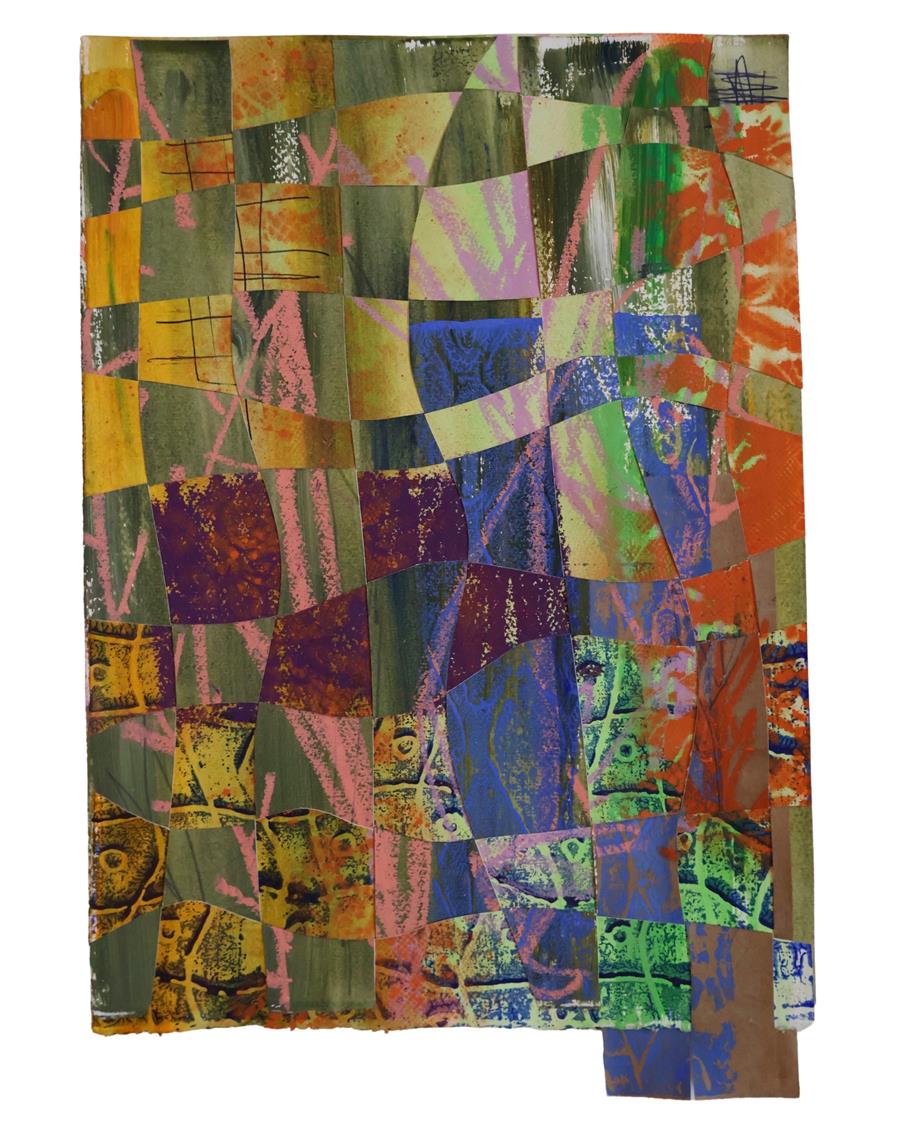
Archival paper woven, acrylic, pencil, collage, oil pastel, spray paint
16.5 x 11 in.
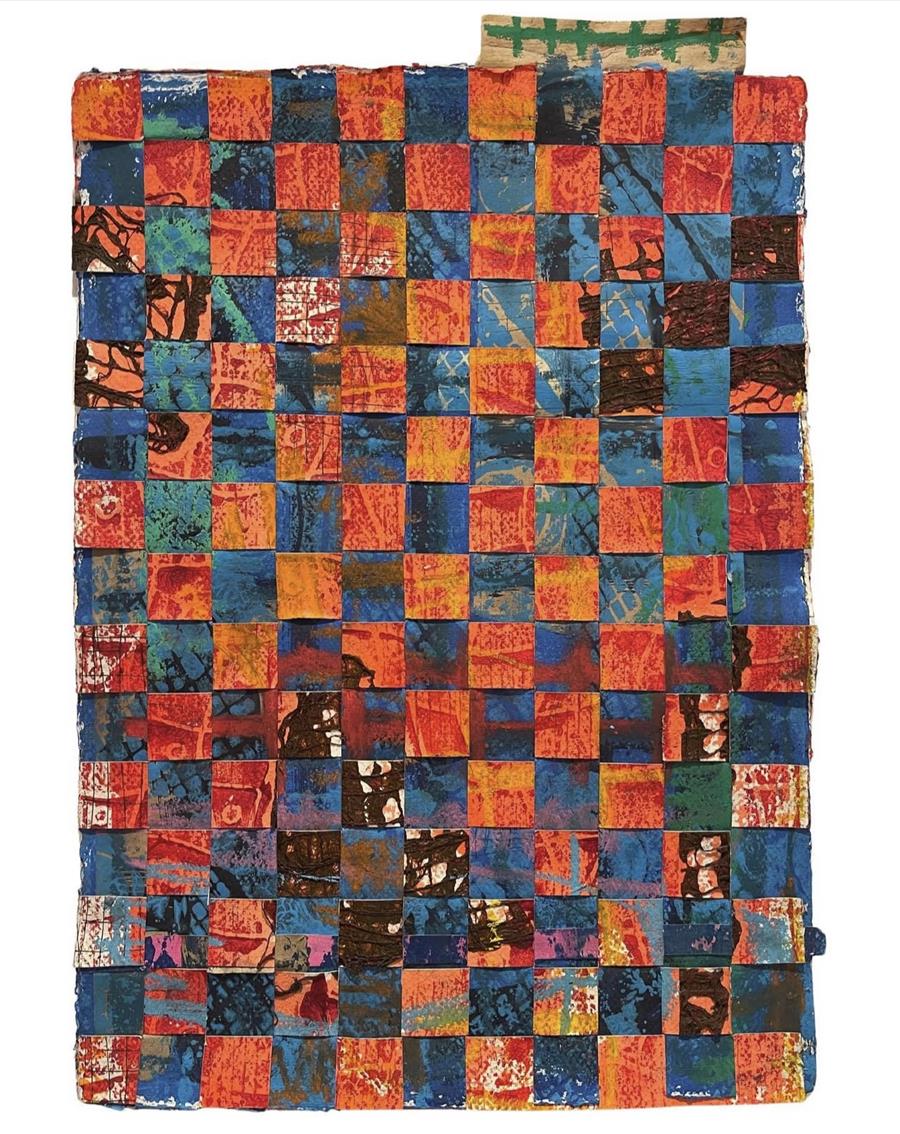
Archival paper woven, acrylic, pencil, collage, oil pastel, fiber paper
17.5 x 11.8 in.

About the Artist
Nola Ayoola (b. 1992) is an interdisciplinary artist based between Lagos and New York. Her practice centers on creating hybrid-scapes: abstract landscapes that merge dreamlike visions with tangible forms, bridging sensation and emotion. These ethereal, ambiguous worlds draw from Ayoola’s lived experience and explore themes of identity, time, displacement, womanhood, and the unseen forces that shape the human experience.
Her work functions as a visual journal - portals that translate emotion and memory into form. Guided by heightened sensory awareness, she uses colour, movement, and tactile techniques such as weaving, hand printing, and collage to create intuitive, multi-sensory landscapes and portraiture. These works transport viewers into layered emotional and psychological spaces, often in response to personal adversity and emotional rupture.
The result is a practice that is both emotionally charged and conceptually rich, evoking reflection, vulnerability, and transformation. Ayoola’s compositions often incorporate symbolic materials and forms rooted in her Yoruba heritage, such as interwoven textiles and cowrie shells. Inspired by everyday life, her environments, and the people within them, these elements form a visual language that is culturally grounded yet expansive - shaped by memory and sensory experience, and open to collective interpretation.
Named one of Artsy’s “5 Artists on Our Radar” in 2025, Ayoola has been recognised for the way she connects traditional forms with contemporary life. Her work has been shown at prominent international fairs and public installations. Ayoola holds degrees from the University of Bristol and Parsons School of Design. Her studio is based in Lagos, where she grew up.
For Your Viewing Pleasure
What to watch, read, and experience, as curated by the Collé team.
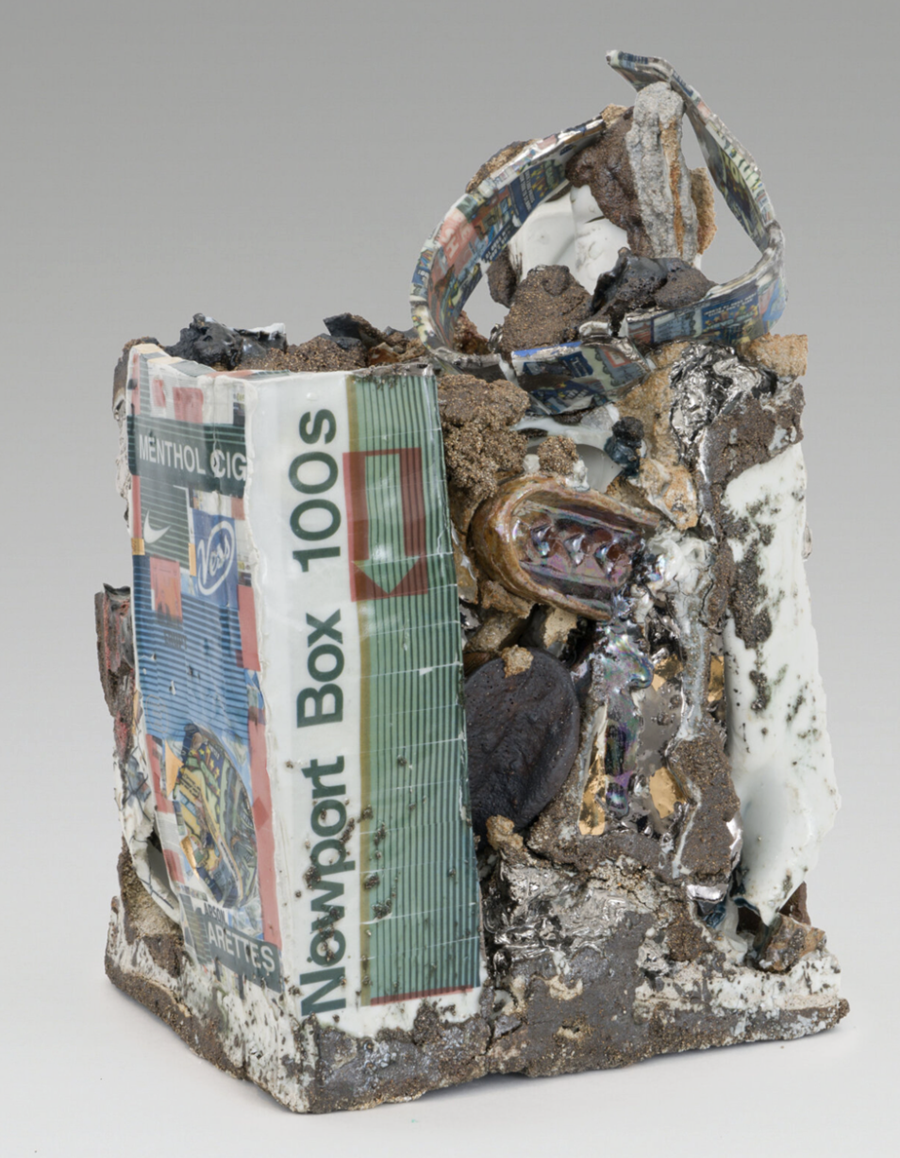
KAHLIL ROBERT IRVING works with ceramic, print, and assembled media to trace layered histories of Black life in the United States. His dense, composite forms echo geological strata and urban detritus, drawing on newspapers, digital screens, and commemorative objects. Through this material collage, he reflects on memory, visibility, and the politics of representation.

KAREN STAMPER works across collage, drawing, and mixed media to explore the poetics of fragmentation and the atmospheres of lived space. Her compositions gather scraps, marks, and traces from daily environments, recomposed into layered surfaces that register movement, memory, and improvisation.

CLAIRE WIGNEY (b. 1997) is an artist from Sydney, making work and living on Gadigal land. Their work approaches the medium of painting with a focus on phenomenology. Wigney’s work makes curious inquiries into the realm of appearances, reproduction, depiction, and imitation.

LUCY HOLTSNIDER is a Denver-based artist, printmaker, and graphic designer known for creating vibrant, layered collages that often explore themes of climate change and environmental issues. She uses techniques like letterpress, monotype printing, and found objects to create her artwork.

HARRY GOULD HARVEY IV (b. 1991) draws from the fabric of his native South Coast Region to deconstruct the building blocks of empire and illuminate the weight of anonymous labor. Working with materials gleaned from downed trees, ruined Gilded Age mansions, and gutted Gothic churches, he creates mystical, diagrammatic drawings in hand-built reliquary-like frames and large-scale installations that evoke lost histories of marginalized artisanship and backbreaking toil.
Out and About
What to watch, read, and experience, as curated by the Collé team.

▼ READ
Pantone Picks “Cloud Dancer” as Color of the Year 2026
The global color authority Pantone has selected Cloud Dancer (PANTONE 11-4201) as its Color of the Year 2026, the very first time a shade of white has been chosen. The color is described as a soft, airy white with both warm and cool undertones, evoking a sense of calm, serenity, and renewed clarity.

▼ WATCH
Forum on Contemporary Photography: Lines of Belonging - MoMA
Organized in conjunction with the 40th anniversary of MoMA’s New Photography series and the forthcoming Lines of Belonging exhibition, this event convenes an international group of artists working in and out of four cities across the globe, which have existed as centers of life, creativity, and communion for longer than the nation-states in which they are presently situated.

▼ LISTEN
Doggerland by Office Dog
On Doggerland, the New Zealand trio loosen the tighter, riff driven focus of Spiel and lean into a grungier but more spacious sound. These songs move between raw noise and soft reflection, building big sonic structures that never feel overworked.
