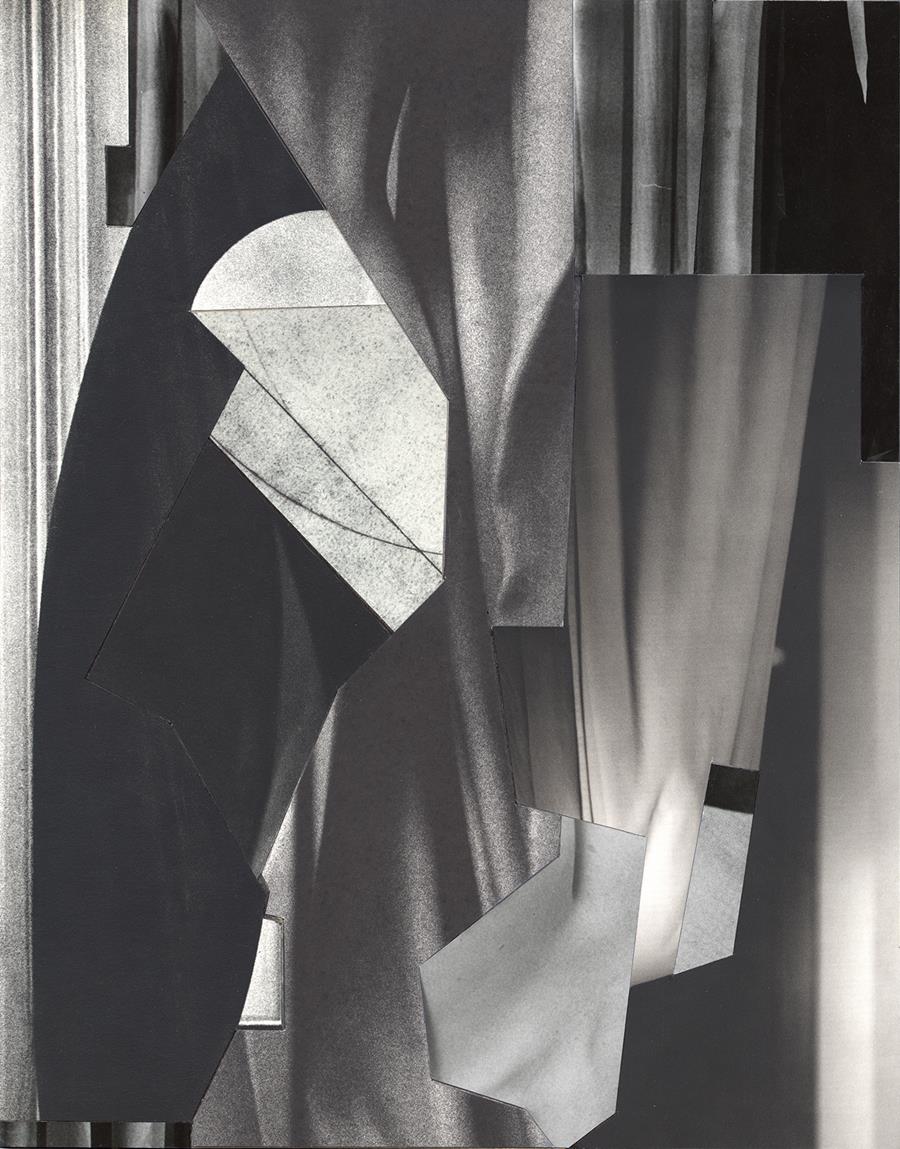
Paper inlay collage, mixed media, on panel
11 x 14 in.
Dan Evans
Dan Evans treats attention as an internal editor, building collage from peripheral space rather than subject. With architectural cuts and minimal pieces, he reduces meaning while preserving the source image’s emotional charge. The work holds perception in a tight loop: familiarity, then abstraction.
In the Words of the Artist
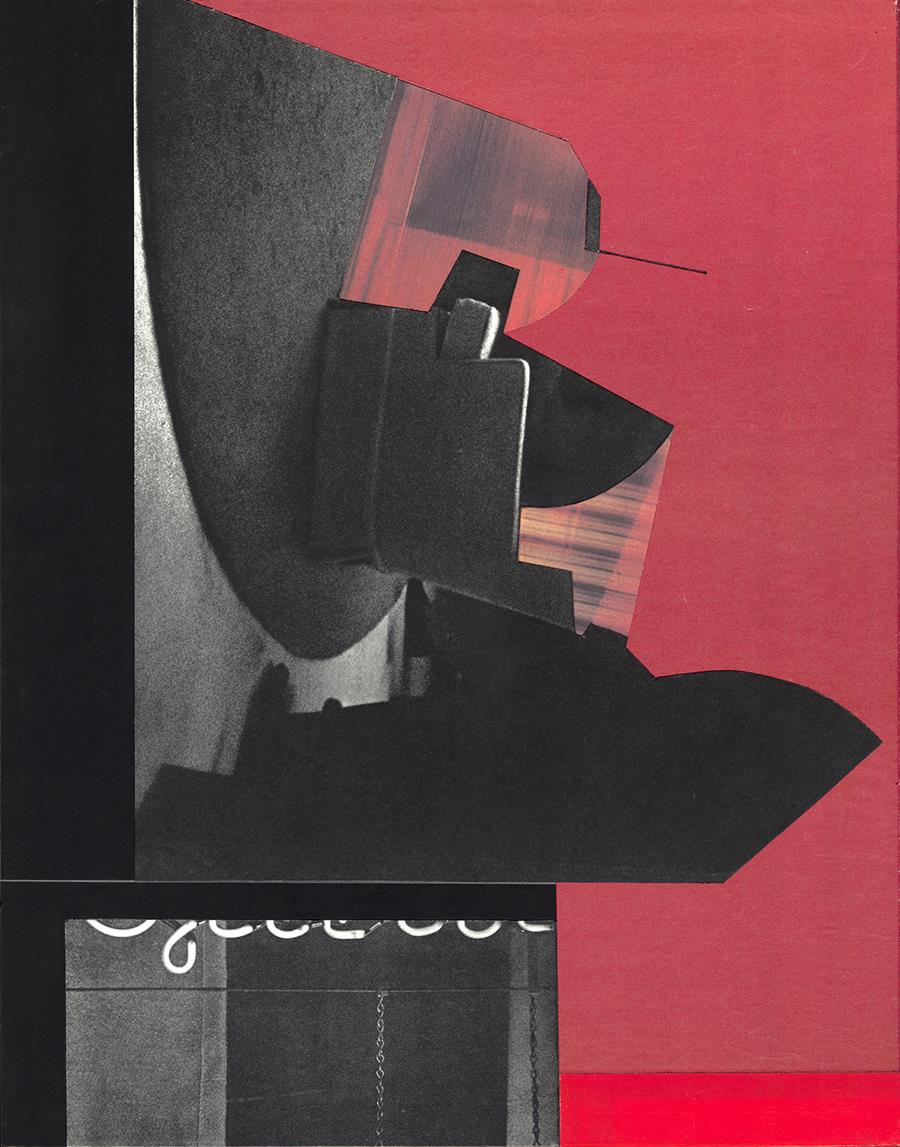
Paper collage, mixed media, on panel
11 x 14 in.
I describe my current practice as “peripheral dependency”. Given the sheer ubiquity of stimuli in modern life, both sensory and conceptual, our survival hinges on the silent work of an internal editor that manages the input, shielding us from cognitive overload. When speaking with someone, I often find direct eye contact to be intrusive and distracting. In an effort to listen better, I’ll look away, fixing my gaze on the surrounding space where the physical world is compressed into immaterial, two-dimensional form.
What risks being interpreted as disengagement is effectively a form of concentration through visual abstraction. Typically, collage speaks through the objective aspects of the appropriated material. By instead looking to the edges and eliminating the subjects or rendering them less recognizable, I aim to strip away connotation while retaining the emotional charge of the source images. These seemingly incidental moments that originally provided context, spatial depth, or counterform become my primary focus. Subordinate spaces assert their identities, colliding and overlapping to reveal aberrant visual syntaxes, communicating on their own terms.
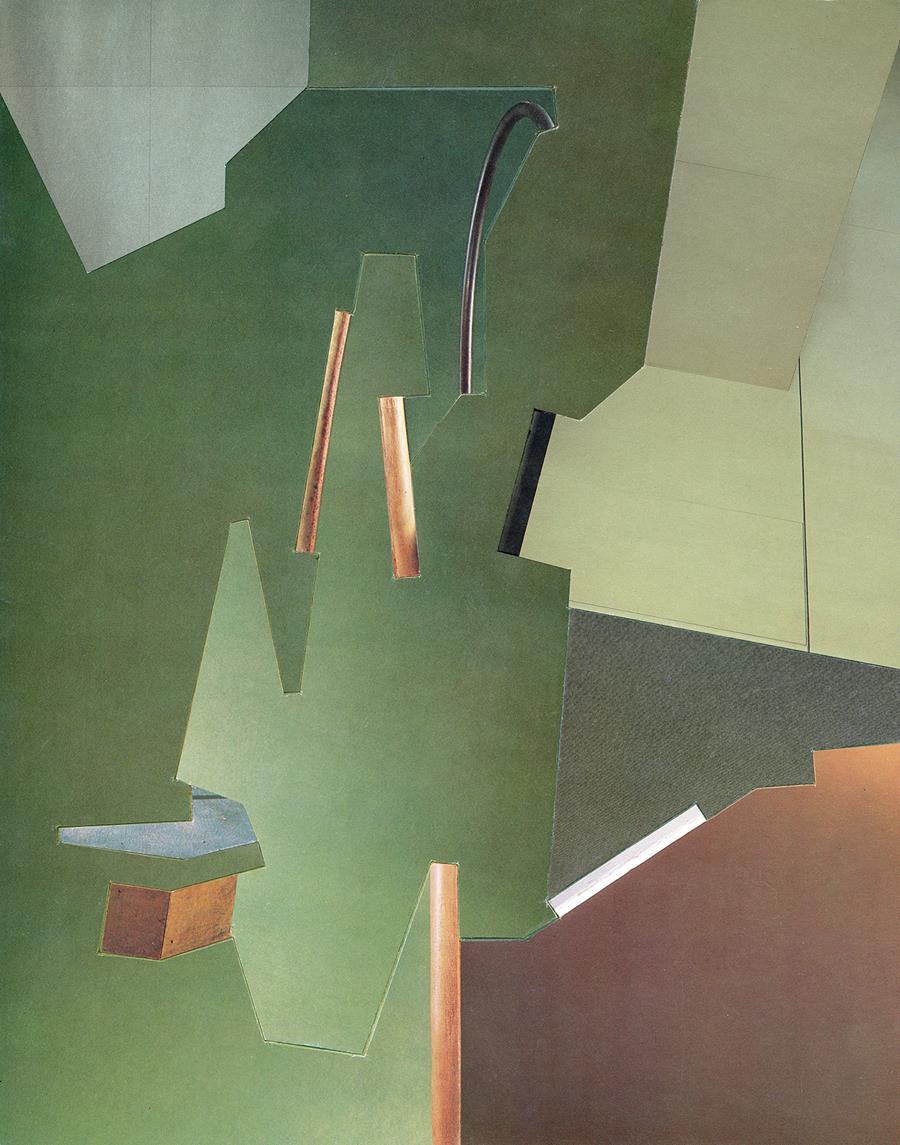
Paper inlay collage, mixed media, on panel
11 x 14 in.
I’m always indecisive about whether my work should be classified as collage or photomontage, but ultimately it doesn’t really matter. The “c word” still conjures dismissive voices in my head, and to be honest, I hate saying it out loud. Yet I fully embrace it as a practice. I think that collage endures because it’s accessible to everyone and resists gate-keeping. It’s the most immediate form of visual poetry that I can think of.
Although the works might be inherently expressive, they are conceptually agnostic. Assigning titles is my least favorite part of the process, but I do understand how they can function as an access point for viewers. Mine are generally some kind of reference to what I know about the appropriated material. For me, the titles are the least important thing about the work. They’re not meant to describe as much as spark the viewer’s imagination, if needed.
In the collection process, I employ a precise architectural/geometric approach to extracting material from its source, excluding and retaining until the remnant reveals itself as a unique object. It feels rather like drafting. By starting this way, I force myself into a puzzle-like construction when initially considering relationships. I try to use as few pieces as possible, which isn’t really apparent until you get up close. Like many collage artists, I pay close attention to moments of both connection and juxtaposition between the building blocks until the interdependencies become immutable. The interview process is slow and painstaking. I don’t commit to a composition until it gratifies my sense of sublime composition, and until my own perception of it fluctuates between recognition and pure abstraction.
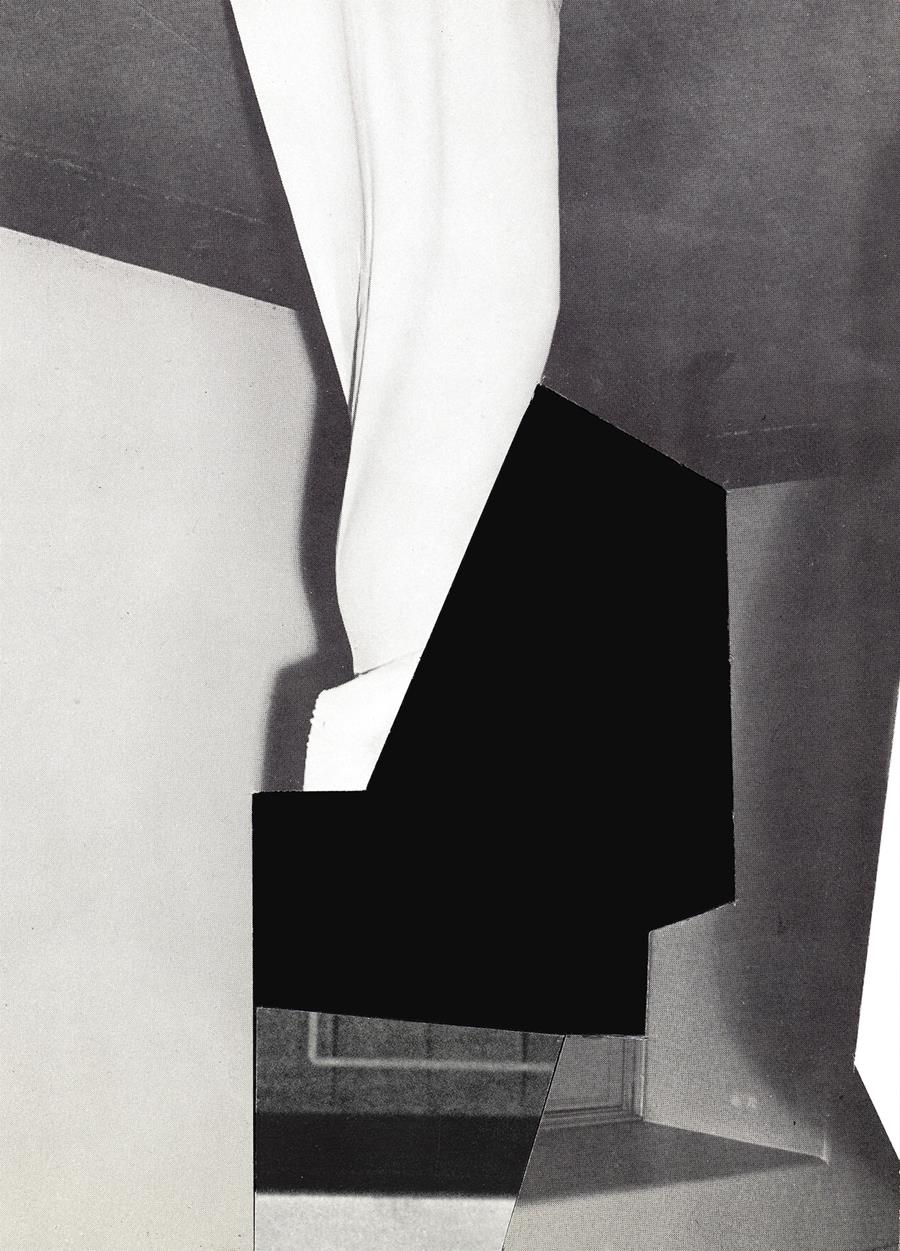
Paper collage, mixed media, on panel
5 x 7 in.
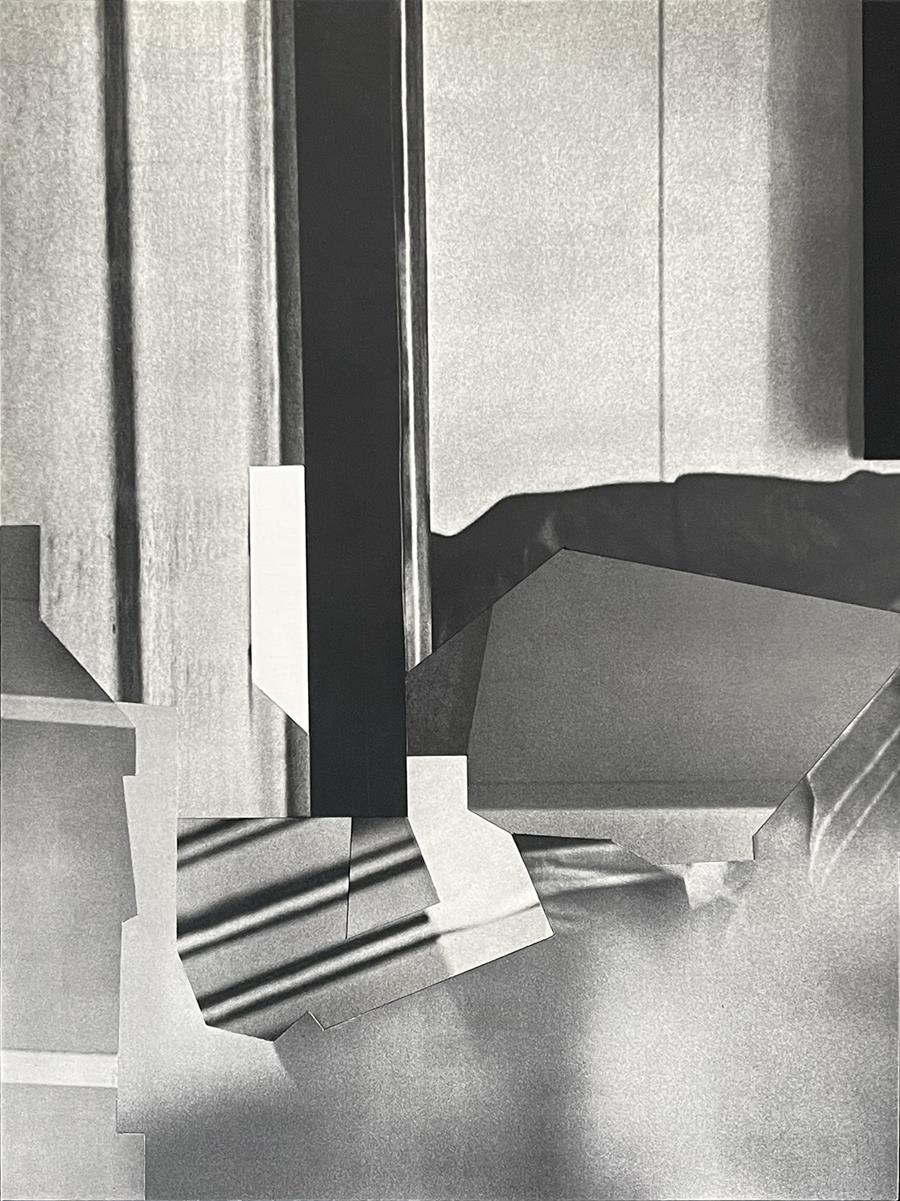
Paper inlay collage, mixed media, on panel
12 x 16 in.
I'm omnivorous when it comes to source material, but generally the larger the better. As a result, “coffee table” books tend to be useful, but paper quality and printing techniques also play a role. Because I happened to have wood panels in my studio, I started using them as the substrate for my collage work. It was totally counter-intuitive, but the challenge of working on a raised surface informed choices that I likely wouldn’t have otherwise considered.
I’m an admirer of John Baldessari, and in particular his use of graphic dots that obscure identity or obliterate focal points in appropriated photography. My work attempts to extend this idea by further de-centering the subject, so that its conspicuous absence is no longer the focus.
In the traditional sense of collage as a 2-dimensional pursuit, I don’t necessarily anticipate its essential definition and characteristics changing. However, I suspect that the materiality of the process and the thrill of cutting through ink on paper will continue to fascinate younger artists for whom digital imagemaking is neither revelatory nor beguiling. I also believe that collage’s ability to confuse demonstrates its potential for modeling ways to fuck with AI’s feedback loop, inspiring more niche and nuanced methods of visual communication rooted in humanism.
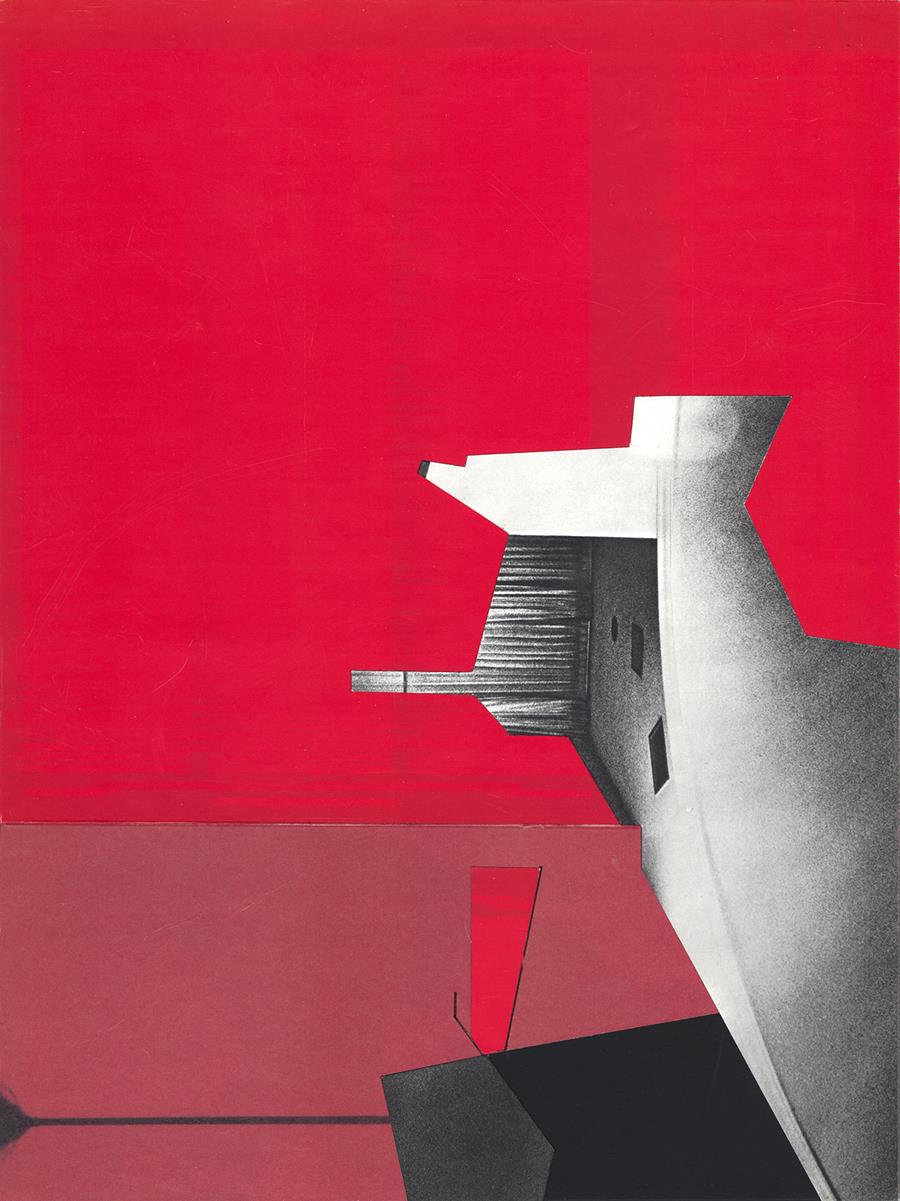
Paper collage, mixed media, on panel
12 x 16 in.
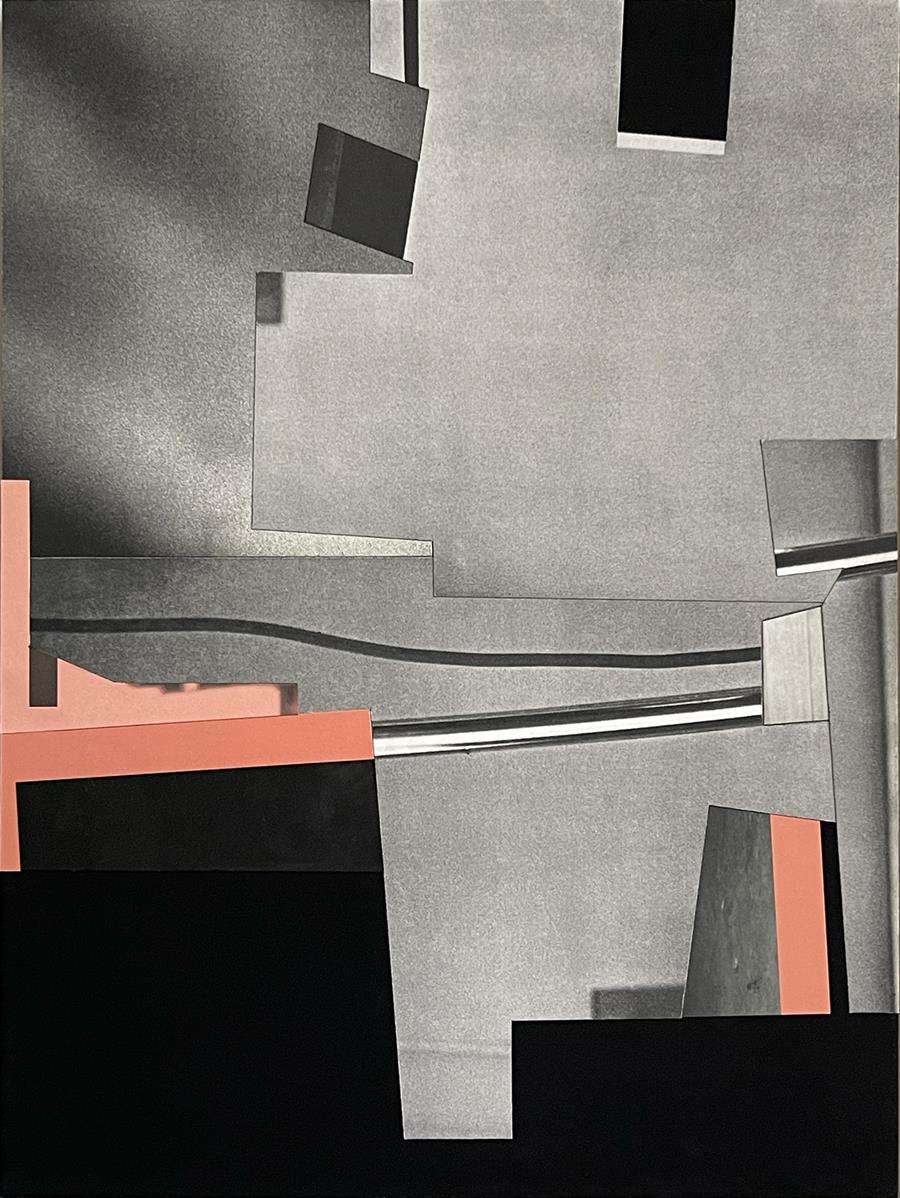
Paper inlay collage, mixed media, on panel
12 x 16 in.

About the Artist
Dan Evans is multi-disciplinary artist and designer whose experience spans across 2D, 3D, and time-based media, environments, installations, immersive theatre, and site-responsive performance. He holds an MFA from California Institute of the Arts (CalArts), and a BFA from Otis/Parsons. He is a tenured professor in the Department of Art & Art History at the University of Utah, and has also taught at Otis College of Art & Design and Art Center College of Design in Los Angeles. His work has been published in American Theater and Time magazines, and honored by the Society for Experiential Graphic Design, AIGA, The Lester Horton Dance Awards, and The James Beard Foundation.
For Your Viewing Pleasure
What to watch, read, and experience, as curated by the Collé team.

ANDREA CARETTO-BEESON is an interdisciplinary artist whose practice works at the intersection of sculpture, installation, and research. Drawing on ecological thought and material inquiry, their work often considers how natural systems, extraction, and circulation shape what we see as “nature” in the first place.
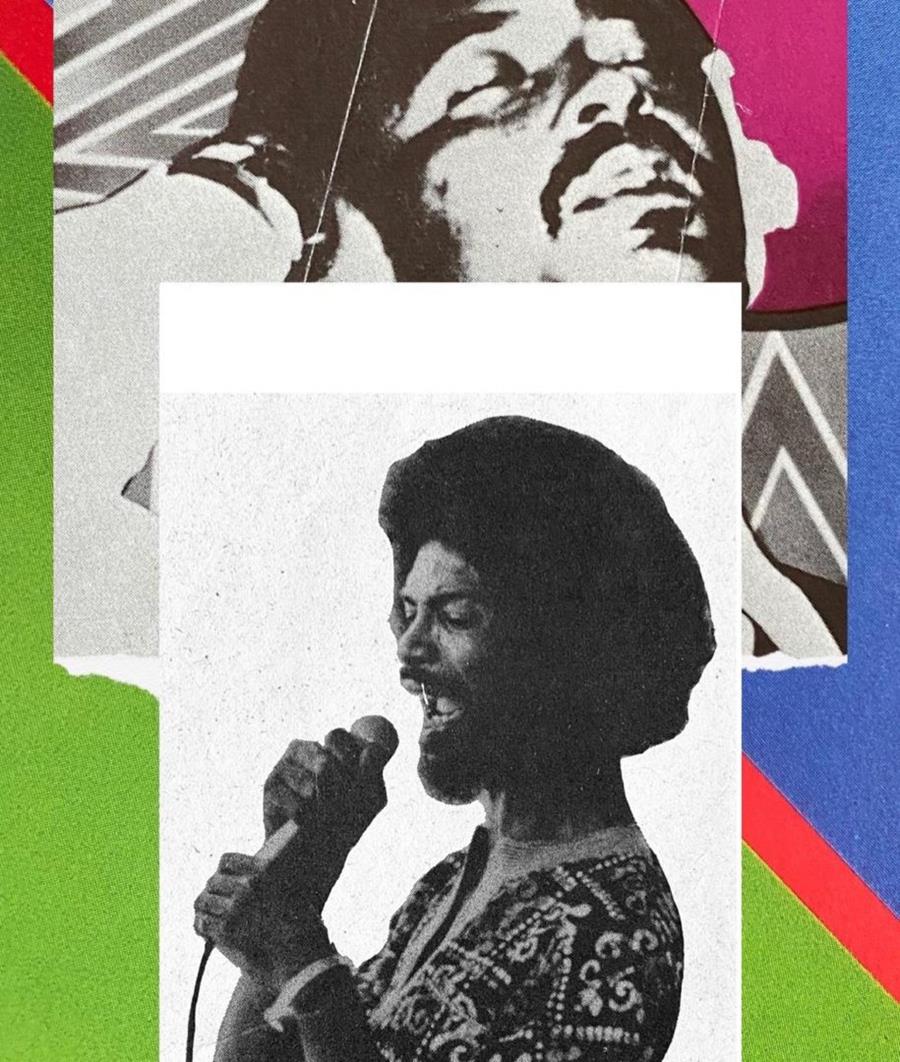
JIMMY TURRELL is a graphic artist and video director. He studied at Central St Martins School of Art. He combines a love of handmade collage, drawing, screenprinting and painting alongside digital techniques.

GELAH PENN was born in Beaver Falls, Pennsylvania and earned a BFA in Painting from the San Francisco Art Institute (1973) before settling in New York City. Her work has been shown widely, including at the National Academy Museum, Sculpture Center, Smack Mellon, and the Weatherspoon Art Museum. In fall 2026, she will present a major site-responsive installation in The Gravity of Light at the Boulder Museum of Contemporary Art.
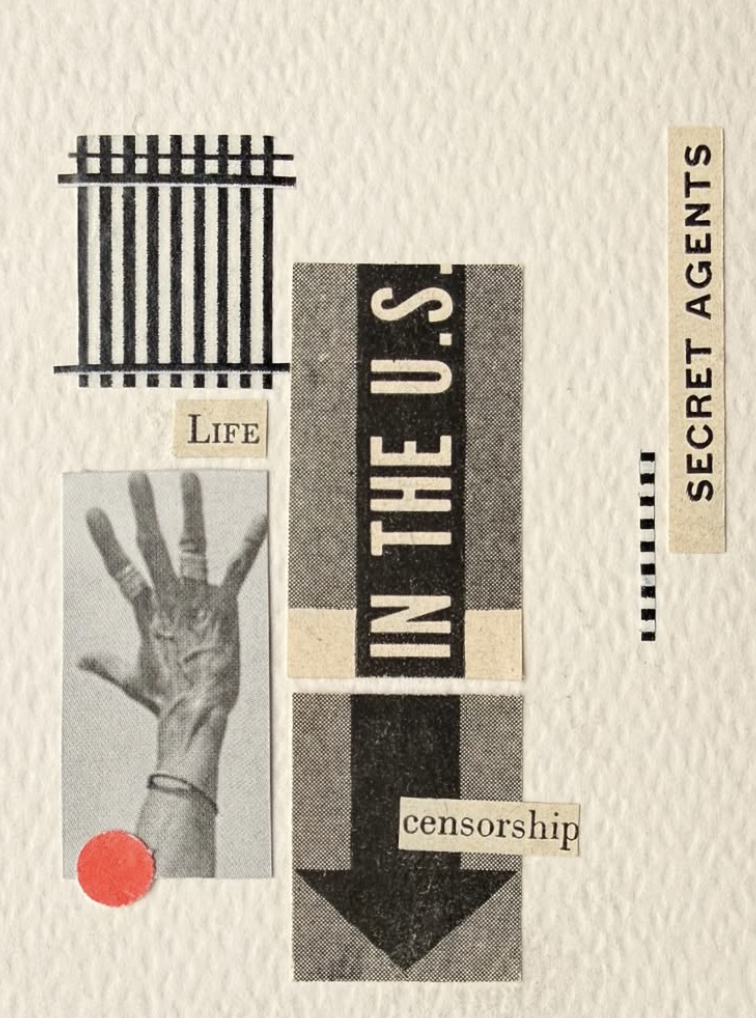
BARBARA GIBSON is a self-taught Polish illustrator specializing in digital collage. She co-owns Gibson Kochanek Studio with her partner, Marta Kochanek, based in Birmingham, UK, where they have spent over a decade blending historical visual language with contemporary design.

FRIDA PAIN comes from a family of collectors, and this history of curation and organization is readily apparent in her work. Resembling mini assemblages, these collages embody a language that speaks to different modes of sculpture. Distinctions between the two-dimensional and the three-dimensional are blurred as sculptures inherit new forms on paper.
Out and About
What to watch, read, and experience, as curated by the Collé team.
▼ VISIT
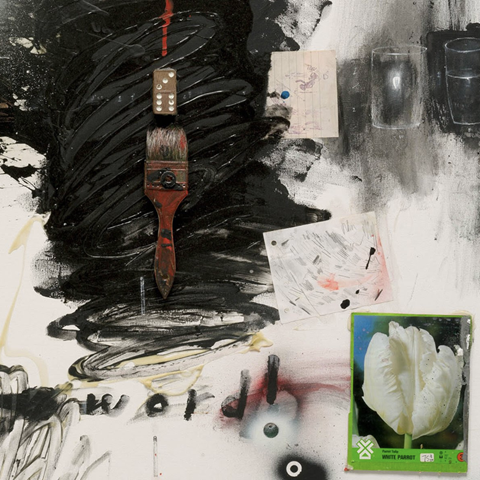
Raymond Saunders: Notes from LA
David Zwirner is pleased to announce an exhibition of works by Raymond Saunders opening at the gallery’s location in Los Angeles. Curated by Ebony L. Haynes, this will be Saunders’s third solo exhibition with Zwirner and will mark the first exhibition in Los Angeles devoted to the artist’s work in over a decade. On view February 24—April 25, 2026.
▼ VISIT
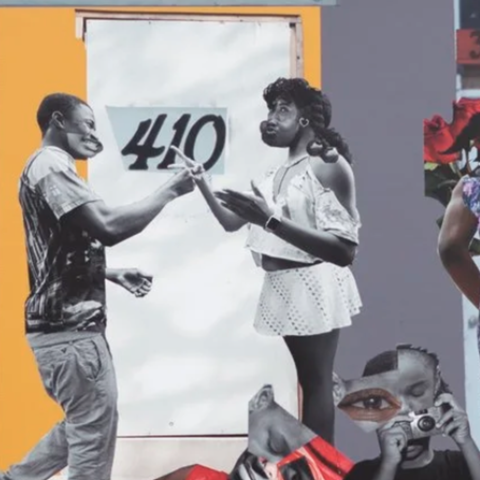
Black Collage: Aesthetic Legacies
Curated by Teri Henderson, this exhibition argues that collage is more than a cut-and-paste technique. It is a defining way Black artists produce culture in the 21st century. On view from Jan 17 - Aug 26 at The Delaware Contemporary.
▼ LISTEN
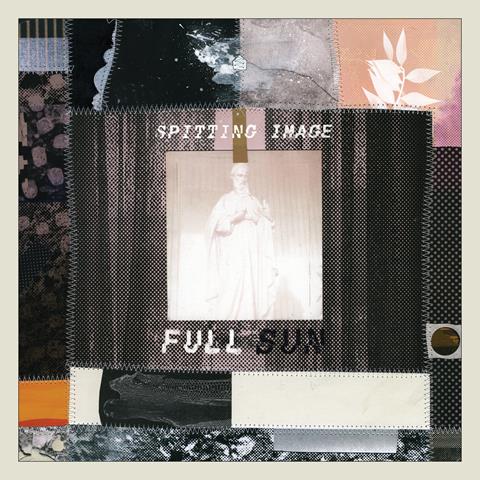
Full Sun by Spitting Image
Spitting Image is a Reno, Nevada-based post-punk band formed in 2012, known for their gritty, "high desert" sound and association with the local DIY scene. Artwork by Nick Larsen.
