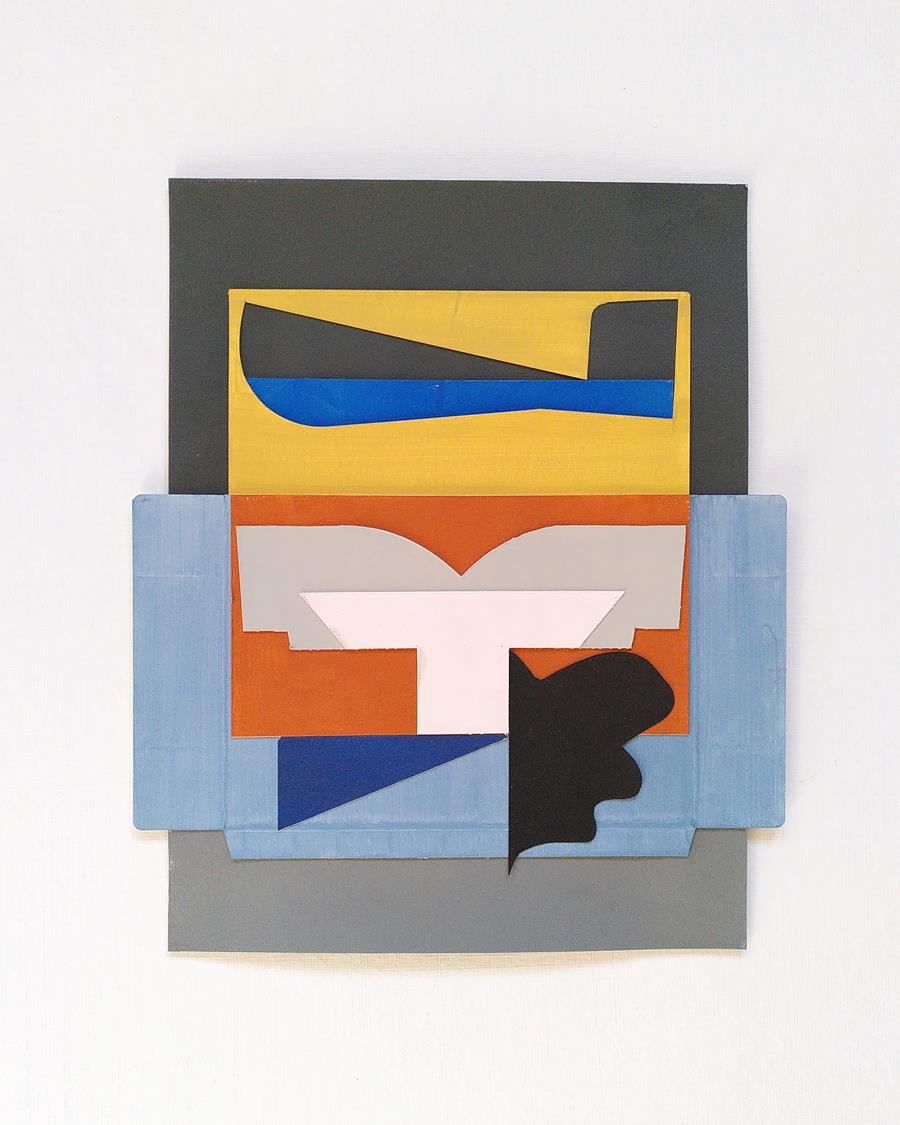
Acrylic on cardboard
27 x 32 cm
Jean Edelbluth
Jean Edelbluth’s painting and collage practice unfolds through an attentive, almost devotional relationship to color, in dialogue with the avant-garde. Working with everyday substrates like cereal-box cardboard, book covers, and salvaged scraps, he treats each piece as an animation of line and shape, choosing play, intuition, and inner rhythm over fixed composition.
In the Words of the Artist
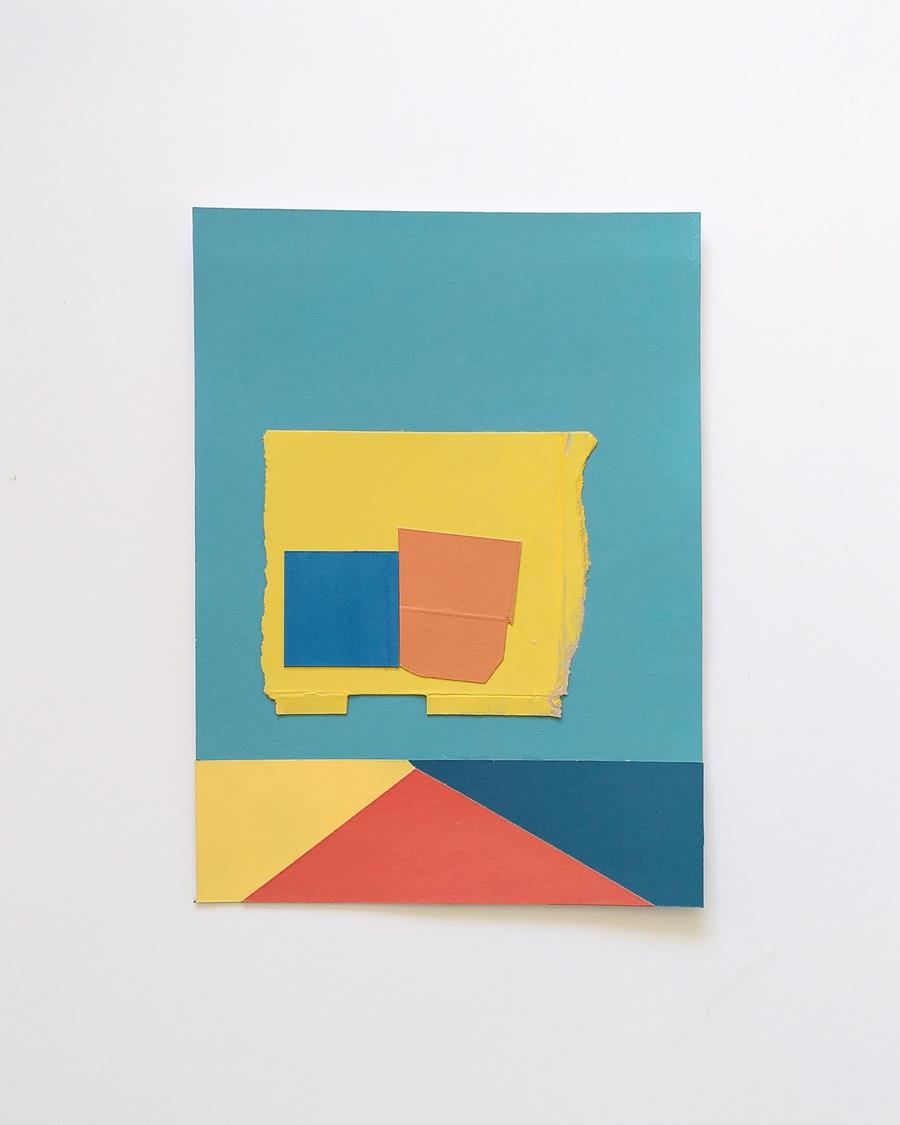
Acrylic on cardboard
19 x 26 cm
When I began my research in painting, I confined myself to the grid, in a way inspired by the work of Agnes Martin. Control was therefore paramount. But the search for this balance and the movement induced by the interplay of lines and forms gave me a feeling of incompleteness. It was then, manipulating pieces of cardboard cut from my children’s cereal boxes, painting them, and then entering into this assembly process - sometimes immediate, sometimes slower - that opened a more intuitive path for me: it’s clear now that the concept of beauty stems from play, from the pleasure and joy that arise from it. It is precisely this spiritual approach that fascinates me.
But I haven't forgotten where my interest in collage came from: in 2016, I became fond of the work of Marcelle Cahn (1895-1981), who was born in Strasbourg. It was while listening to her talk about her practice in an archived interview that my relationship with the world found an echo in her collages. A humble approach, full of joy, that speaks to us of childhood and solitude, appropriating the game of stickers, as if the shadows of the planets were seeping into her little pieces of paper. It is a question of establishing the essence of an inner rhythm, of perceiving, beneath the apparent simplicity of things, an unfathomable grandeur. I like to think of a collage not as a composition, but as an animation of lines and shapes, in the same way that a poem disciplines words and sounds.
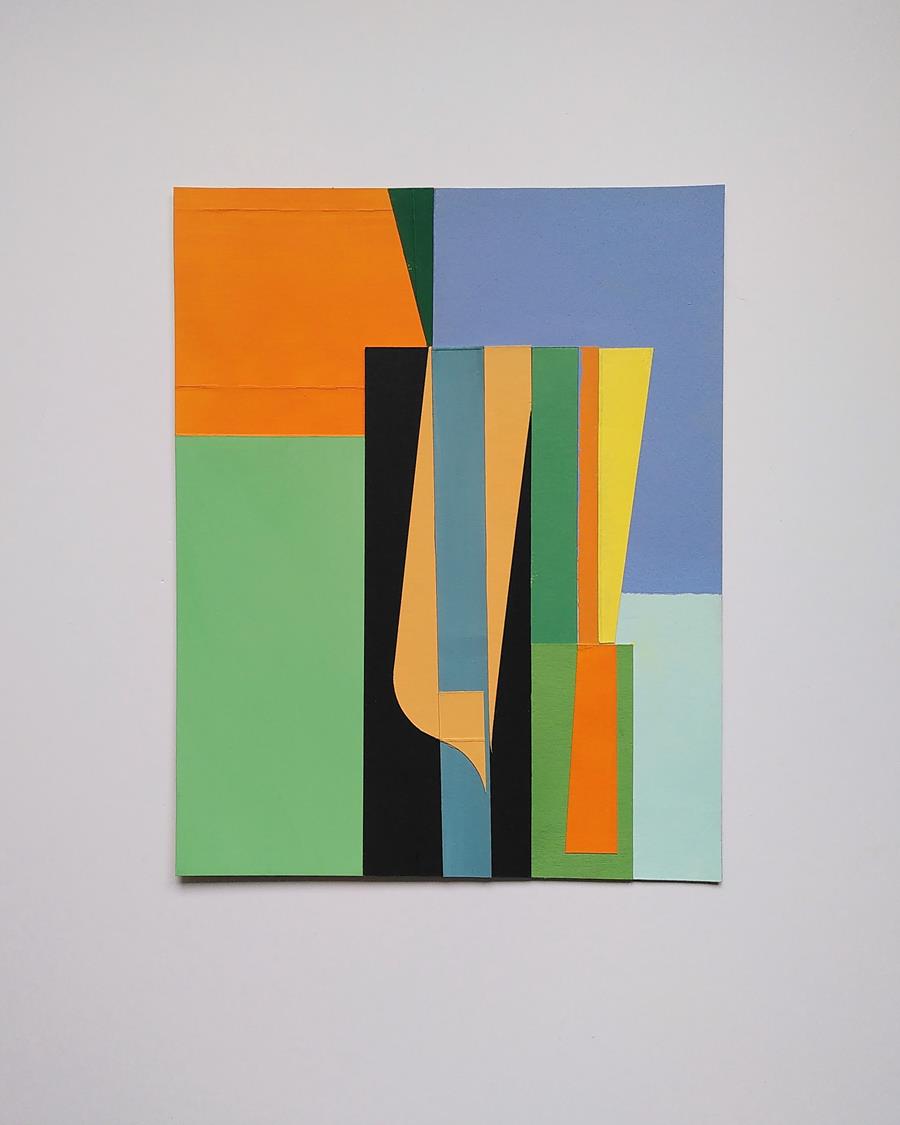
Acrylic on cardboard
28 x 35 cm
It’s primarily the combination of colors that captivates me. Once I’ve found the right intensity, I allow myself to be surprised by the choices of forms and the dynamic that emerges. I like the idea of stirring up the muck of what’s brewing inside, then waiting for everything to settle and gently deciphering what reveals itself. It’s often a real struggle, but what a delight when a truth dawns before my eyes. As for having a strategy, I quickly learned to rely on my intuition, which meant picking up scraps from torn cardboard and making use of the tabs on the boxes, including pieces of tape covered in acrylic paint.
In relation to my work as a painter, I have imposed a small format on myself: 19 x 26 cm, always dictated by the size of cereal boxes. I have sometimes used a collage as a model to reproduce on a larger scale on canvas.
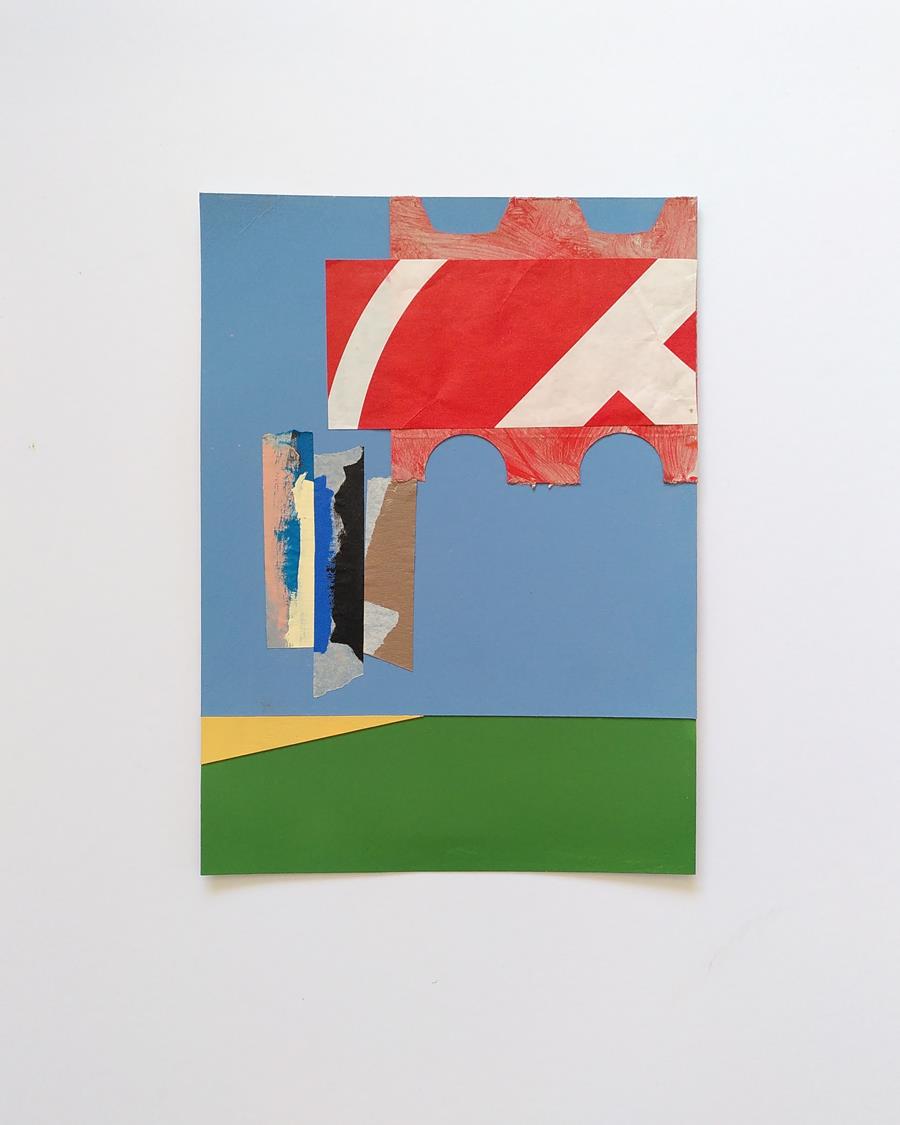
Acrylic on cardboard
19 x 26 cm
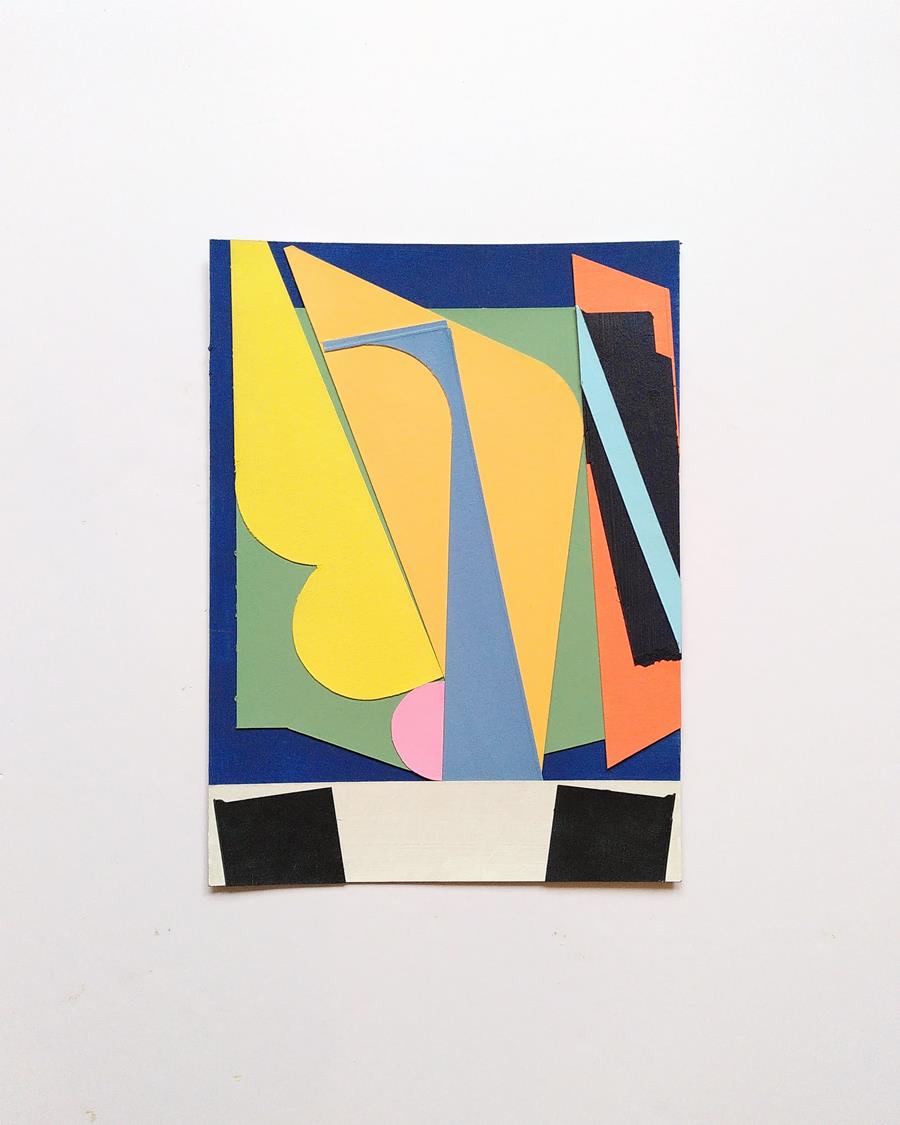
Acrylic on cardboard
19 x 26 cm
I save the cardboard boxes as long as my children continue to eat cereal! But I also like to use the covers of old books. The last time was at the waste disposal centre, where a man was clearing out the contents of a house, including some old books in German that I was able to rescue from the rubbish. Last year, I worked for four months in a factory that cuts and assembles boxes for chocolatiers and other luxury brands. I was able to collect scraps and incorporate new shapes into my collages. There is definitely an appeal to things that are not usually considered.
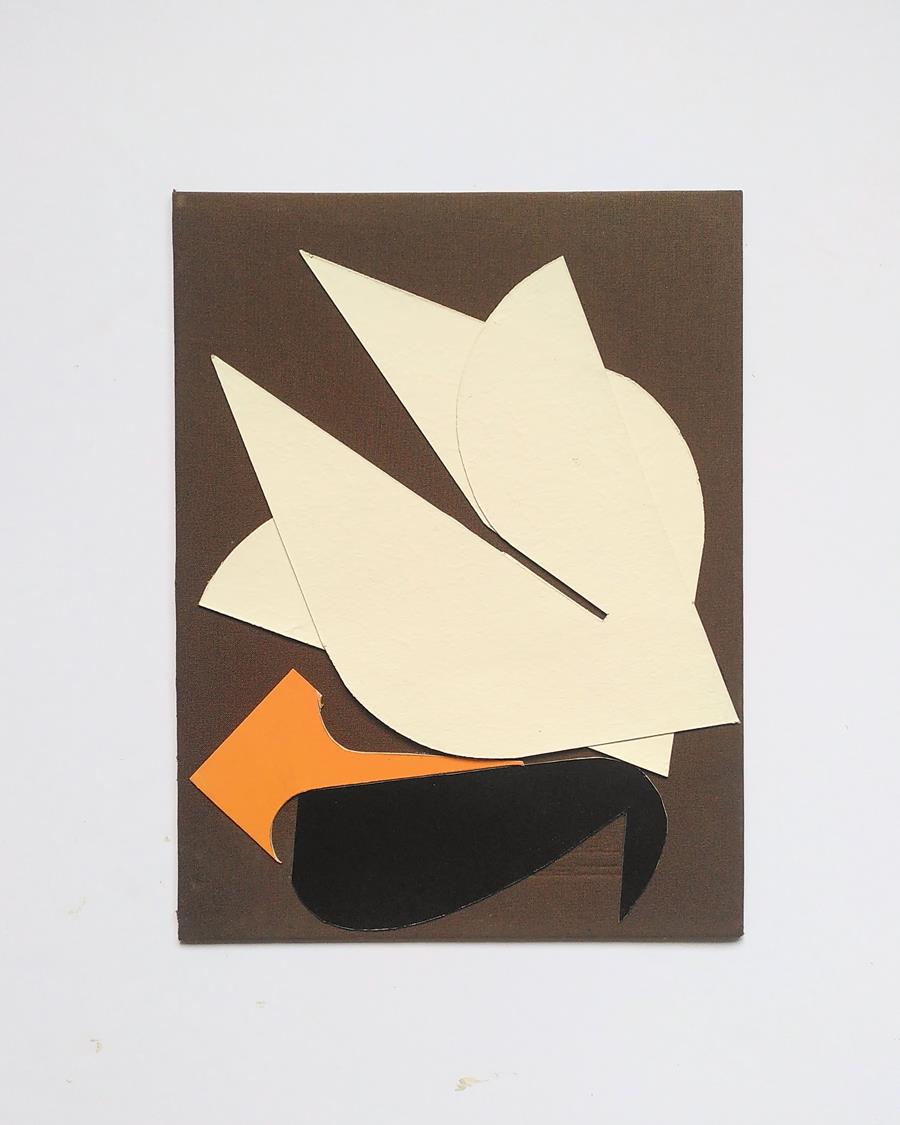
Acrylic on cardboard
19 x 26 cm
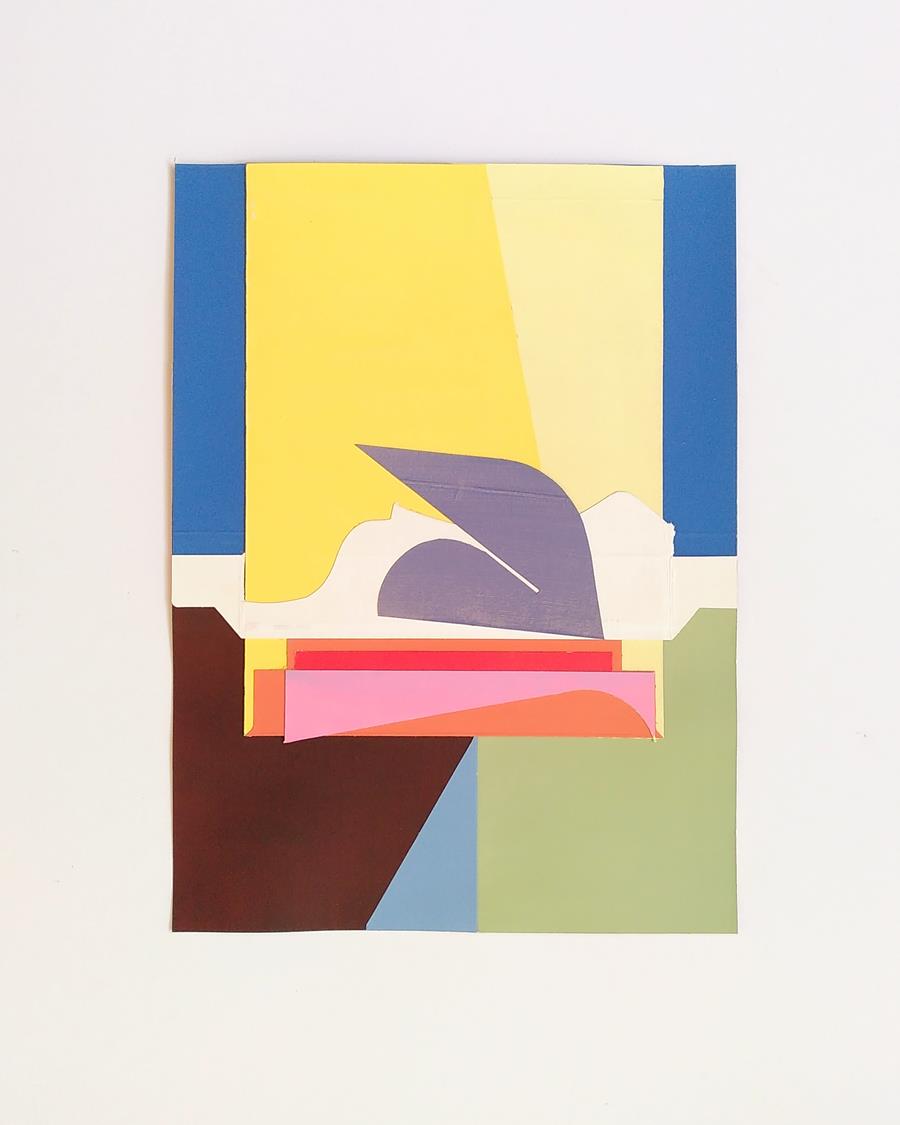
Acrylic on cardboard
25 x 35 cm

About the Artist
Jean Edelbluth (b. 1986) lives with his family in Bouxwiller, a small town near Strasbourg in eastern France. He studied design at the Strasbourg School of Decorative Arts, then trained as a shoemaker in an Alsace factory, a trade he practiced for nine years. He later joined a small non-profit publishing house, where he develops greeting card and book offerings. Working within publishing has given Edelbluth a steady, independent creative rhythm, which he extends through painting, where he continues to explore a long-standing fascination with color. He is also a father of five
For Your Viewing Pleasure
What to watch, read, and experience, as curated by the Collé team.

MARCELLE CAHN (1895–1981) was a French abstract painter associated with the interwar Parisian avant-garde. Invited by Marcel Duchamp, she exhibited with Société Anonyme in 1926. Her work moves between geometric and lyrical abstraction, often crossing into collage and relief.

SUZANNE DUCHAMP (1889–1963) was a French painter and collagist linked to Paris Dada. Blending text, collage, and graphic forms, she made tight, witty works that treat the image as a coded message shaped by modern life.

GEORGES HUGNET (1906–1974) was a French poet, critic, and visual artist closely associated with Surrealism. He worked across writing, publishing, and collage. He is especially known for La septième face du dé (1936), an influential artist’s book that fuses poetry and collage into a single, uncanny visual language.

CLAUDE CAHUN (1894–1954) was a French writer and artist known for staged self-portraits that probe identity, gender, and performance. Working closely with their partner Marcel Moore, Cahun moved alongside Surrealism while resisting easy classification.

JACQUES PRÉVERT (1900–1977) was a French poet, screenwriter, and collage artist. Best known for Paroles (1946) and his screenplays for Marcel Carné, and Les Enfants du Paradis (1945), he also made poetic collages from found images and ephemera, extending his cut-and-recombine sensibility from language into visual form.
Out and About
What to watch, read, and experience, as curated by the Collé team.

▼ READ
Jana Frost Unlocks Handmade Worlds Through Collage
Based in London, Frost creates immersive, surrealist worlds primarily out of paper works she assembles herself from her humble, at-home A3 paper printer. Interview by Charlotte Beach.

▼ READ
Dorothea Tanning - A Surrealist World
by Alyce Mahon, Yale University Press.
This study overhauls canonical accounts of Surrealism, demonstrating how one woman artist expanded its activity and expression in bold new ways for the modern age.

▼ LISTEN
Genius of Modern Music Vol. 2 (Expanded Edition) by Thelonious Monk
This 1952 album shows Monk inventing a new kind of jazz, with melodies that sound jagged and playful and rhythms that land a little “off” on purpose. The expanded edition adds more tracks that make it easier to hear how original his style was and how much it influenced modern jazz.
