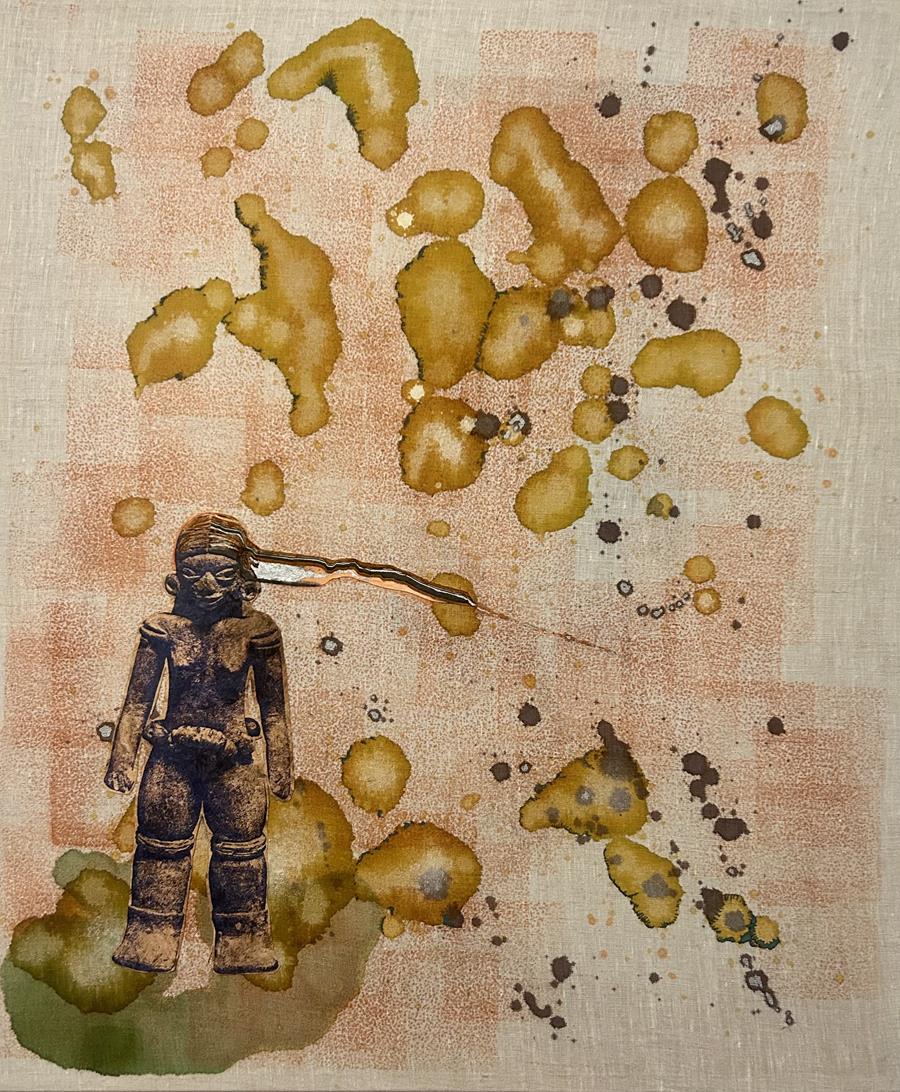
Mixed media on linen
28 x 24 in.
Sara Cardona
Sara Cardona works between collage, sculpture, and installation. Drawing from her own photographs of Mexico City’s architecture and everyday found objects, she braids cultural timeframes and turns the image into a portal, where scale slips, meanings mutate, and unexpected alignments surface. For her, collage is a conductor: an amuletic, intuitive practice of channeling possibility until form resolves, right at the edge of chaos.
In the Words of the Artist
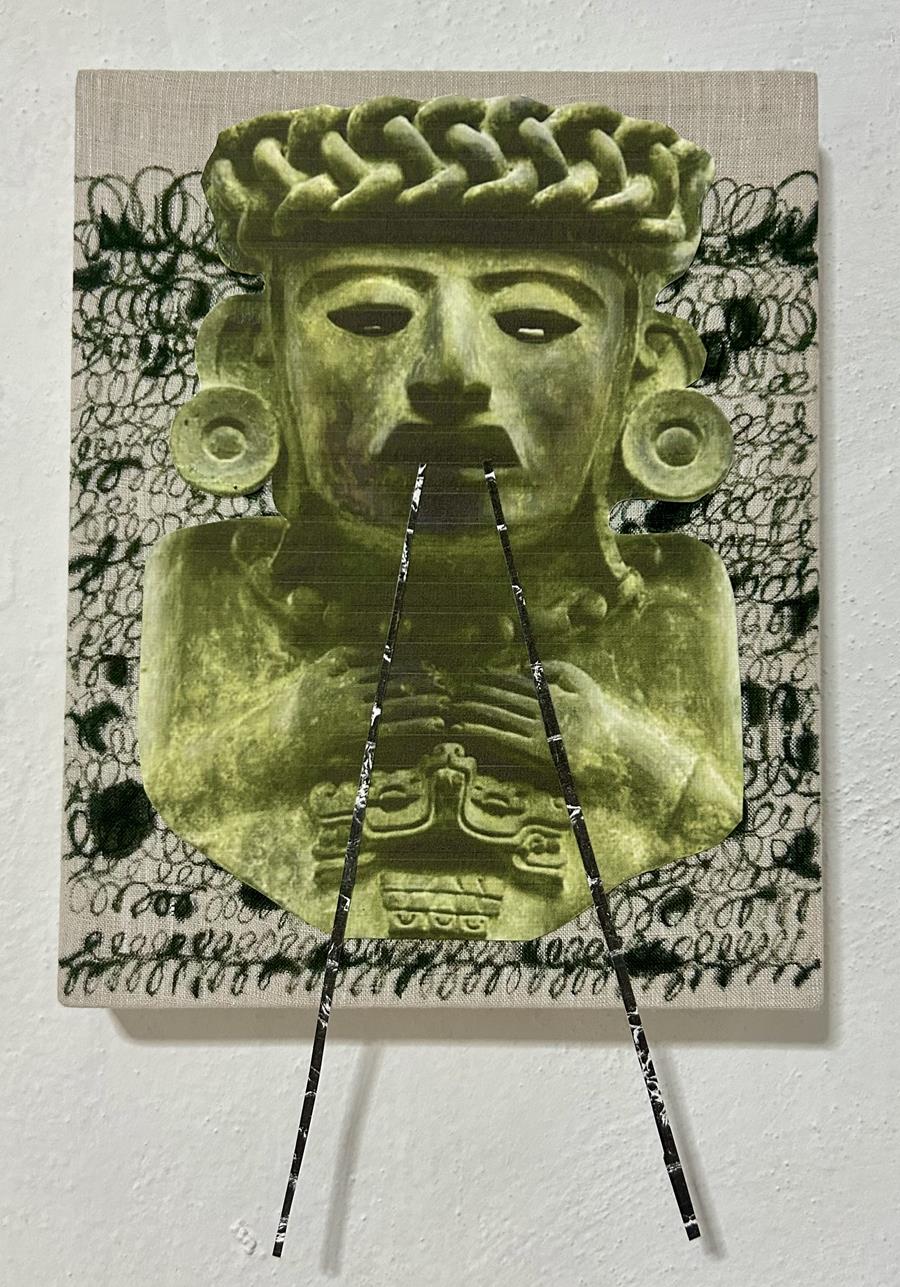
Mixed media on linen
12 x 9 in.
Collage is a conductor! It's liberating and magic. It frees me creatively, as it allows me to connect intimately with what is present in my current field of experience, without necessitating the generation of images solely from my mind or an interior source. This is where I feel it is magic – like a medium, collage lets you toggle forms physically, feeling organic connections in an emergent manner. I think of it like a conductor, and active channeling of possibilities until they collapse into one singularity. I like the feeling of being surprised by what they wish to become.
Collage feels like a psychological approach to creating. It allows me to build continuously on an idea with the same elements until I begin to deepen my connection to them. I think of scissors like a drawing tool. Currently, I am working with my own photographs that I print in different sizes, so I can play with scale. Other times, I have been mesmerized by printed materials that offer tonalities and textures that become the subject matter.
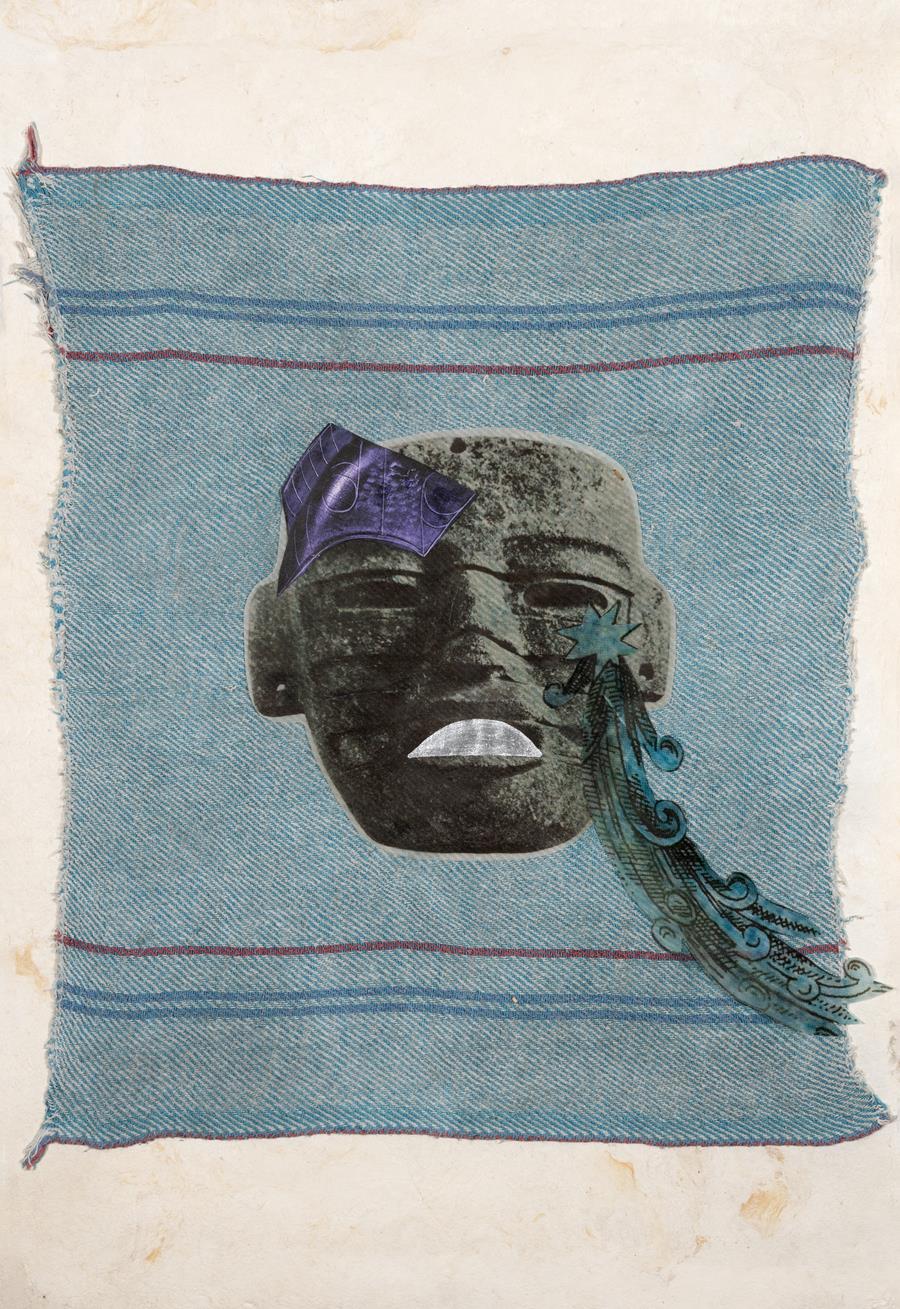
Mixed media on amate paper
28 x 22 in.
It is precisely the multiple aspects of collage as a process, and the varying energy levels they require, that keep me engaged. I like to work on several things at the same time – and depending on what level of focus I have, there is always something to draw me into the studio. Some days, I just want to sit and look at materials, gathering and enjoying their qualities. Other times, the energy is about cutting and cutting and cutting. According to my energy levels, working on moving things about might be in order – other times, it's the exactitude of pasting. I rarely do it all in one sitting – I like to have piles of images, objects, photographs, drawings, etc., both on tables and pinned to the wall so that I can just hang out in their company – that is when I best feel connections and conductivity.
I like to be drawn to images and objects, and trust my intuition that they are calling out with purpose. I think I am a responsive artist, feeling the environment I live in and allowing the universe to be in me, somehow. For example, I lived in Dallas, TX, for many years, and it is definitely a car culture. It was a little dangerous, but I often found myself taking photographs of highway overpasses, the sky, signs along the highway, and then also collecting lots of glossy fashion magazines because the city definitely has a flashy side. These all made their way into a series of ever-expanding futuristic armatures made of concrete and diamonds and clouds.
Now that I am back in Mexico City, I haunt the open-air book-sellers and the Tianguis a lot, where I am frequently charmed by the objects of daily life. I also take lots and lots of photographs of the windows, doorframes, tiles, grids, and pre-Columbian figures in museums– without knowing why, these were the things that I was drawn to. Then the process of collage, of working the same images repeatedly, allowed me to realize an emergent theme– an interest in the overlap of timeframes in the urban sprawl, and an obsession with portals.
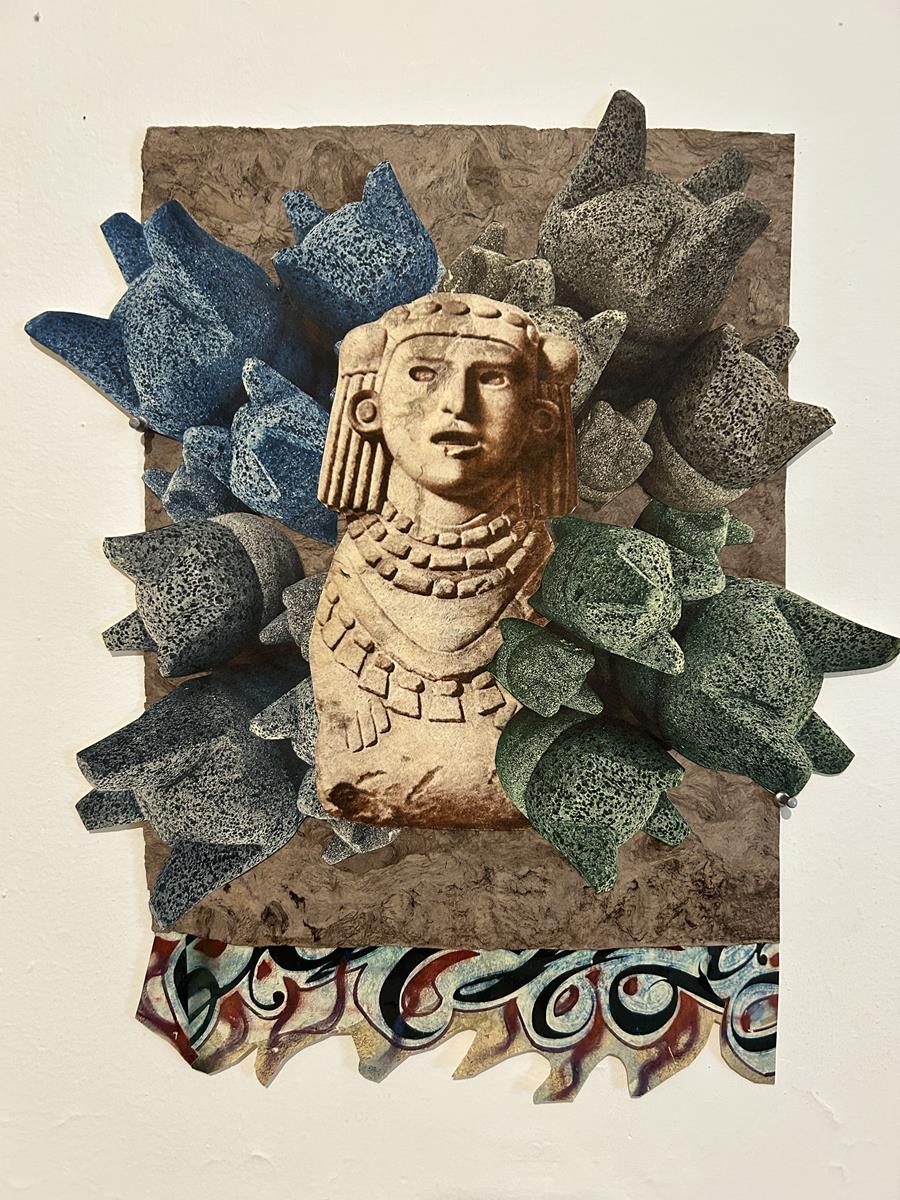
Mixed media on amate paper mounted on wood panel
26 x 20 in.
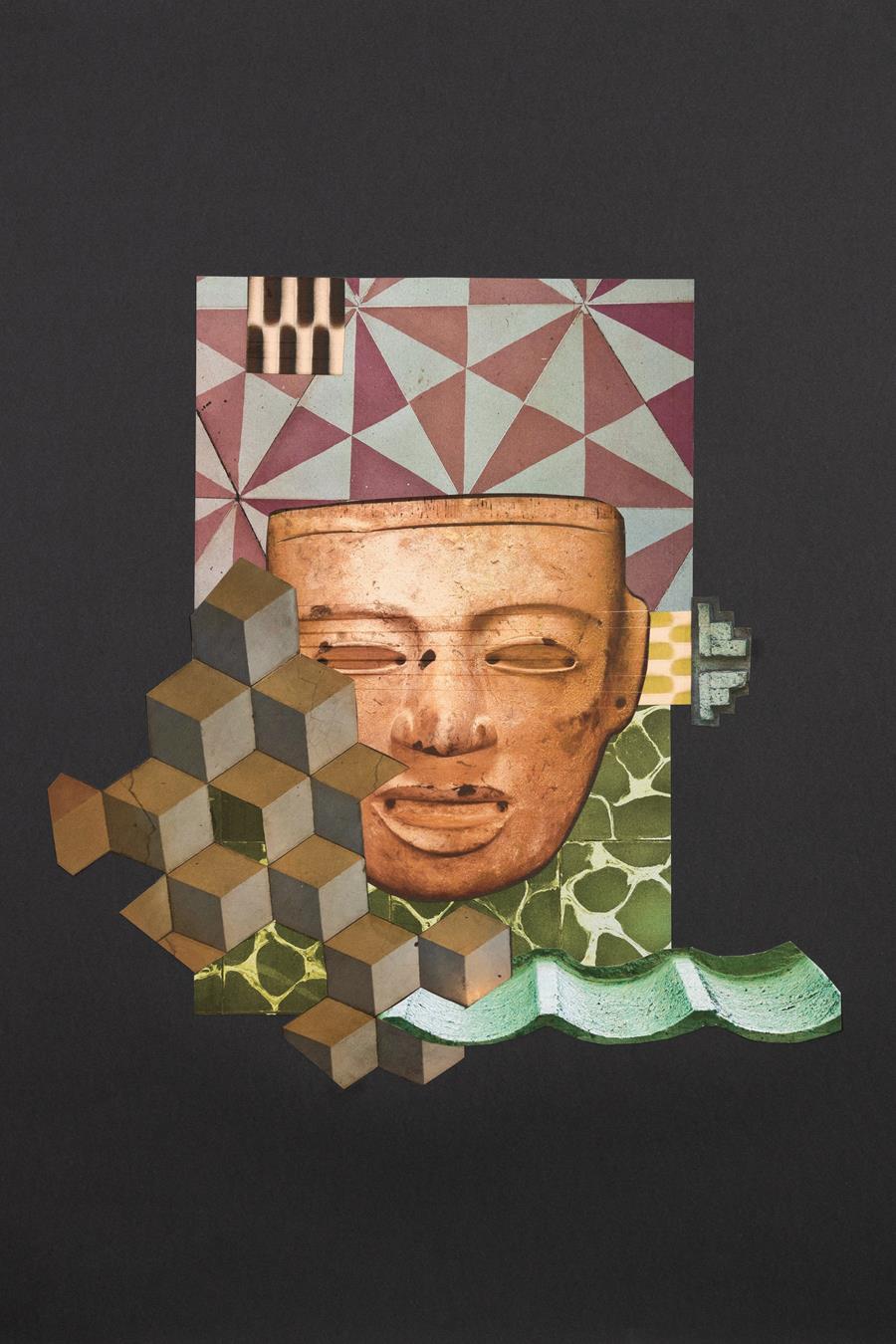
Archival ink printed on wood panel (image source is hand-cut collage)
20 x 18 in.
Although I have worked in distinct styles of collage, there is a type of science fiction or futurist quality to what I produce. The idea of historical events as fixed in a past relative to our time frame is rich fodder– so much of collage is working with print material or pre-existing detritus, so there is some degree of engagement of latent (historical) content.
My current pieces are about animating cultural objects relegated to museums, institutional spaces that are intended to be educational ( this is often dubious), but the LAST space that the objects were intended to inhabit. When I visit these sculptures, so many of the pre-Columbian figures have gaping mouths and eyes- they are on shamanic journeys- and they give me the sensation that they are not just seeing an ancestral deity, but maybe looking into the future– in other words, looking at us. So I take them home through my photographs and return them to the contemporary world– in my case, Mexico City with its graffiti, jergas, tire shops, and subterranean streams.
Collage and art making in general is more of a magical act for me. I want them to function more enigmatically- like incantations or amulets. I want them to transmit and have animus. One of my favorite aspects of collage is how it mirrors “Edge of Chaos Theory” – a concept I am fascinated by. This theory states that the strongest creative output for societies happens just on the brink of chaos-disintegration of rigid structures and systems, but not a collapse into an abyss of nihilism. Great collages often have this feature that reveals an act of letting things fall apart to the point that you have to reconstitute with ingenuity- not with what you already know might work, but something totally not anticipated. Yet in the elements themselves, the new body is constituted.
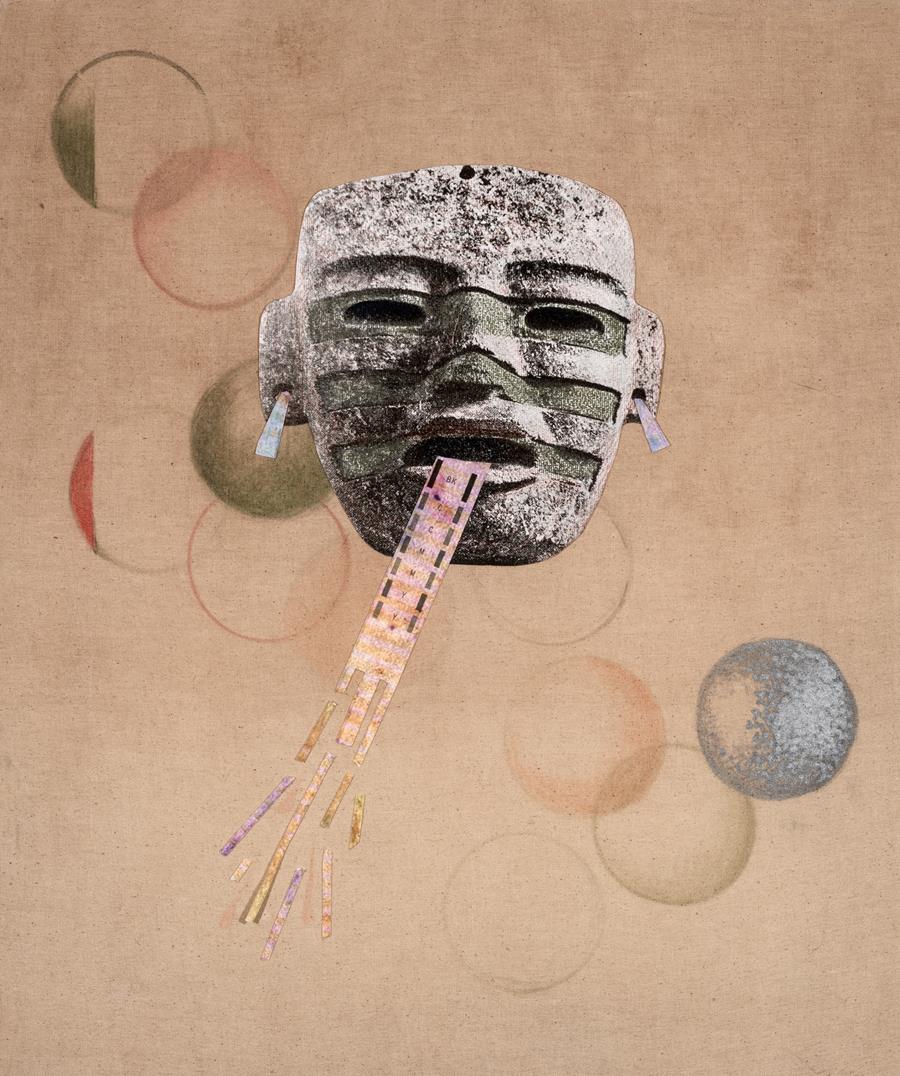
Mixed media on linen
24 x 18 in.

Mixed media on arches paper
20 x 18 in.

About the Artist
Sara Cardona was born in Mexico City, lived in Texas and currently lives and works in Mexico City. She uses the analog process of cut-and-paste to create collages in the tradition of early twentieth-century assemblage and in a nod to the editing process of film. These collages often become the foundation for sculptures. Her pieces are based on architecture-armatures, cultural objects and the lattice of space-time.
Her recent collages are based on her own photographs of buildings and objects in Mexico that hint at a porous net of cultural space. Larger sculptures and installations are influenced by the aesthetics of theater, rasquachi, or low-tech “hacks” and arte povera. They are assembled with the materials of daily labor, such as office paper, hardware store finds, and domestic tools. As an artist who grew up in a family involved in the film and theater industry, her practice involves the intersection of artifice, spectacle, photography, and scenic construction.
Sara Cardona has exhibited across the U.S. in Chicago, Los Angeles and various cities in Texas. Her work is included in collections such as the Federal Reserve Bank in Dallas and has been exhibited in Texas Women: A New History of Abstract Art at the San Antonio Museum of Art, and in the Nasher Public Window Series at the Nasher Museum of Sculpture. Her first public art commission, Seeding the Trail, was installed on the Katy Trail in Dallas in 2022. Sara is a recipient of the Nasher Artist Grant, the Dallas Museum of Art Kimbrough Award, and a Rockefeller grant. Sara studied at the Kansas City Art Institute, received her BA from UT Austin, her MFA from Tyler School of Art in Philadelphia, PA, and attended the Skowhegan School of Painting and Sculpture in Skowhegan, ME.
For Your Viewing Pleasure
What to watch, read, and experience, as curated by the Collé team.

RAFA ESPARZA (b. 1981, Los Angeles) is an artist working across performance, sculpture, and installation. Using materials like adobe, earth, and vernacular architectural forms, he treats making as shared labor and social ritual. His practice foregrounds queer Chicanx experience while tracing how place and history are carried, staged, and remade.

PERLA KRAUZE (b. 1953, Mexico) studied in Mexico City and later in London at Goldsmiths and Chelsea College of Art. Her work is in collections including Museo de la Estampa (Mexico City), Museo de Arte Contemporáneo de Oaxaca, and the Manuel Felguérez collection in Zacatecas.

TROIKA is a contemporary art group formed in 2003 by Eva Rucki (b. 1976, Germany), Conny Freyer (b. 1976, Germany), and Sebastien Noel (b. 1977, France). Based in London, they work across sculpture, film, installation, and painting to examine how emerging technologies reshape perception, social relations, and the natural world. Their work engages questions of human and non-human agency, consciousness, and representation, with particular attention to artificial intelligence, algorithms, and data.

TREVOR PAGLEN is known for investigating the invisible through the visible, with a wide-reaching approach that spans image-making, sculpture, investigative journalism, writing, engineering, and numerous other disciplines.
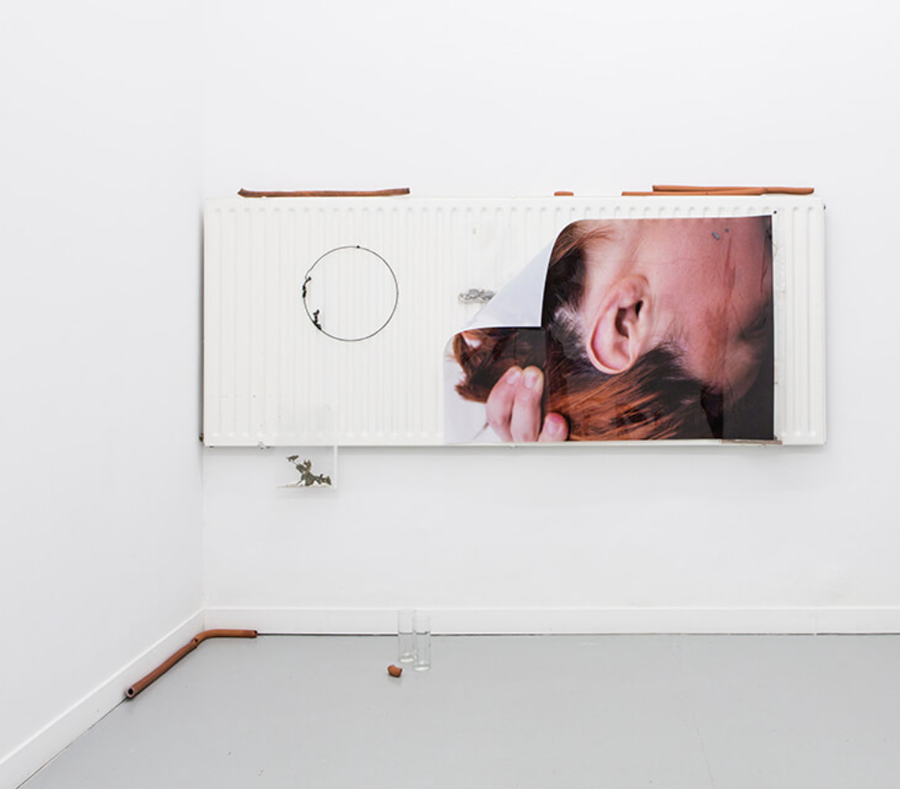
JUNE CRESPO (b. 1982) is an artist based in Bilbao whose sculpture moves between body and architecture. Working with cast concrete, metal, and found industrial elements, she builds modular forms that register touch, pressure, and absence. Her installations read as provisional structures where fragments brace and interlock, linking material process to vulnerability and repair.
Out and About
What to watch, read, and experience, as curated by the Collé team.

▼ WATCH
Alice Isaac on collage making and playfulness in practice
Isaac kicked off London’s Nicer Tuesdays in November with a talk filled with passion for analogue collage-making, thoughts on today’s rapidly shifting image culture, and the importance of engaging in crafts that involve hand-made processes.
▼ COLLECT
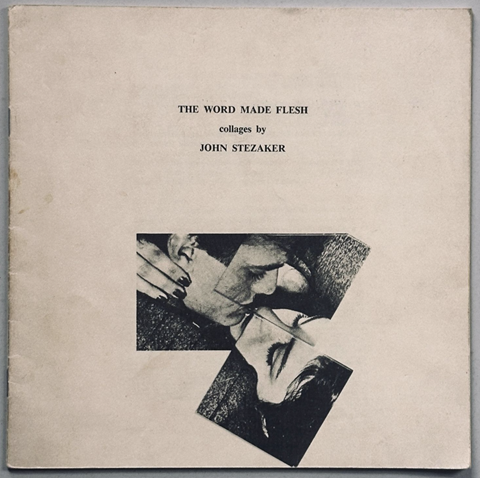
The Word Made Flesh by John Stezaker
Early exhibition catalogue showcasing the cut-up work of John Stezaker held at The New '57 Gallery, Edinburgh in the late 70's. The anti pop artist - Stezaker's collages became highly influential to the WBA's during the mid 90's.

▼ LISTEN
Bacchanal by Gábor Szabó
This seminal 1968 jazz-rock album by Hungarian guitarist Gabor Szabo was recorded for Skye Records and features his acclaimed 60s quintet with guitarist Jimmy Stewart. Blending psychedelic, Eastern, and Latin influences, it creates a dreamlike, melodic sound that highlights Szabo’s warm guitar tone and subtle use of feedback.
