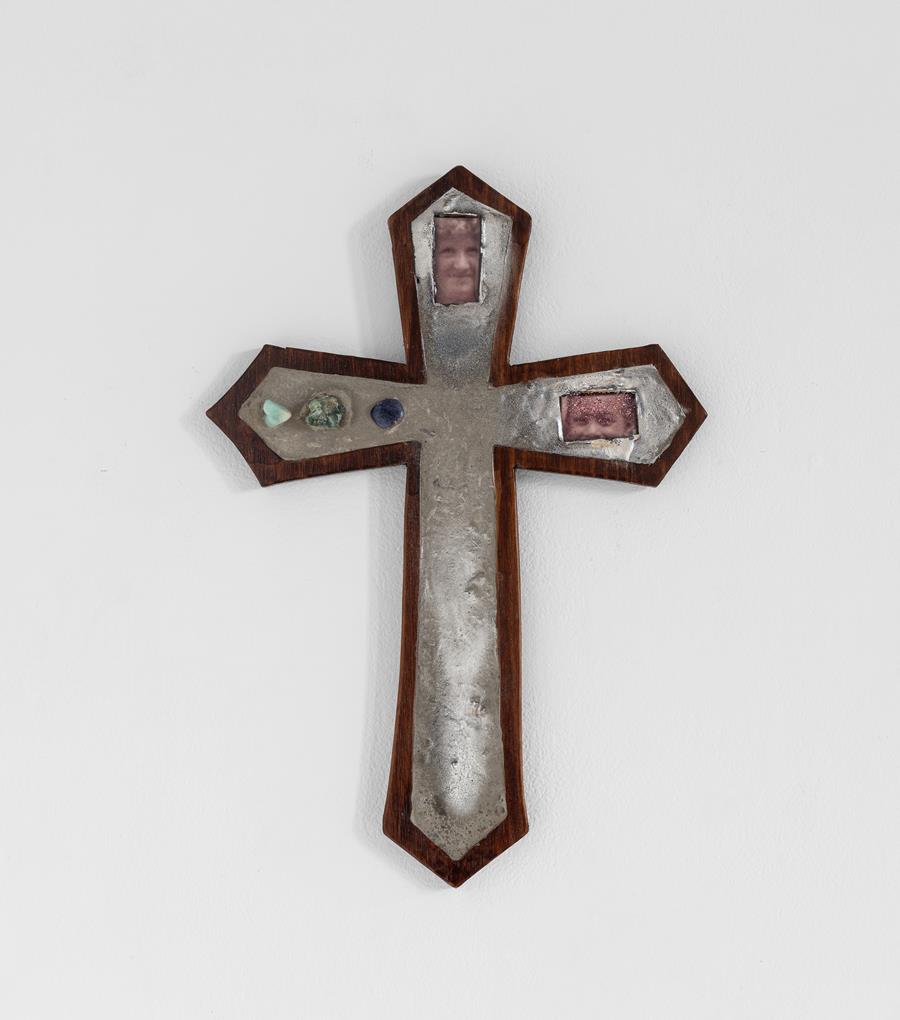
Emerald, lapis lazuli, fluorite, inkjet image, spray paint, cement on pine wood
20 x 14 x 2 in.
Onajevwe
Onajevwe is a Nigerian-American artist whose work explores ancestry, domestic space, and the power of the gaze. Working with wood, resin, textiles, and images drawn from family archives, she creates sculptural collages that preserve intimate moments of Black life while foregrounding memory and materiality. Her practice approaches collage as both a material process and a spiritual framework, where images, ritual, and lineage converge to reframe the canon of art history.
In the Words of the Artist
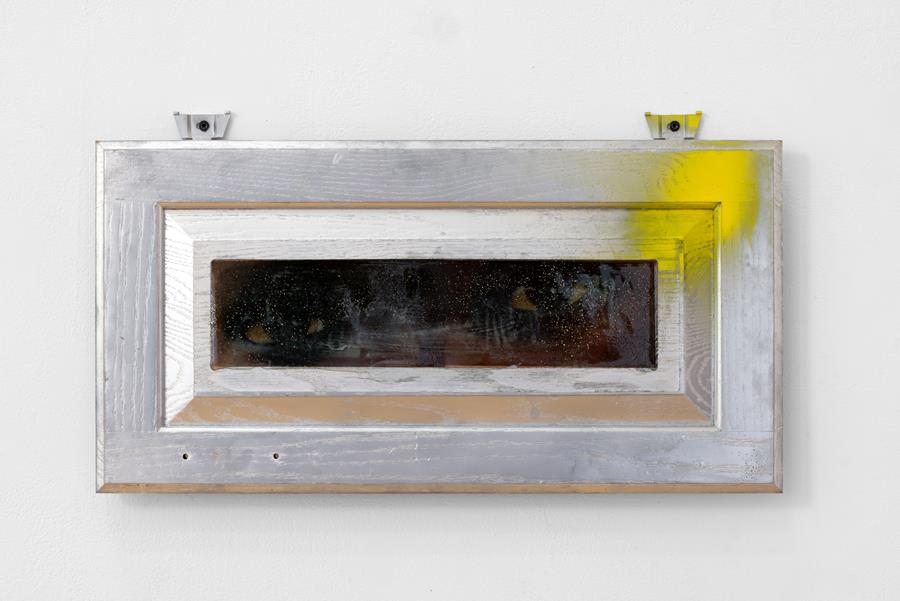
Inkjet image, glitter, spray paint, resin on found wood
30 x 12 in.
Collage is formative in my process of making. I am captivated by the tension between images when placed together. I like to think of my practice as sculptural collages, first driven by a desire to tell a specific story, one done through object and image. I am constantly thinking about gaze and how neutrality is rarely extended to my perspective. This drives my practice. What message can I superimpose in these images that feels so powerful to me?
Initially, I found myself working with found wood and found imagery, in pieces like Giovanni and Harvest. Now I have returned back to my personal family archives, working with images, in this process I am calling ‘adornment.’ Its basis is still collage, but now I am thinking of ways to converge with the domestic space. In my most recent piece, Gemini, an image of my maternal aunt and uncle (Gemini twins) is adorned with glitter and resin and sits beside a rich blue velvet that I have diamond tufted. This then sits in a handcrafted, stained wooden frame.
These images mean a lot to me, so adorning them only feels right. At the end of the day, these are collages that allow me to assert my gaze and ultimately somewhat redress the canon of art history to include voices like my own. One day, I hope for my gaze to be included in what is considered neutral.
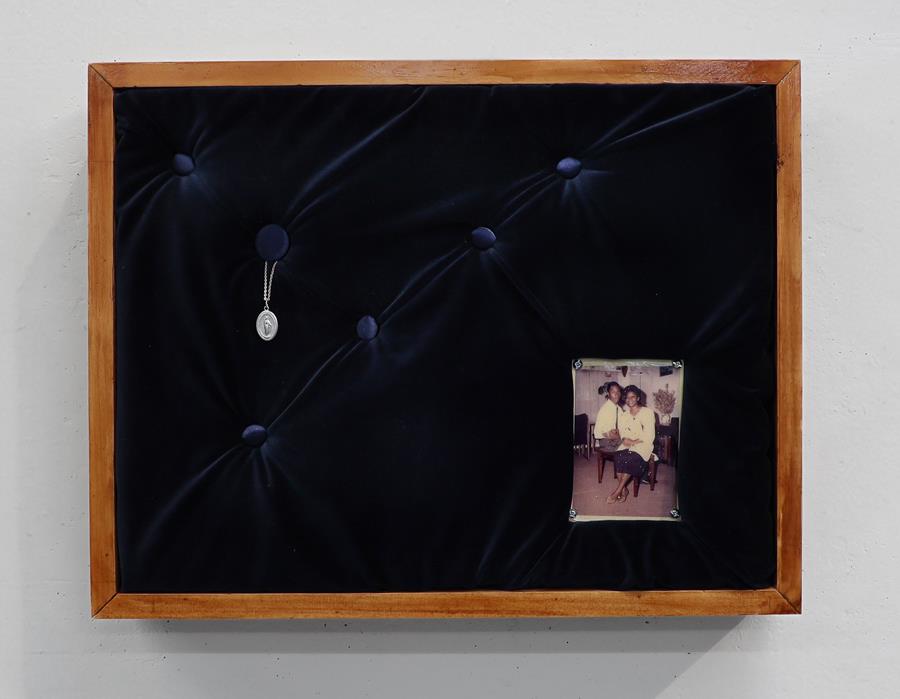
Velvet, resin, inkjet image, charms, wood
20 x 15 x 4 in.
My studio is definitely an amalgamation of the things that exist in my mind. My ancestors truly guide me through my practice. I truly feel them when making, I work extremely intuitively, ideas that come to me are usually directly drawn into my sketchbook, and ruminate in there, till it is made.
My entire experience in the studio is a ritual, burning sage, soft music, and lots and lots of happenings. I truly allow myself to make what comes to mind; there is a lot of work with wood, cement, epoxy resin, metals, textiles, found and family archives, and sentences that play in a loop in my mind. These allow me to feel deeply in tune with the process of making.
Making for me is a meditation, and the process is definitely more important than the outcome, though a positive outcome is always satisfying, especially when the vision I had in my head is brought to life. I am a very messy maker. I like to think of mistakes made in the studio as ‘happenings'; that truly draws me closer to what I am making, and a lot of the time leads to my favorite pieces. Ritual is everything to me, both in my art practice and in my personal spiritual practices.

Resin, Amethyst, Glitter, Frosted Mylar on Found wood
70 x 45 in.
Gaze is extremely important to me, and my place in the collective gaze of humanity drives my making. Wood feels both natural and commodified to me, and the image trapped in resin feels like a vital act of image preservation. I am most of all drawn to domestic sensibilities and the magic that happens in a Nigerian household through storytelling. These stories are usually told in the comforts of one's home, in the living room, or in the kitchen. It is this feeling I am trying to evoke in my work.
Permanence to me is relative; on the one hand, I make these works that feel really important to me, in hopes that in 100 years people could look at a piece of mine and see themselves in me. Whilst on the other hand, I love the ephemeral nature of things, I think there is permanence and beauty in the passing of time and in the decay of things. I think as an artist and human, my ultimate goal is the enlightenment of all sentient beings, so if my work grows the collective consciousness in any way, then my role here has been somewhat permanent.
It is a mixture of things. I maintain a spiritual practice for the enrichment of my being. I am deeply fascinated with that which is unseen and have had many encounters with the formless. I think my constant quest is to rid myself of my egoic nature and attachment to form. This has truly healed me spiritually.
The acknowledgement and gratitude towards my ancestors has created a really magical space for me in the studio, the feeling that I am not alone. I also think that for me it is important to remember that regardless of who I am or become as an artist, the most important thing is my oneness and our collective oneness with the universe, not the accolades or material entities.
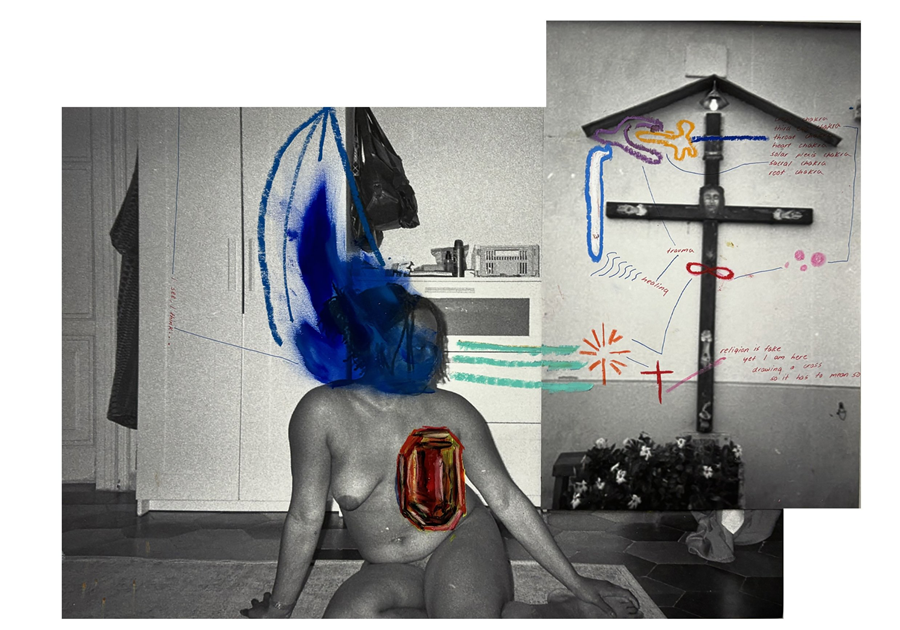
Oil pastel, oil paint on photograph
12 x 8 in.
The number 4 is deeply personal to me; it is my constant reminder that I am on the right path. I am one of 4 children, and things usually show up to me in fours. My maternal grandfather is a very important figure in my life; he is a symbol of protection for me, due to all the adversities he has been through in his life, and still, he remains calm and certain in something higher. I actually have a tattoo of the number four in his handwriting.
The number means a lot to me; I have multiple spray-painted fours in my studio as a reminder of my life path. I also collect momentos in fours, and in my most recent piece, Gemini, the Virgin Mary pendant is one of four I collected in an antique shop recently.
As a black woman, I make work about black people, because that is who I am and what I know. I think my main focus is on the black diaspora and the many ways we exist. I am Nigerian, but I am also British and American. I have now lived and existed in what would have been the transatlantic slave trade triangle. I think the ‘politicizing’ of my work is really a mirror for where we are as a society. I like to think that the themes I explore are pivotal in redressing the canon, and most of all, I am deeply happy and excited to be one of the many voices redressing the canon.
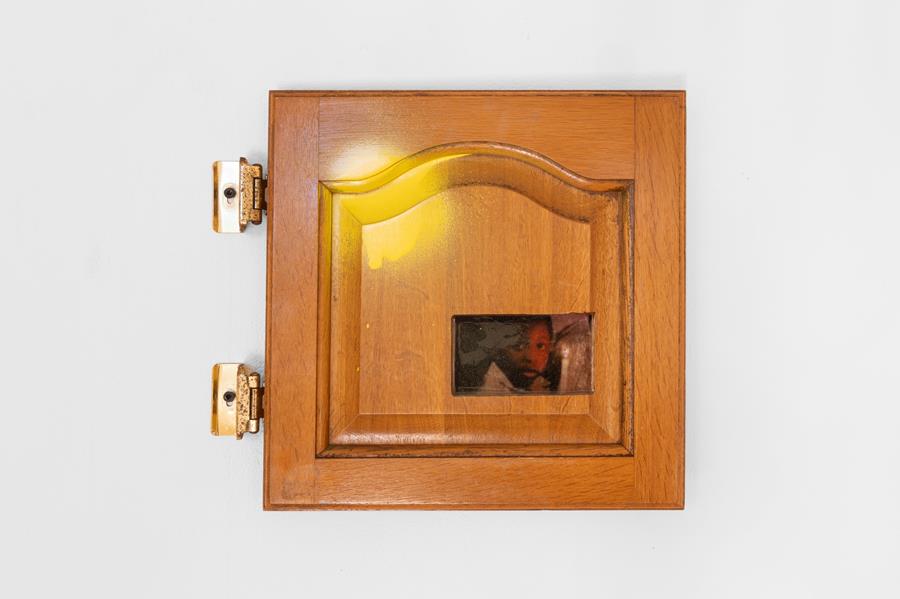
Inkjet image, glitter, spray paint, resin on found wood
12 x 12 in.
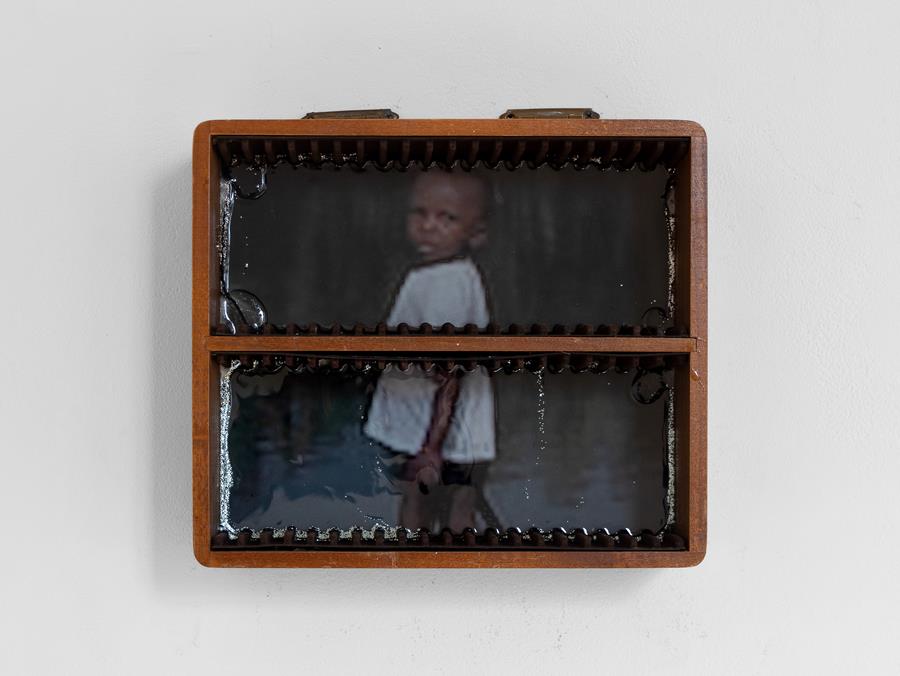
Resin, glitter, gems, and inkjet image on found wood
15 x 10 x 5 in.

About the Artist
I make for a future unknown to me, to leave a prior version of myself in a room as a trace to be discovered. My name and the meaning of it are deeply important to me: Onajevwe means this is the one I love; in Urhobo, my mother tongue that I do not speak. My name allows me to feel close to my identity.
I am drawn towards wood as materiality, fascinated by the tension between natural origins and commercial commodities, and by its associations with domesticity and the familial. I am mesmerized by domesticity and materials that remind me of interior spaces. I trap images into wood surfaces with resin, capturing moments of Black being, I deem vital.
My ancestors guide me through this process; they are the pulse between my eyes, the glitter as it glides onto the art piece. I feel them in my chest, like a burning, bright star. I once described myself as a spirit child, a being experiencing a reality beyond the visible. I am enthralled by the process of art-making: the not knowing, then the becoming. A tightness in my throat, then release. It is euphoric.
For Your Viewing Pleasure
What to watch, read, and experience, as curated by the Collé team.

TROY MONTES MICHIE is an interdisciplinary painter and educator. Montes Michie’s recent solo exhibitions include Rock of Eye at the Contemporary Arts Museum, Houston (2022), and Black on the Face of the Moon, Company Gallery, New York (2025).

Y. MALIK JALAL (b. Savannah, Georgia, 1994) employs traditional methods of craft and collage to expand dialogues on Black history, power, and humanity. He draws aesthetically and conceptually from the lineages of his mediums, welding steel and bronze to address histories formed by morphing industries and inequalities.
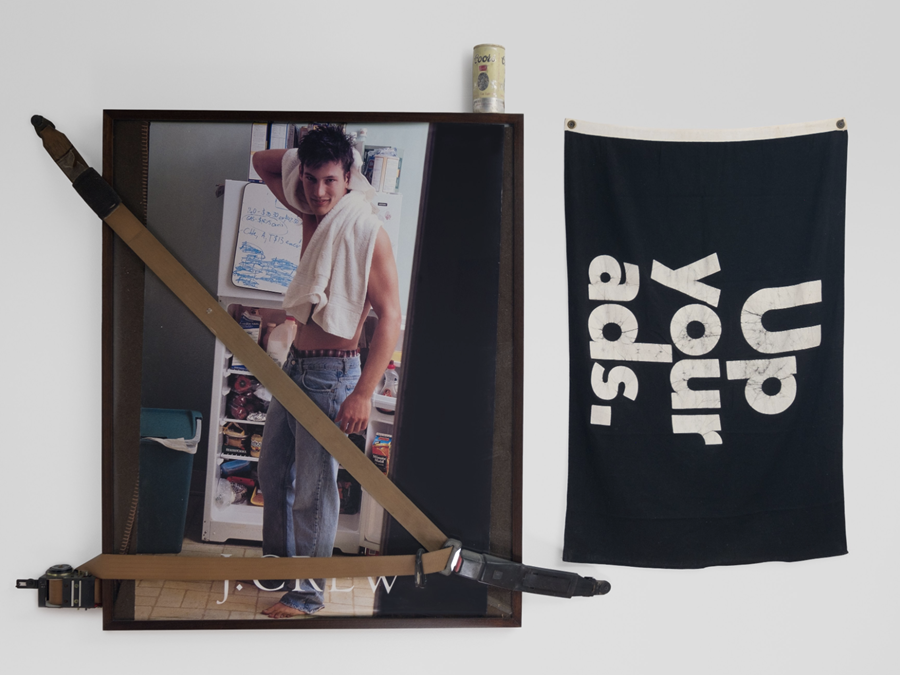
NICK HOECKER, b. 1990, is a New York-based artist using assemblage and historical archiving of ephemera to explore themes of masculinity, sexual identity, and culture.

AGOSTO MACHADO is a Chinese-Spanish-Filipino-American performance artist, activist, archivist, and muse who has been a vital participant in New York's cultural and creative life since the early 1960s, spanning art, theater, performance, film, and the dawn of the gay liberation movement.

ISABELLE FRANCES MCGUIRE (b. 1994, Austin, Texas) lives and works in Chicago. Her work has been presented in solo and group exhibitions at venues including What Pipeline, King's Leap, Artists Space, and the Museum of Contemporary Art Chicago, among others internationally.
Out and About
What to watch, read, and experience, as curated by the Collé team.

▼ VISIT
Nature by Nick Hoecker at Sebastian Gladstone
Sebastian Gladstone presents a new exhibition by Hoecker, opening March 6. The exhibition expands Hoecker's signature practice of found photography and repurposed domestic and automotive assemblages to include functional furniture.

▼ READ
First Looks at the 2026 Whitney Biennial: Politics, Memory, and Unexpected Emotion
The 82nd Whitney Biennial opened this week at New York’s Whitney Museum of American Art, featuring 56 artists, duos, and collectives. Organized by Marcela Guerrero and Drew Sawyer, this year’s edition arrives without a theme, but there were unifying threads.

▼ LISTEN
Unstraight Ahead by Karl Hector & The Malcouns
This 2014 release blends Afrobeat, psychedelic funk, and Middle Eastern influences into a hypnotic instrumental groove. Rooted in the Now-Again Records tradition of global beat excavation, it showcases the German collective's deep command of vintage world sounds.
