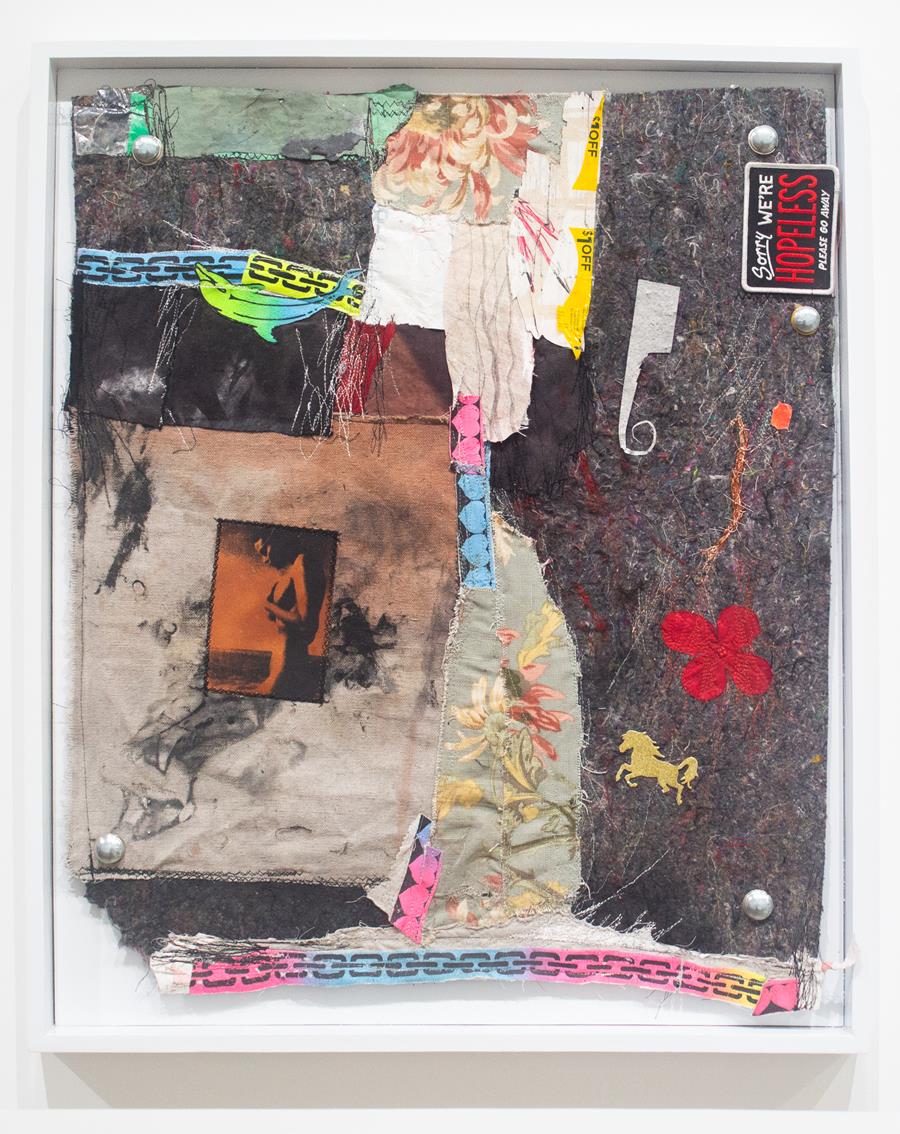
Found objects, avocado dye, fabric, sewing, spray paint, silkscreen, oil, collage,
found patch, grommets, hardware in artist’s frame
26.75 x 22 x 1.5 in.
Thomas Macie
Thomas Macie is the recipient of the 2026 Collé Prize, presented at Feria Material this past February. Trained in printmaking at Cal State Long Beach, Macie works across mediums — building his own paper pulp substrates and layering found materials, signage, and debris into works that map the noise of contemporary American life. His practice is loose, process-driven, and completely his own.
In the Words of the Artist
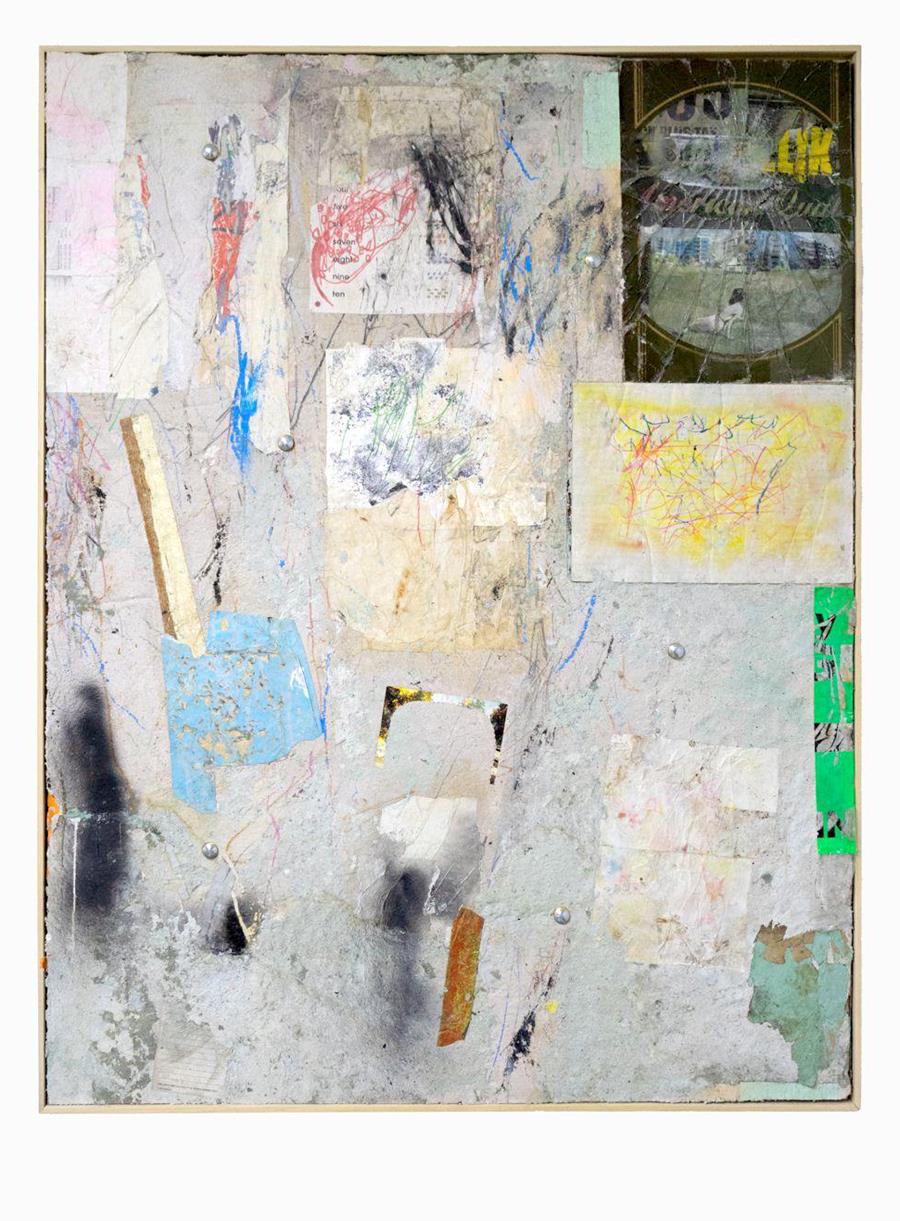
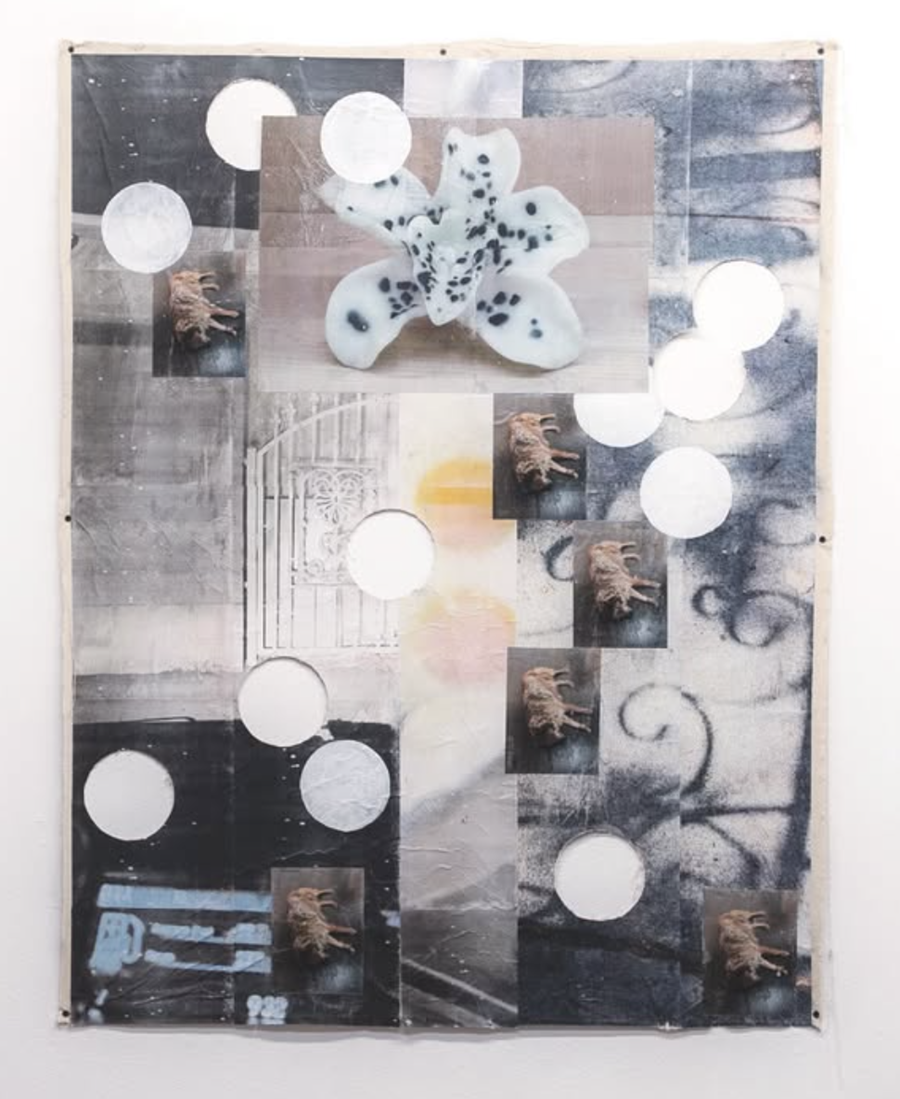
Paper pulp, found objects, collage, spray paint, crayon, oil stick, grommets,
hardware in artist’s frame
50.5 x 39.5 x 1.5 in.
Collage can take so many forms. A collage is an avenue or a place where two disparate objects can meet to have a conversation.
In the most literal sense, I see collage as the act or decision to put one thing on top of another. It’s in the dialogue between those materials, objects, papers, images, etc., that any number of meanings, interpretations, or detournements can arise. I enjoy the immediacy of collage, but also how dependent the medium can be on the methodical choices of the maker. I think about instances when I have had a found child’s drawing or a one-of-a-kind torn piece of paper, objects I would be hard pressed to find anything that carries a similar feeling or elicits the same emotion, and wanting to ensure the placement of said material is just right before joining it to the piece. There's no going back or readjusting. Collage takes a special trust in one’s intuition, and oftentimes composition can be just as important as the content.
I came to collage out of an interest in graphic design. I wanted to be a graphic designer and make magazine layouts when I was younger.
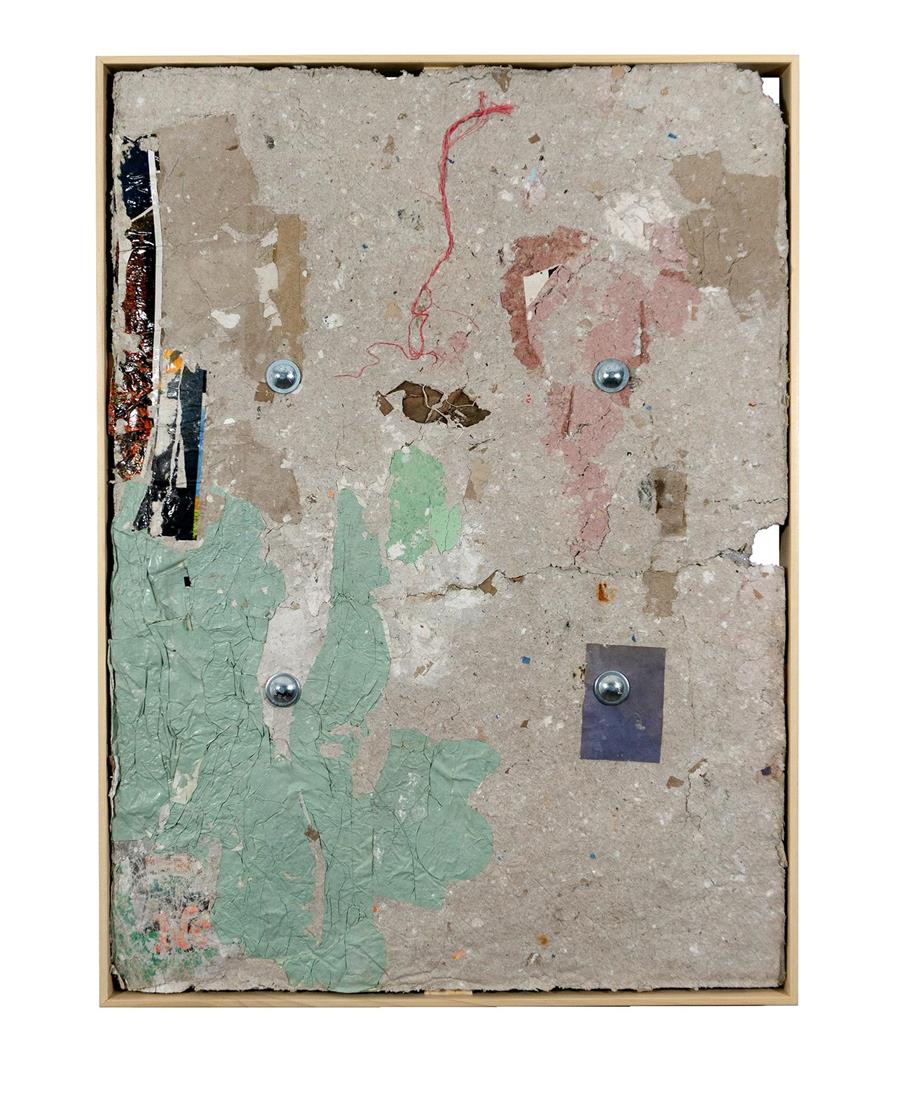
Paper pulp, collage, found objects, hardware in artist’s frame
30 x 22 x 1.5 in.
I need to walk to clear my head. I have found I do some of my best thinking while walking. My use of found objects wouldn't have blossomed into an integral part of my practice had it not been for nurturing a habit of daily walks. With that being said, I don’t necessarily go for walks with the intention or goal of returning with new material. My eyes are constantly scanning my surroundings, and if something, a scrap of colored paper, a mangled piece of metal detritus, a torn street poster catches my attention in the moment I take it back to the studio.
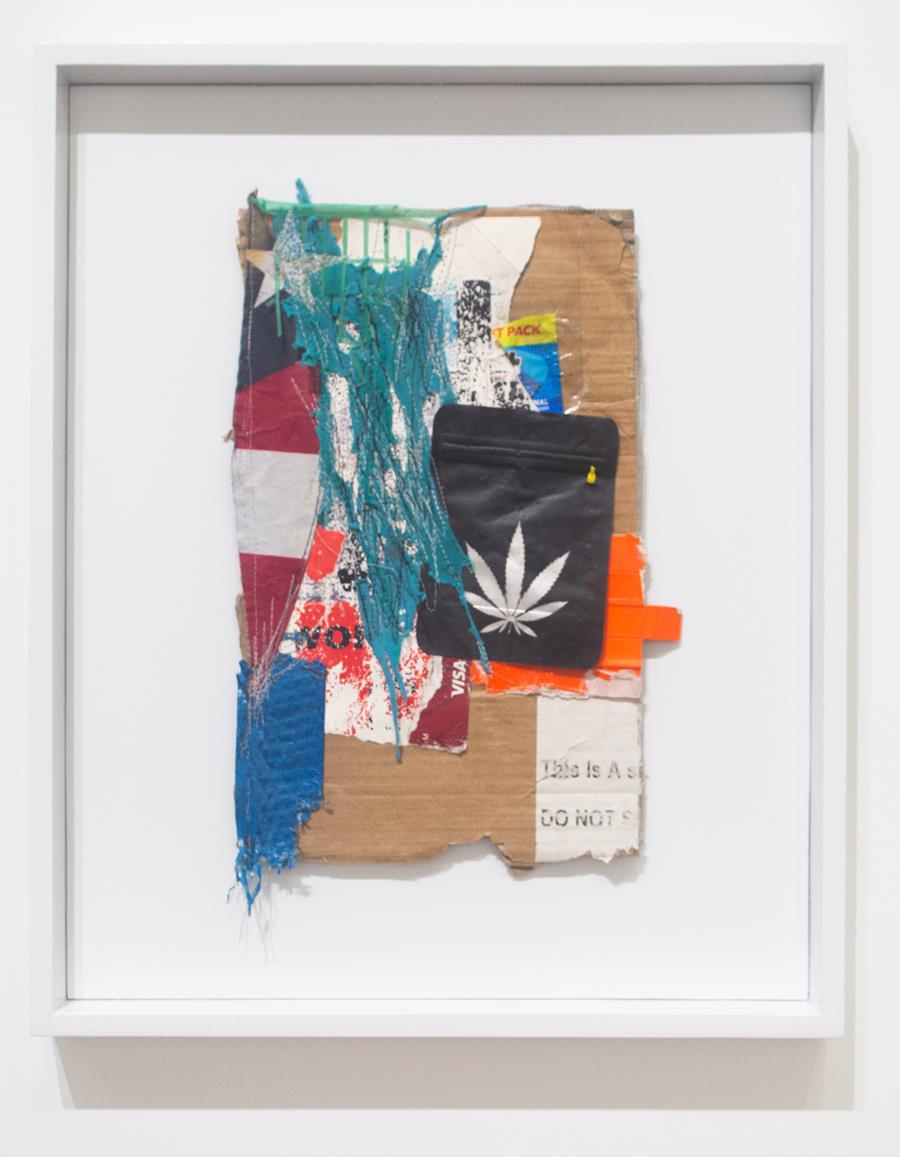
Found objects, collage, sewing, zip tie in artist’s frame
19 x 16 x 1.5 in.
I think contradictions are healthy, and if I can present the absurdity of consumerism, I think about the idea of ‘retail therapy’ here, within a marketplace/ gallery setting, I don’t think it subverts the message of the work. I knew of the work of Schwitters and Rauschenberg loosely… in some ways, relocating to Long Beach for undergrad and exploring Los Angeles influenced my material choices.
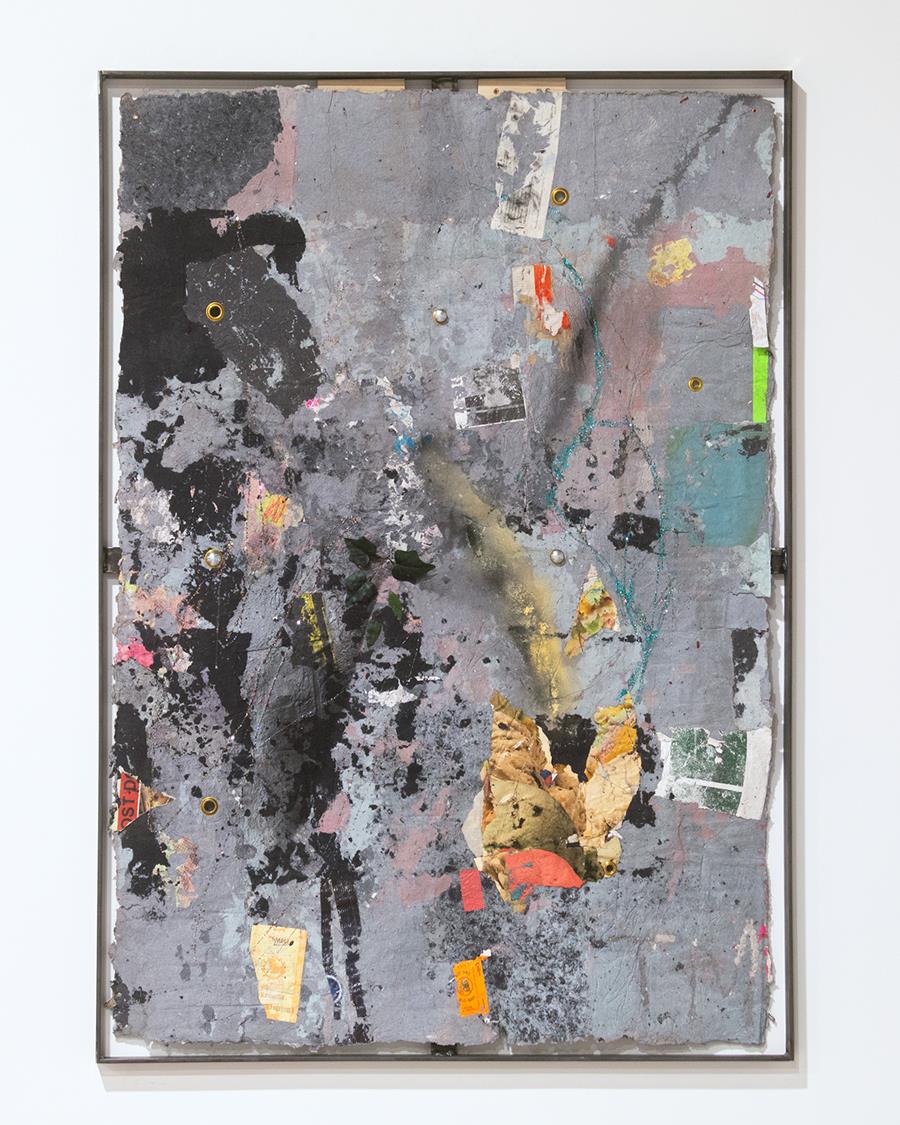
Paper pulp, found objects, collage, acrylic, spray paint, oil stick, pva, grommets, hardware,
glitter in steel artist’s frame
55.5 x 40 x 1.5 in.
The SOUP project has been on an extended hiatus, but I still enjoy making books and zines. Making zines was one of my earliest entries into what I would now consider curating a body of work. A zine or book can encapsulate so many different ideas and is experienced at such an intimate level compared to an exhibition that it feels more personal and direct. I wasn’t showing work as often when I started SOUP and saw the project as a separate venture from my studio practice. I always had friends asking if I would help them make a zine, and figured the least I could do was help them realize their vision. One of my biggest influences, Adam Roye, stresses that everyone should make a zine, and I second that.
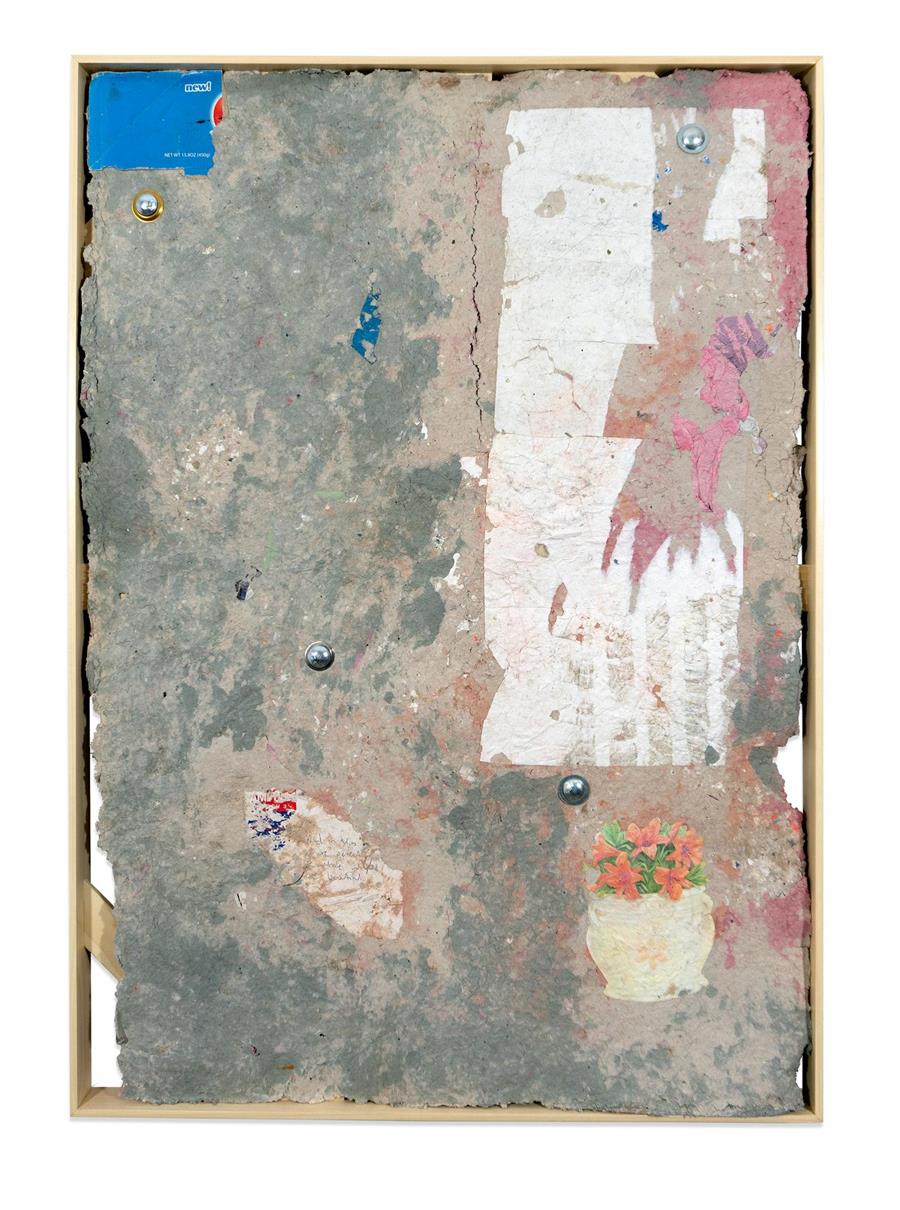
Paper pulp, found objects, collage, grommets, hardware in artist’s frame
34 x 24 x 1.5 in.Type image caption here (optional)
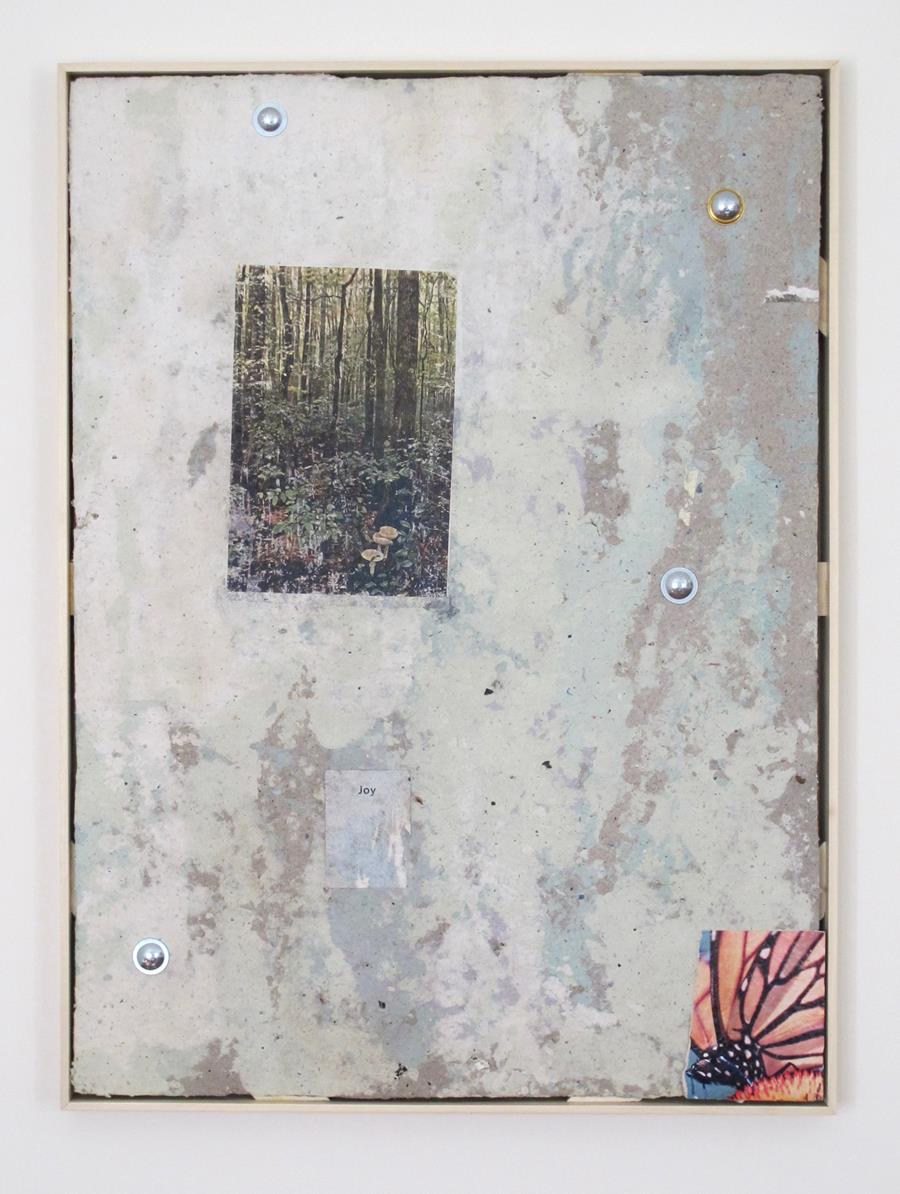
Paper pulp, found images, collage, hardware in artist’s frame
30.5 x 22.5 in.

About the Artist
Thomas Macie (b. 1995) is an artist living and working in Los Angeles. Found objects and material detritus inspire his process-oriented and intuitive making across painting, sculpture, and works on paper. His work aims to uncover the intricacies of the insignificant and overlooked traces of everyday life.
For Your Viewing Pleasure
What to watch, read, and experience, as curated by the Collé team.

MERRITT SPANGLER is a multidisciplinary artist based in the U.S., exhibiting across North America and Europe. Residencies include Joya AIR (Spain) and PADA Studios (Portugal).
ZOE ALAMEDA (b. 2000) is a Los Angeles-based painter and sculptor. She received her BFA from the University of Southern California in 2023 and has exhibited at Good Mother Gallery, Guerrero Gallery, and NADA New York with Swivel Gallery.

CAMERON SPRATLEY (b. 1994) lives and works in Chicago. He holds an MFA from the School of the Art Institute of Chicago. Recent solo exhibitions include showings at Moskowitz Bayse (Los Angeles), James Fuentes (New York), and M. LeBlanc (Chicago).

PETER SUTHERLAND (b. 1976) is a photographer, filmmaker, and mixed media artist whose work has appeared in Vice, Dazed & Confused, and Monster Children, with clients including Supreme, Nike, and Stussy. His 2004 book Autograf documented New York City graffiti writers.

EVA DIXON (b. 2000) is a painter and mixed media artist living and working in London. She holds a BA from Central Saint Martins (2023) and has exhibited at Saatchi Gallery and The Fores Project, with a residency at Christie's-linked Good Eye Projects.
Out and About
What to watch, read, and experience, as curated by the Collé team.

▼ READ
Lucy Sante on Collage: ‘You Have to Kill One Thing to Make Another.’ NYT
The visual historian and celebrated author of “Low Life” has two shows of recent artwork made from decades of gathering materials, a trove she slices and glues.

▼ READ
Making Art and Making a Living: Adventures in Funding a Creative Life
Mason Currey turns his lens from artists' routines to their finances — the unglamorous, necessary work of keeping a creative life afloat. Honest, practical, and radical. Required reading for anyone making art outside the mainstream.

▼ LISTEN
Silver Apples - Silver Apples
New York, 1968. Simeon Coxe strapped a homemade oscillator to his body and played it with his knees. The result was Silver Apples — buzzing, hypnotic, and decades ahead of its time. Still sounds like the future.
