
Magazine pages, cardboard, math cards, paint swatches
8.5 x 11 in.
Martín Morante
Martín Morante makes collages by letting chance do half the work. Old papers, blocks of bold color, and blurry photo scraps come together into pieces that don't tell a story but feel like a memory you can't quite place. He doesn't overplan the process; he lets the materials decide the outcome.
In the Words of the Artist

Magazine & book pages
8.5 x 11 in.
My work and practice are fueled simply by curiosity and a constant search to satisfy an internal desire for visual pleasure. Each piece I make in any of the main mediums I tend to gravitate towards is always striving to achieve a satisfaction in visual terms that becomes the challenge, which ends up making the search always more interesting for me. I sometimes feel that each time I approach a blank sheet or surface, a sort of game starts that I can only play and understand when it is completed. Sometimes I win it, sometimes I don’t.
Collage has always been an interesting medium for me for various reasons. First, it was one of the first artistic mediums (together with drawing) that I approached as a child with the playfulness and carefree attitude of that specific stage in life, which I still believe is critical for a person to develop any sort of creative output.
And second, it offered me and still does an output that does not require a great monetary investment, which sometimes can be a factor for pursuing or not other mediums. Especially as my first decade growing up in Uruguay was marked by strained economic circumstances that did not allow for much, which, in retrospect, I feel grateful for, as it has influenced tremendously how I approach art by finding out how resourceful you can really be by adapting to what’s available, and collage has been the perfect example of how to make do with very little. Still does.
As a definition beyond the encyclopedic “cut & paste”, I personally think it has been a great medium in which to pour myself. It allows me to keep exercising the eye, the brain, and above all, to continue the constant conversation with myself on what gives me pleasure visually speaking and what that transmits to others. At the same time, I feel that my collage practice has been really instrumental in how to approach other mediums, especially photography. As a kid, I started to understand the basics of composition by doing collages. I will say that for me, not only has it been a medium, but it has been a tool as well, one for continuous self-development.
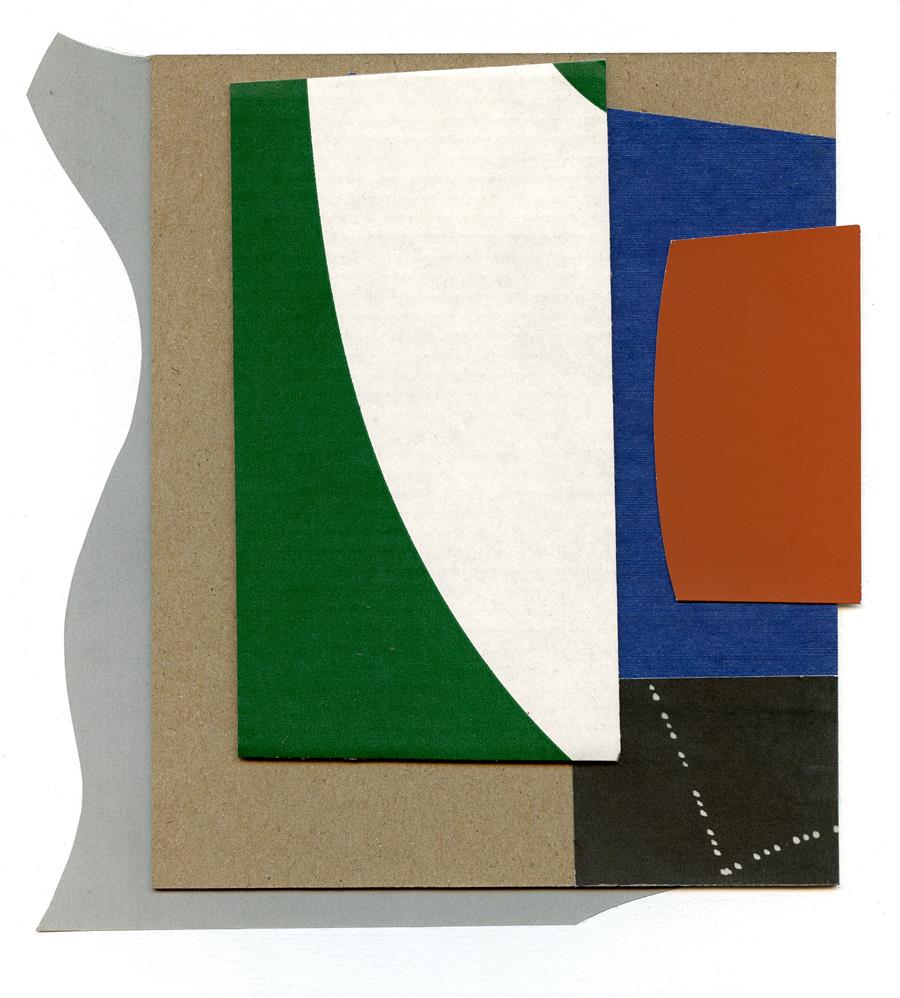
Cardboard from various sources, paint swatches, magazine pages
8.5 x 11 in.

While I tend to gravitate towards memory & place as the two most frequent ones, sometimes consciously or not, I am always open to the possibility of a piece taking shape without a theme in mind. And once those pieces are completed, it is always interesting to see how organically they find their way into some theme.
I think I find the most satisfaction in collage by letting go and allowing things to form organically. I truly enjoy connecting with whatever materials I have in front of me and let them dictate how a piece is going to take shape, but at the end all comes full circle, because I ended up making my own connections to the piece in front of me, either because it triggers certain memories or recollections of people, places and events as I was describing in relation to the previous question.
Above all, the one thing that is truly critical for me is not to sit with a preconceived idea in mind. If I do that, most likely it will be either frustrating or sometimes ends up eliminating other positive possibilities. It is the same with my photography; if I go out saying to myself that “today I am going to photograph this or that…” I most likely will come back home empty-handed. Instead, I leave it open to the “let's see where it goes,” and most of the time it works in my favor.
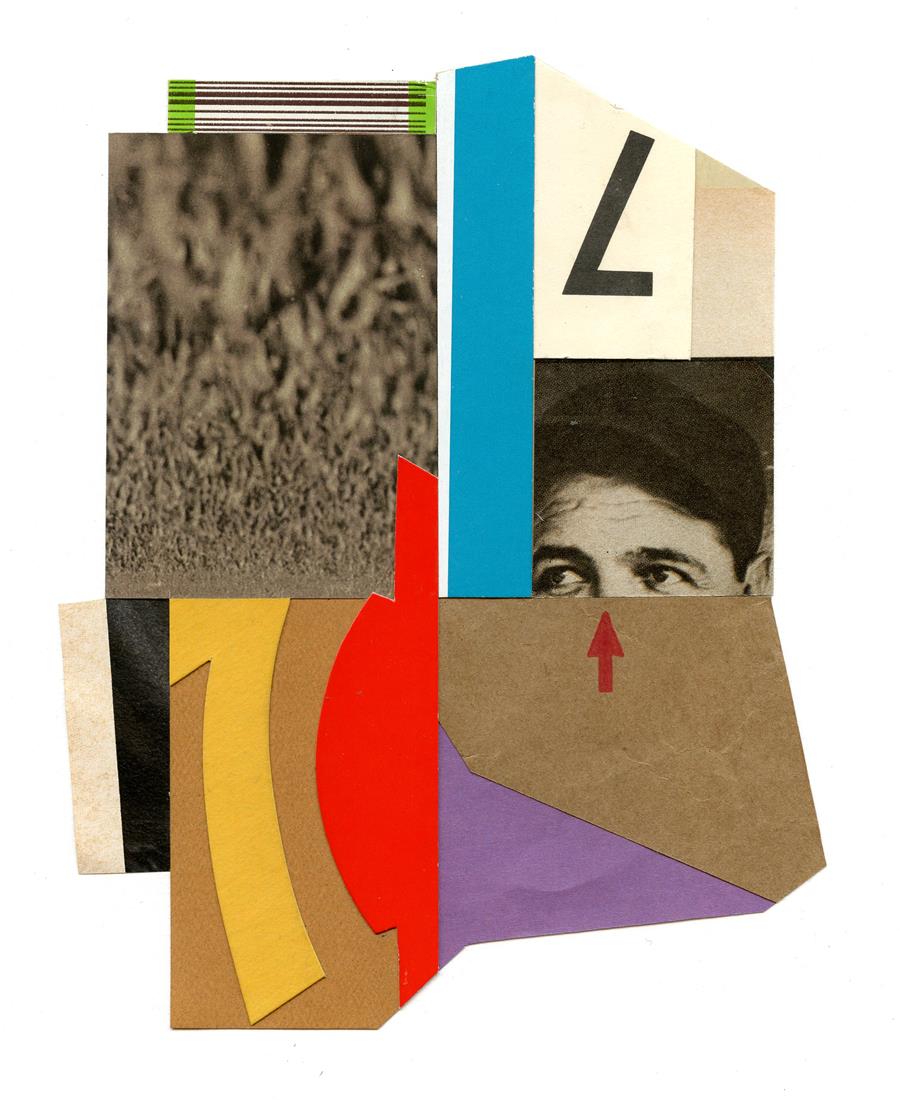
Magazine pages, cardboard, math cards, paint swatches, brown paper bag, luggage tag barcode
8.5 x 11 in.
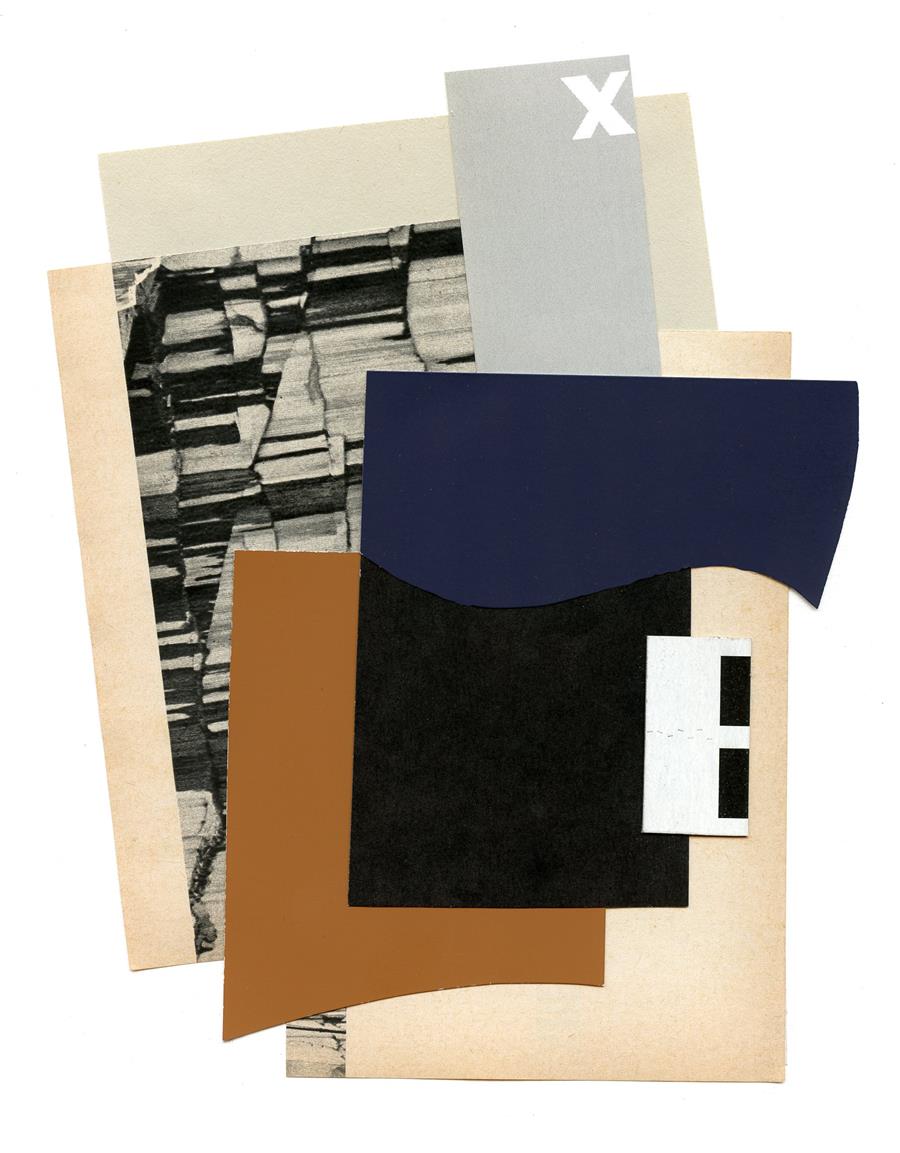
Magazine pages, cardboard, math cards, paint swatches, brown paper bag, luggage
8.5 x 11 in.
My source archive is simply many open boxes in which things manage to fall into it. I used to be very organized with boxes for books, magazines, scraps, etc. At one point I had boxes with categories (i.e., colors, people, landscapes, things, etc, etc), but recently somehow I have found ways to let go a little of the control freak aspect of it that I used to apply to things and now I really let myself jump on a pool of items and see what I can find and where do they take me. And in recent years, that somehow has freed me a lot.
The materials I use can vary. There are things I have accumulated throughout time because they have yet to find their way into a piece, if they ever do, and there are items that are either given to me or I find by chance. I used to go “hunting,” but I rarely do anymore because it would become frustrating if I let a preconceived idea of what I should find take over.
My move from Uruguay to the US occurred during a time in which I was greatly focused on doing something with my photography, so it did not affect or required for me great effort and or resources moving or save materials for me to continue making collages once in the States.
I do believe that each medium informs and influences in small or great ways, and that is something that I have learned through time. Many times my collage work is informed by my photography, and sometimes it is the other way around. I think that in one way or another we become, or we need to become, this sort of sponge in which we absorb as much as we allow ourselves to do and then that spills into what we do. I like to believe that is how good work comes to be.

Magazine pages
8.5 x 11 in.
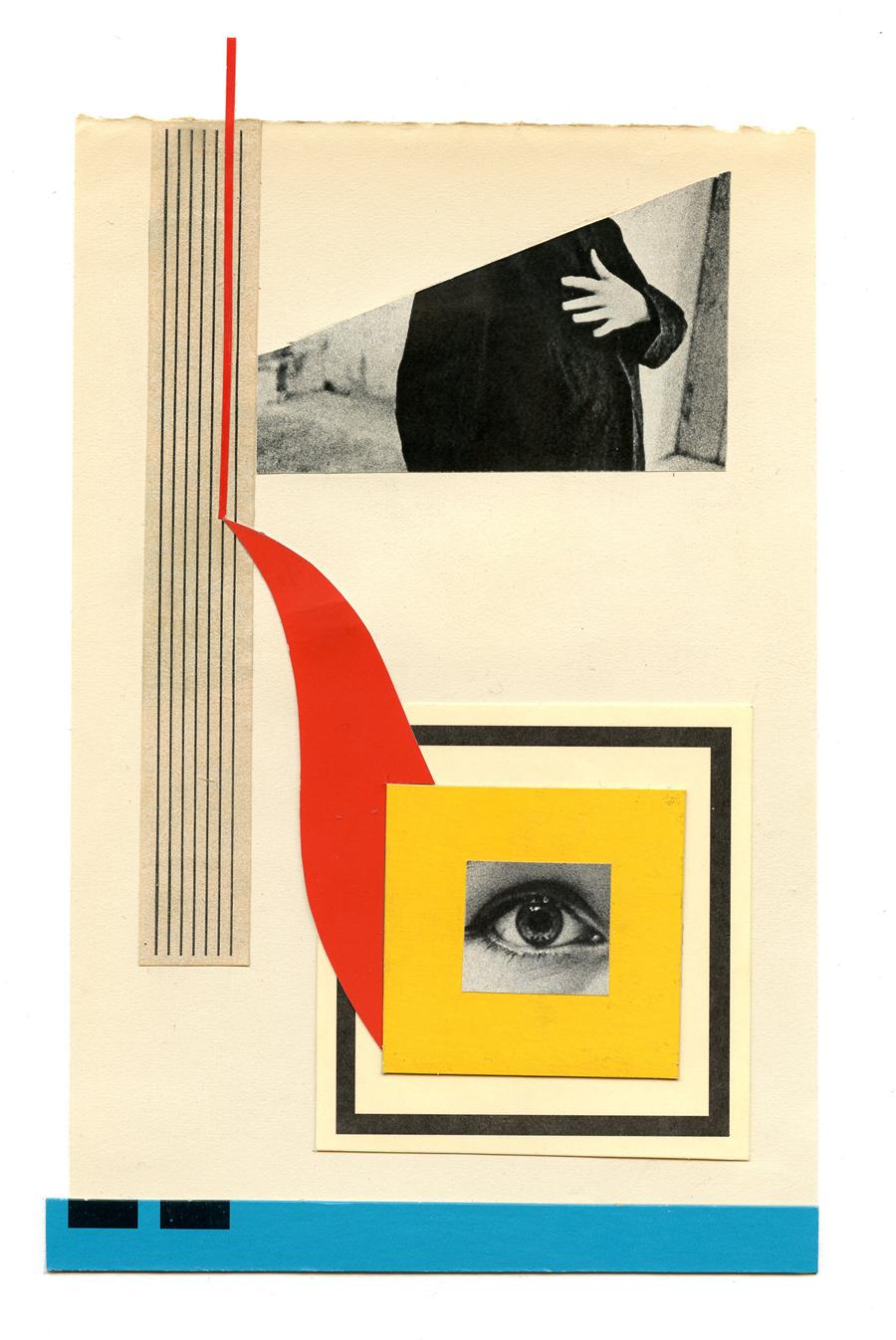
Magazine & book pages, cardboard
8.5 x 11 in.

About the Artist
Martín Morante (b. 1976, Montevideo, Uruguay) is a visual artist based in Wisconsin, working across collage, photography, and painting. His practice began in childhood, shaped by the resourcefulness of making art with limited means, and remains rooted in play and improvisation. Working without preconceived ideas, he lets materials dictate the shape of each piece, returning often to memory and place.
For Your Viewing Pleasure
What to watch, read, and experience, as curated by the Collé team.

KATAYOON YOUSEFBIGLOO is an Iranian-born, Vancouver-based interdisciplinary artist and musician whose work explores cultural narratives, mythmaking, and degraded media. She holds an MFA from Simon Fraser University and frequently incorporates media installations, performance, music, and her own brand, P.L.U.R.O.M.A., into her practice.
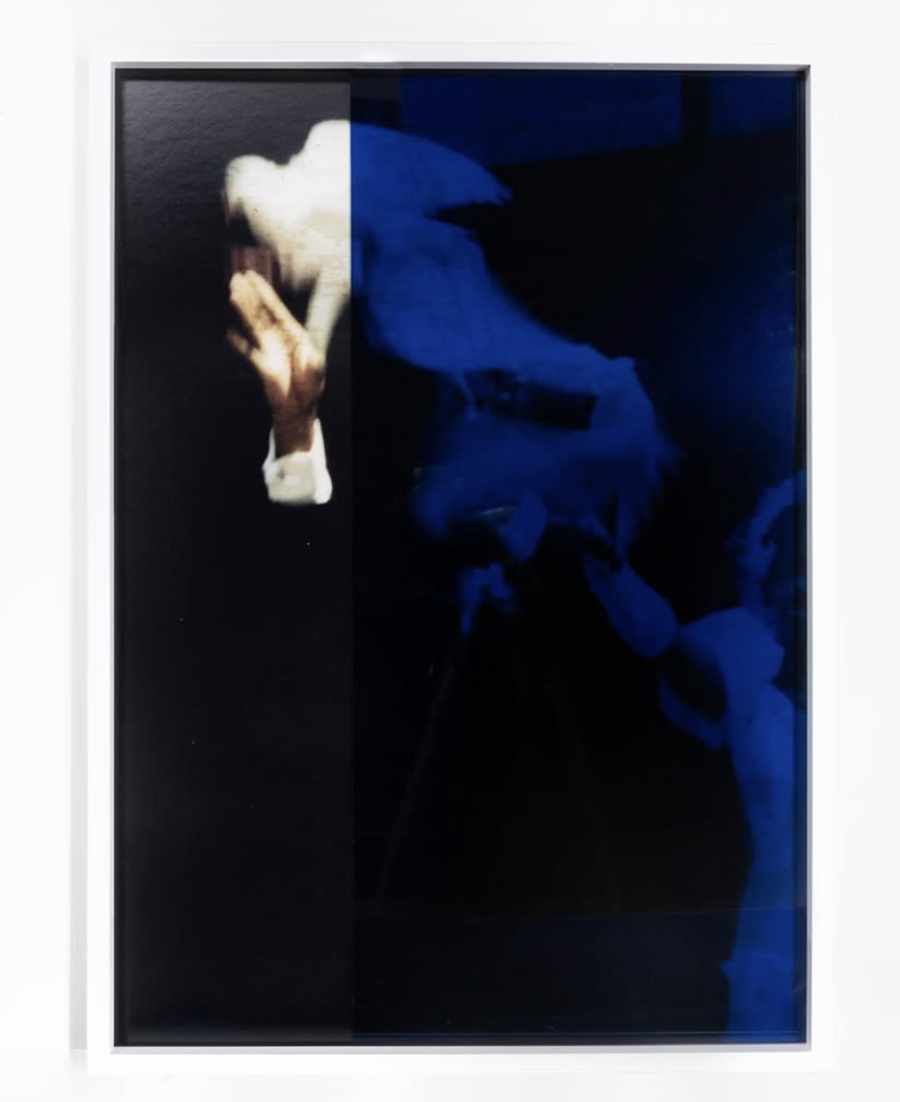
BRANDON FOUSHÉE (b.1999) is a lens-based artist born and raised in Budd Lake, NJ, living and working in New York, NY. His photographs and assemblages explore the boundlessness of time in context with familial legacy, collective memory, and invisibility.
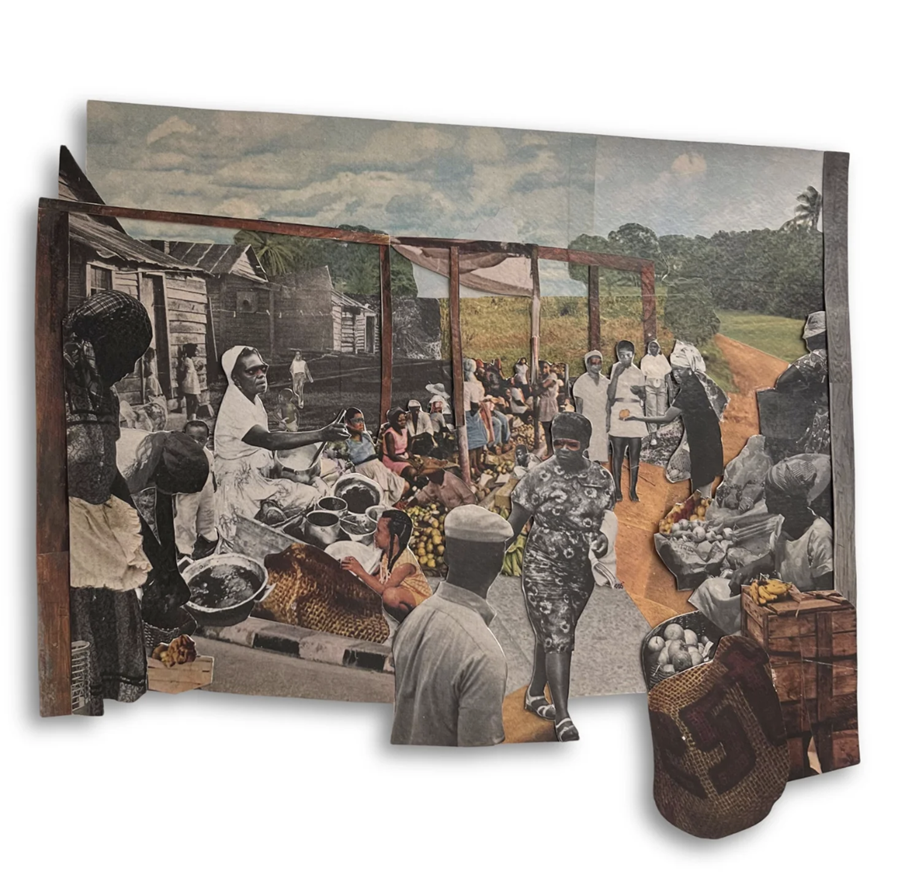
CHANTEL WALKES (b.1994) finds inspiration in archived images, various film stills, connecting through changing environments, and by means of individuals and ancestors. Motivated by her matriarchal lineage, Chantel is heavily influenced by Black women.
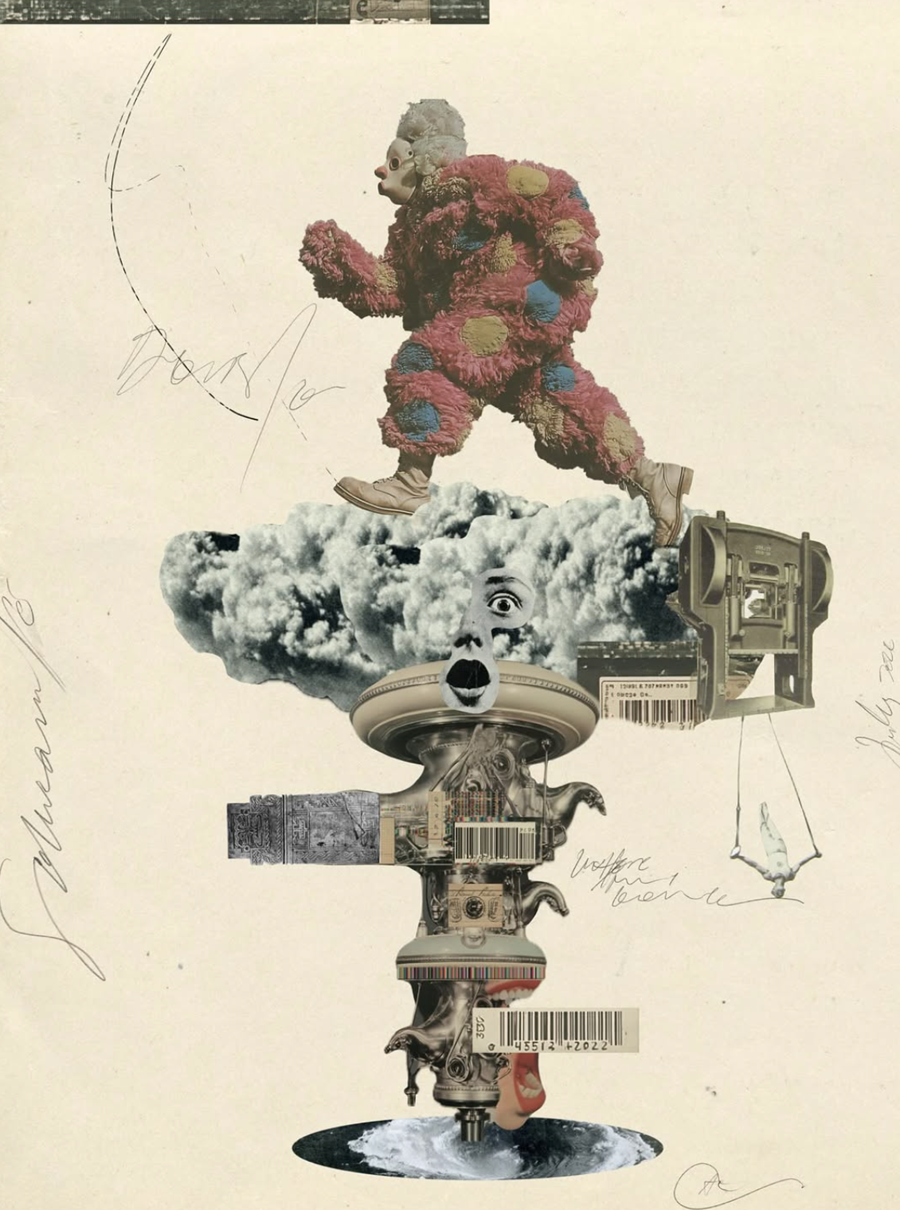
ALEJANDRO CHAVETTA is an artist and Executive Creative Director (Brand) at Adobe, exploring the future of image-making through collage-driven work blending found imagery, texture, and surreal figuration.
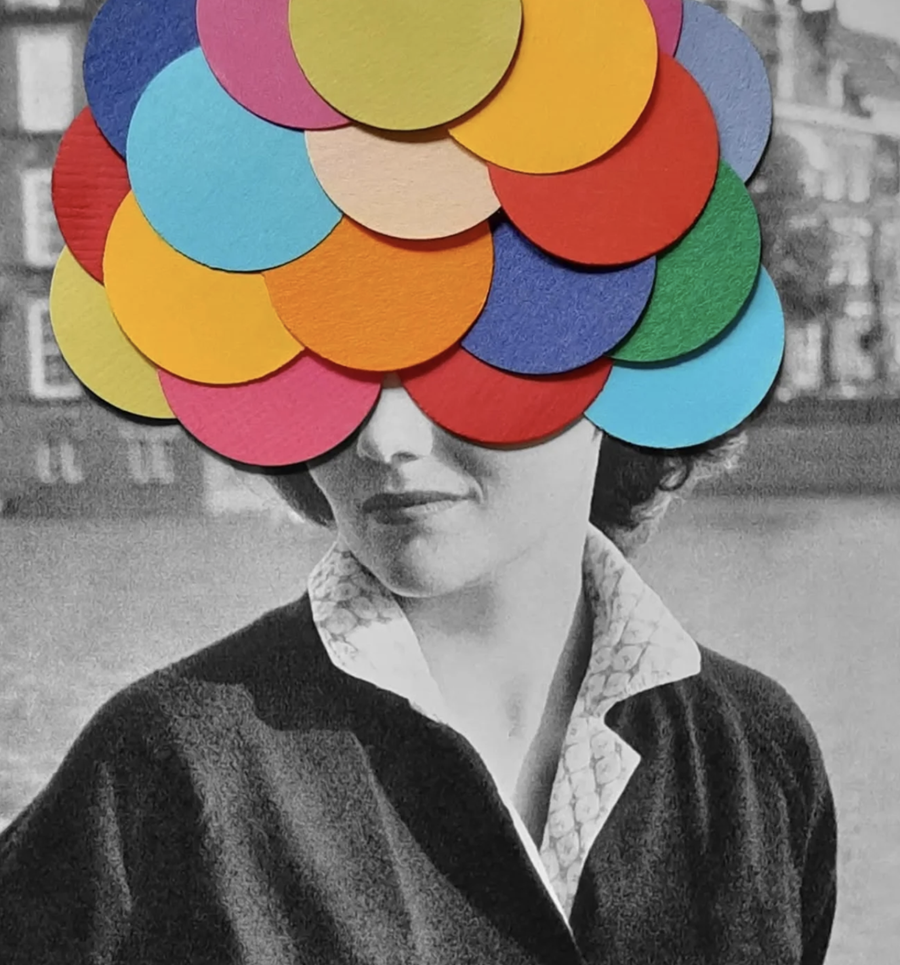
HAGAR VARDIMON creates thread and paper works, exhibited internationally at Robert Mann Gallery, Scope Art Miami, and museums across Europe. Her monograph Coutures was published by Edition Marguerite Waknine in 2012.
Out and About
What to watch, read, and experience, as curated by the Collé team.

▼ READ
How Important Is Art as a Form of Protest?
A feature from frieze issue 186 polled more than 50 artists and curators – their responses were life-affirming.
▼ READ
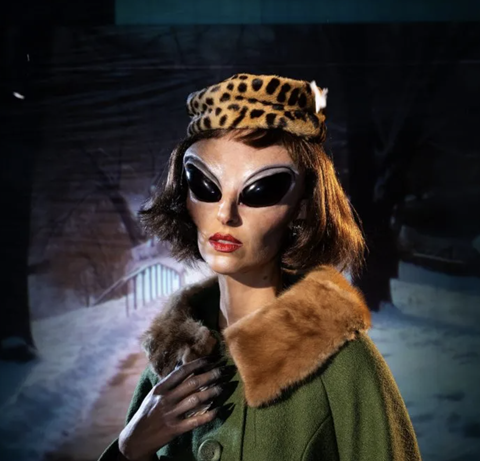
In Chloe Wise’s ‘Extrasensory’ Basel Show, UFOs Meet Scripture
The first room of Chloe Wise’s “Extrasensory” exhibition in Basel is a gift shop-slash botánica. The walls of the entrance of the Kulturstiftung Basel H. Geiger are powder blue and “busted on purpose,” Wise said. She spent hours painting them to look moldy.
▼ LISTEN
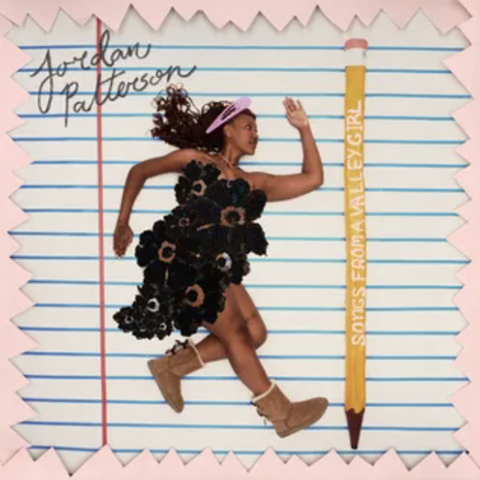
Songs From a Valley Girl by Jordan Patterson
The Los Angeles singer draws on the glossy radio pop of the late '90s and early 2000s, delivering a set of songs anchored by her singular, expressive voice.
