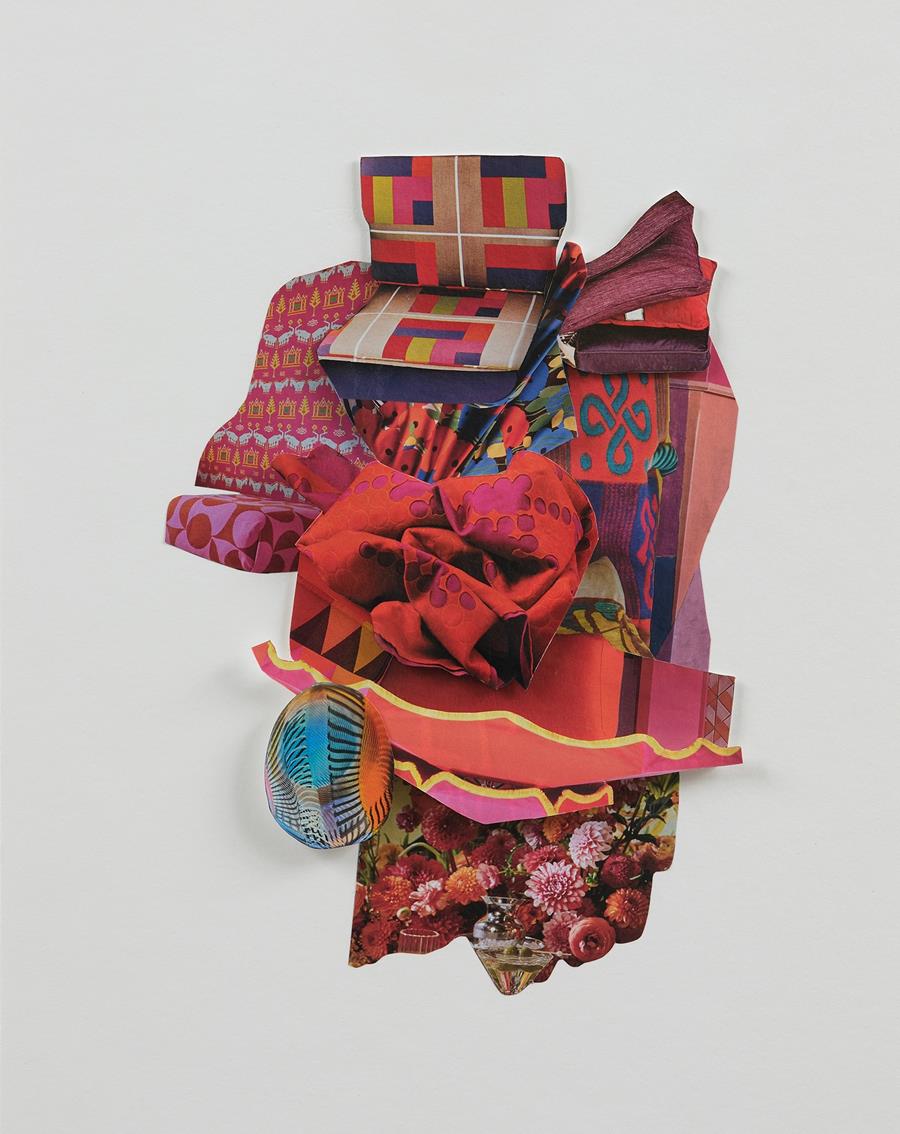
Collage on paper
14.5 x 11.5 in.
Sara Graham
For twenty-nine years, Sara Graham has made work about cities, built and unbuilt. Lately she has turned toward the interior. Her collages cut apart design magazines and reassemble them into rooms full of clutter and inherited objects, layered into relief using Paper Tole, a 1980s craft technique.
In the Words of the Artist
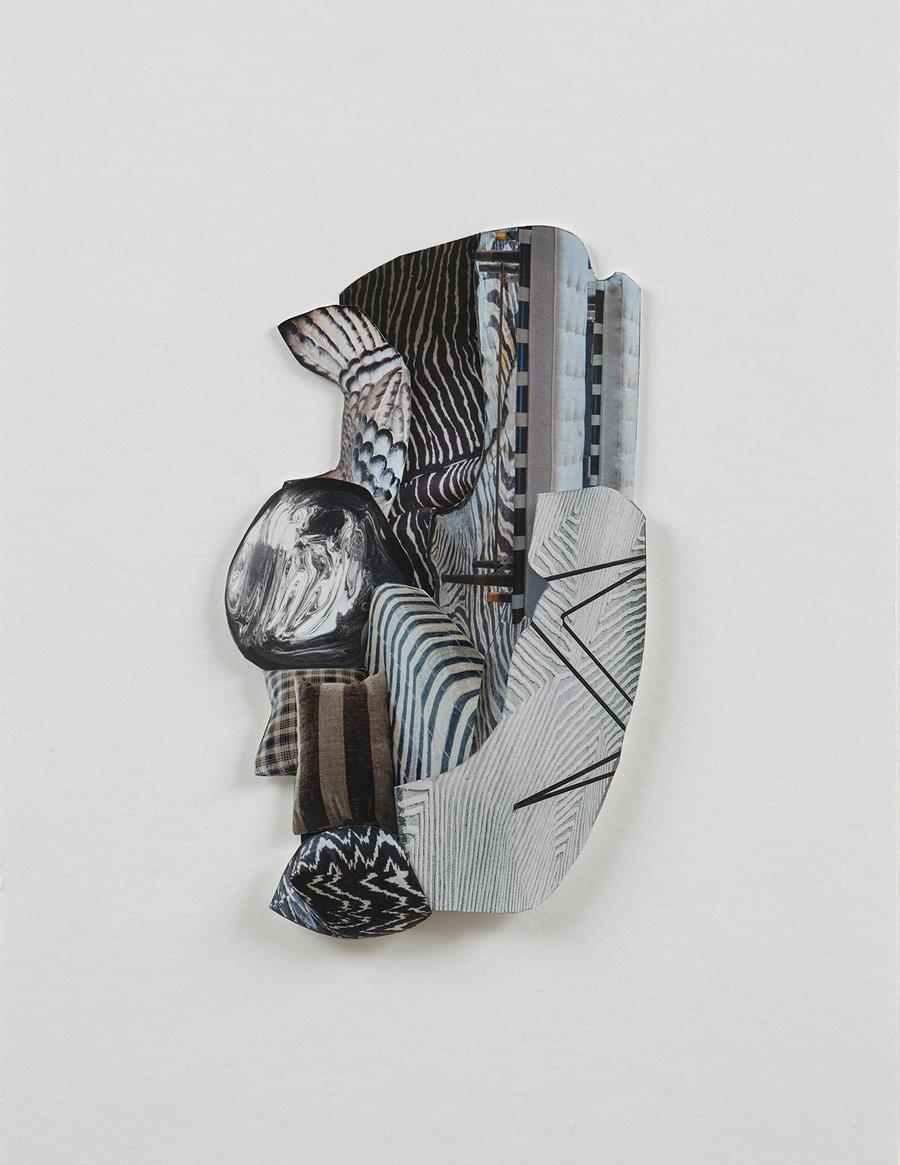
Collage on paper
12.5 x 9.5 in.
I am drawn to collage for its ability to disrupt and distort, creating an uneasy whole. For me, the most compelling moments occur where edges meet—through chance or intuition—blurring the boundaries between positive and negative space. Collage is the only medium in which two incongruent wholes can coexist as one while simultaneously challenging our perception of the picture plane.
What excites me is the process itself—cutting, creating cut-outs, rearranging, and layering. It's in the meeting of two different edges that confusion and harmony can exist simultaneously. Those seams invite a moment of uncertainty that asks the viewer to pause and really look at the work. To borrow from Ellsworth Kelly, they create an opportunity for "eye-work."
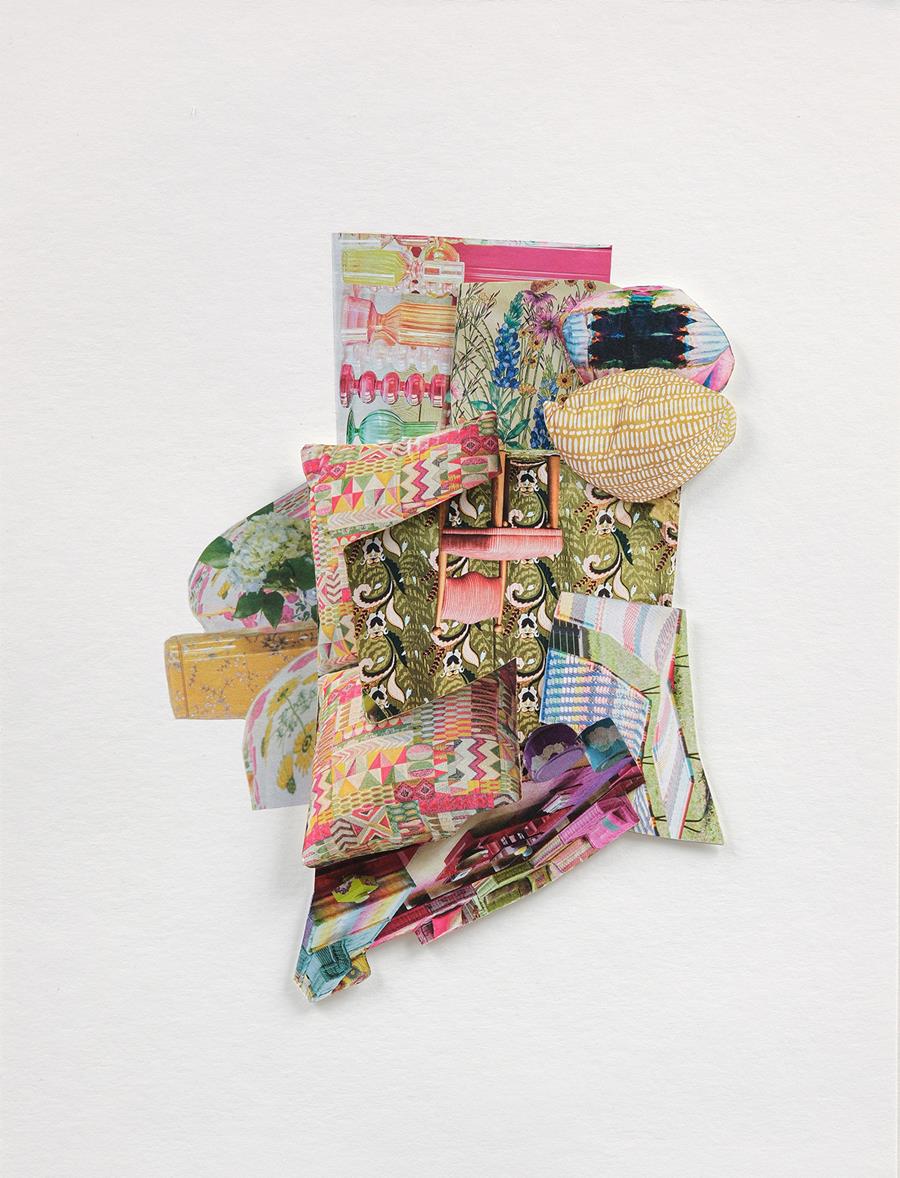
collage on paper
12.5 x 9.5 in.
Over the past twenty-nine years, my independent studio practice has evolved through a series of diverse bodies of work united by an ongoing interest in the images, issues, and ideas that shape the cities we inhabit and those we imagine. My practice is primarily concerned with the contemporary city and the relationships between its built and unbuilt forms. Through drawing, collage, sculpture, and installation, I explore the interconnectivity between these spaces, proposing alternative ways of seeing the city and its architecture by using the real to construct the imagined. My current studio practice is primarily rooted in drawing and collage.
In Canada, and particularly on the West Coast in the Lower Mainland, the affordable housing crisis has fundamentally changed what home looks like for many people. Like many cities around the world, the region faces rising housing costs, making the idealized interiors presented in glossy design magazines feel increasingly distant. Rather than reflecting lived experience, these images often resemble carefully staged still lifes more than homes shaped by everyday life.
The physical act of collage felt like the right language for this work. Cutting, creating cut-outs, rearranging, and layering images is, in itself, an act of accumulation. It mirrors the way homes are shaped over time through the gradual gathering of objects, memories, and experiences.
At the same time, I wanted to introduce a sense of physical depth that isn't always associated with paper collage. To do that, I incorporated techniques from Paper Tole, a paper craft I was introduced to when I was sixteen. Popular in the 1980s, Paper Tole involves precisely cutting apart multiple copies of the same image and reassembling them into a three-dimensional relief. By adapting this technique, I was able to emphasize the layered histories embedded within each work, allowing the accumulated imagery to occupy space as well as the picture plane.
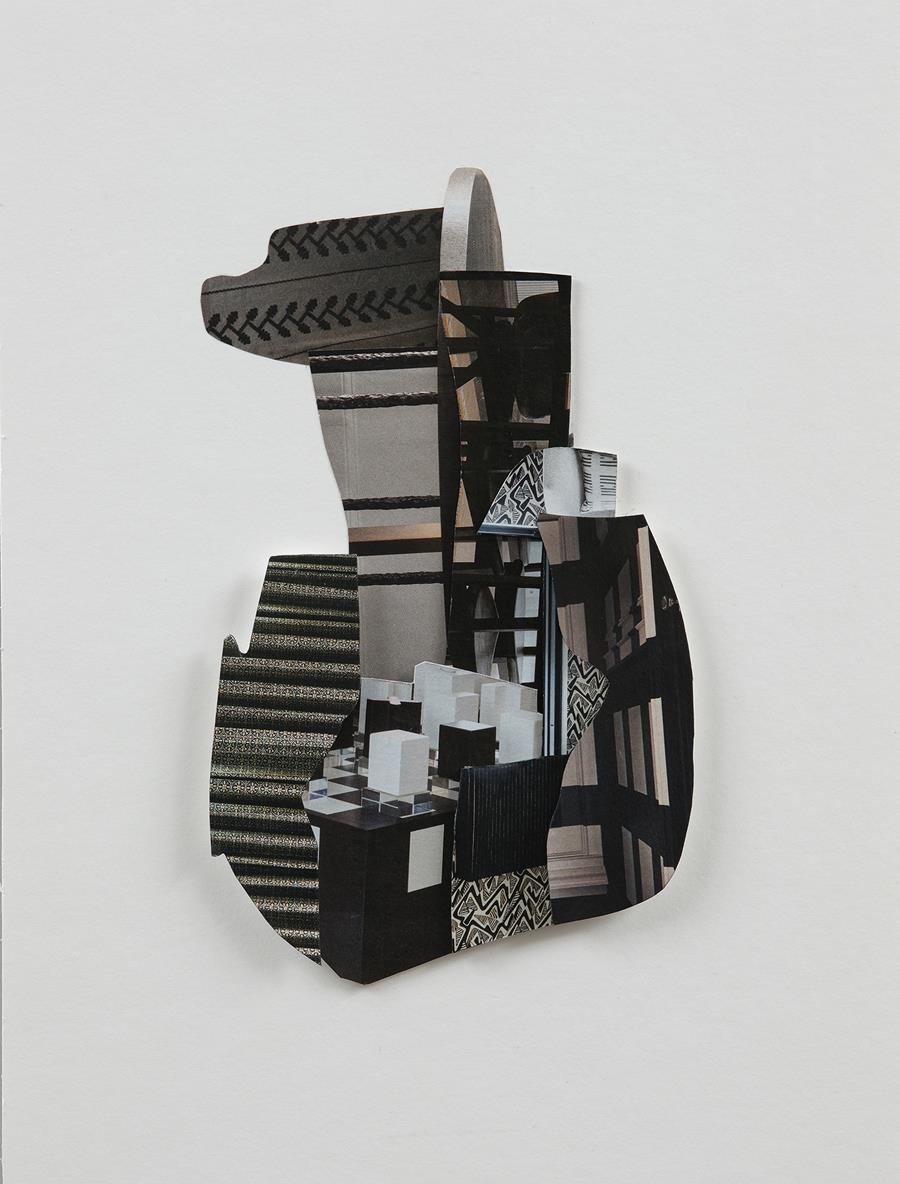
collage on paper
14.5 x 9.5 in.
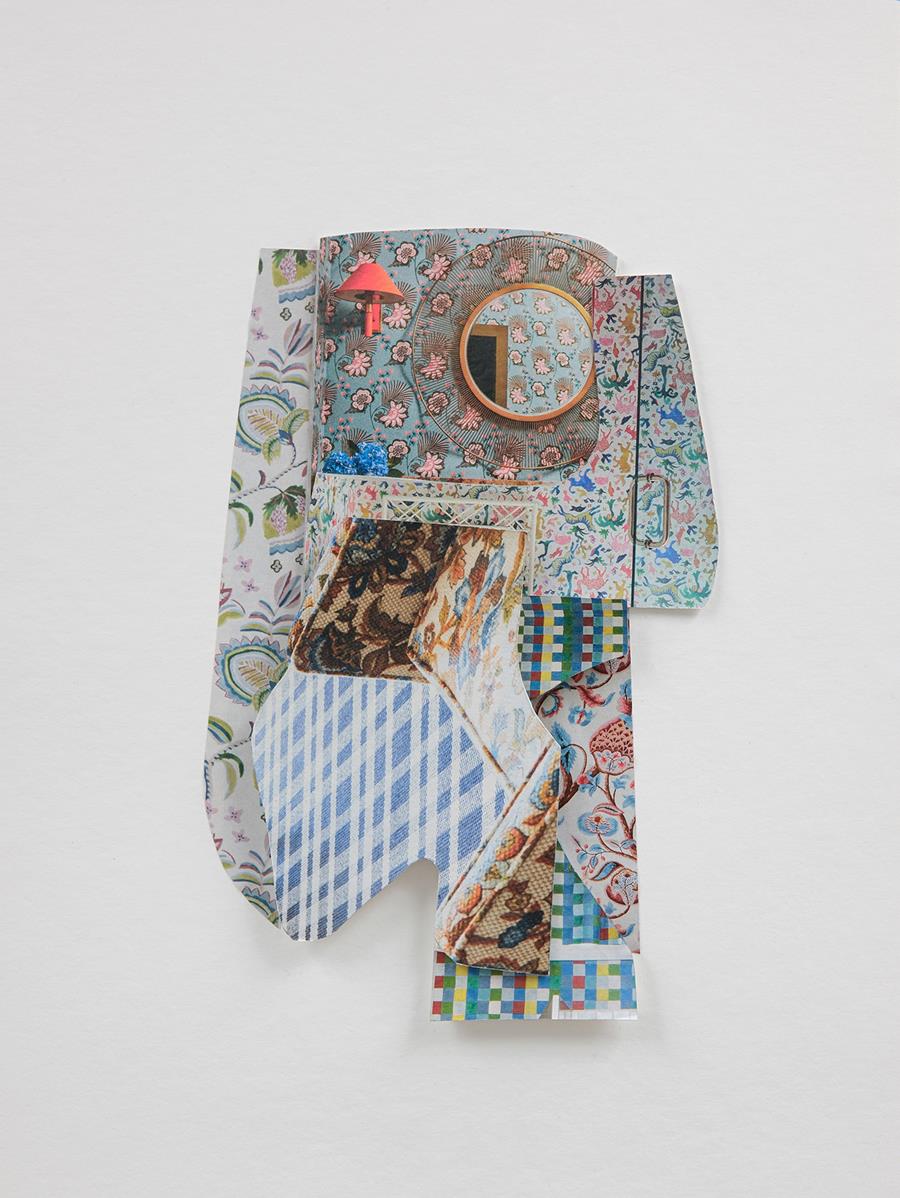
collage on paper
12.5 x 9.5 in.
Interior design magazines often depict an idealized version of home that doesn't exist for most people. I wanted instead to highlight the real textures of domestic life: the clutter, the heirlooms, the mismatched accessories, and the fragments of memory and personality that make each space unique.
These works reveal the layered nature of home through complex compositions and juxtapositions of pattern and colour, depicting an accumulation of objects that suggests a compressed history—one that can be imagined unfolding over decades. In many ways, this accumulation recalls the homes of our parents or grandparents, where objects gathered over a lifetime form a lived archive, reflecting the ongoing act of collecting and making a home. This series brings those histories to the surface, celebrating the intimate, imperfect, and deeply personal qualities that define the spaces we inhabit.
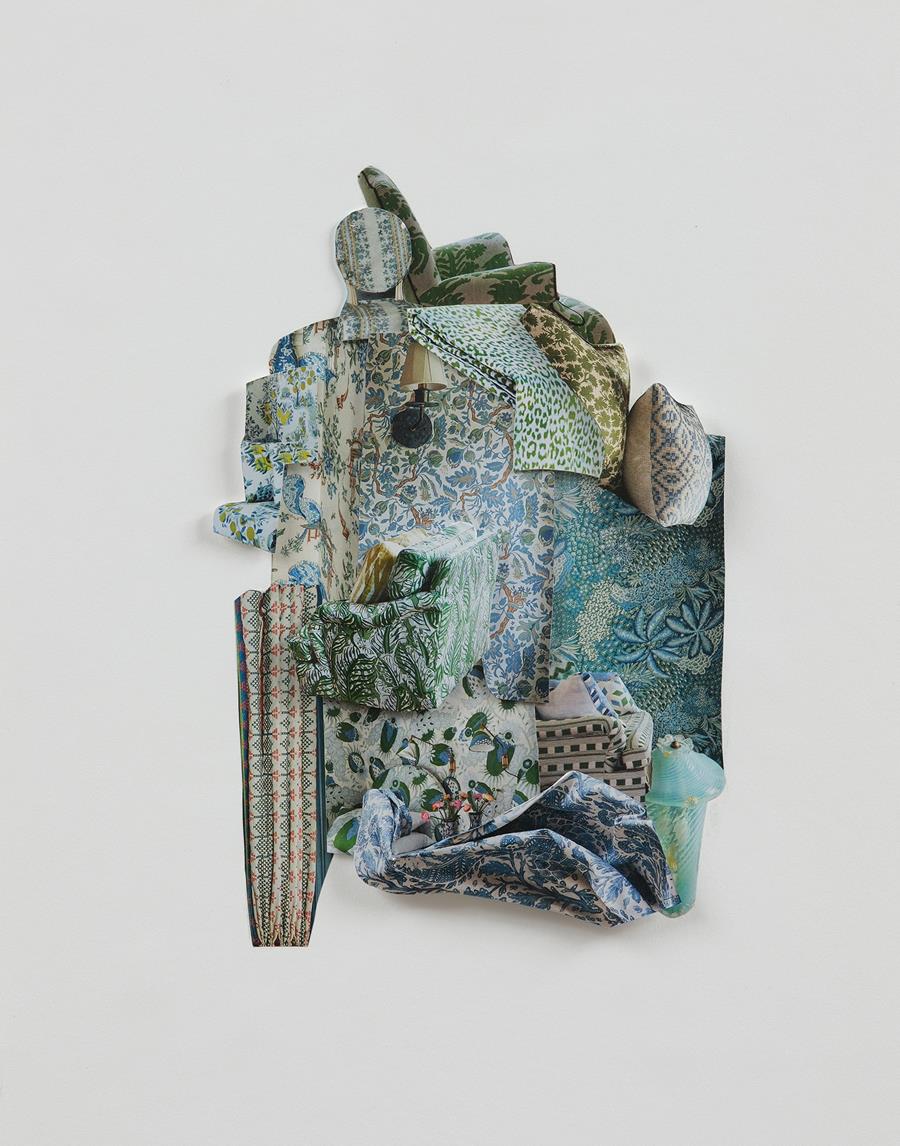
collage on paper
14.5 x 11.5 in.
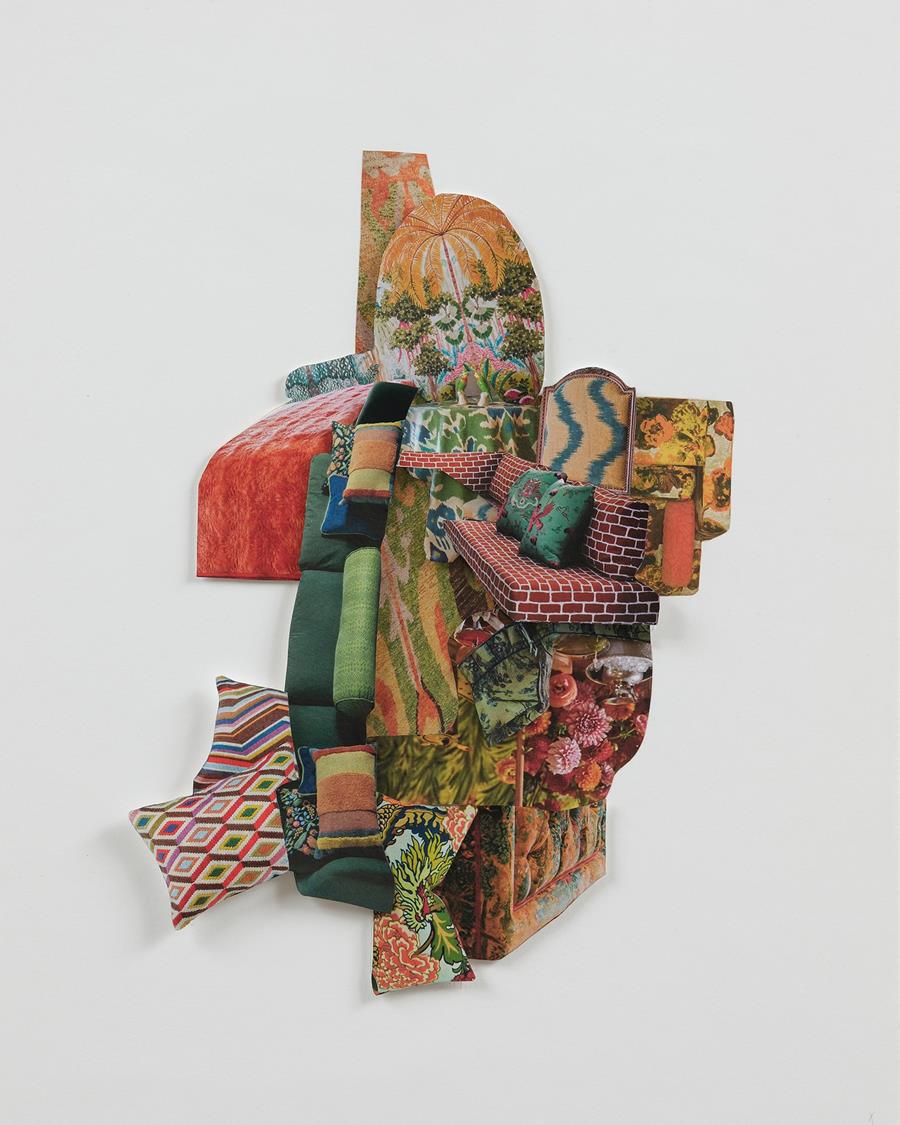
collage on paper
14.5 x 11.5 in.

About the Artist
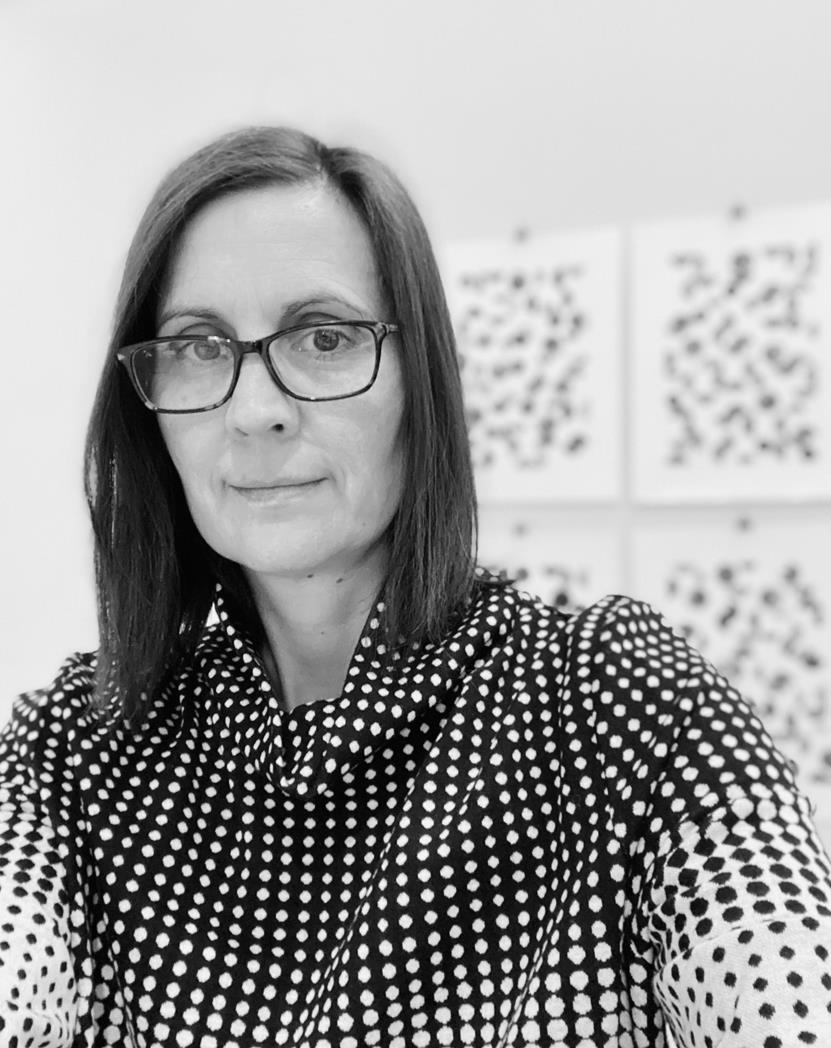
Sara Graham is an artist based on the unceded core traditional territory of the Kwikwetlem First Nation, within the shared territories of the Tsleil-Waututh, Katzie, Musqueam, Squamish, and Sto Nations, in what is now known as Port Moody, British Columbia. The artist is represented by MKG127.
Graham takes a cross-disciplinary approach to her practice, often drawing on the methods and materials of mapping, architecture, and urban planning. Her work proposes alternative ways of seeing the city and its architecture, using the real to construct the imagined. The resulting works span paper, sculpture, photography, and large-scale public art.
Graham holds a Bachelor of Fine Arts from the Nova Scotia College of Art and Design and a Master of Fine Arts from the University of Guelph. Her work has been exhibited widely across Canada. Most recently, her large-scale integrated artwork, On the Other Side of Tomorrow, at the Gordon Howe International Bridge was officially unveiled to the public at the bridge's opening.
For Your Viewing Pleasure
What to watch, read, and experience, as curated by the Collé team.
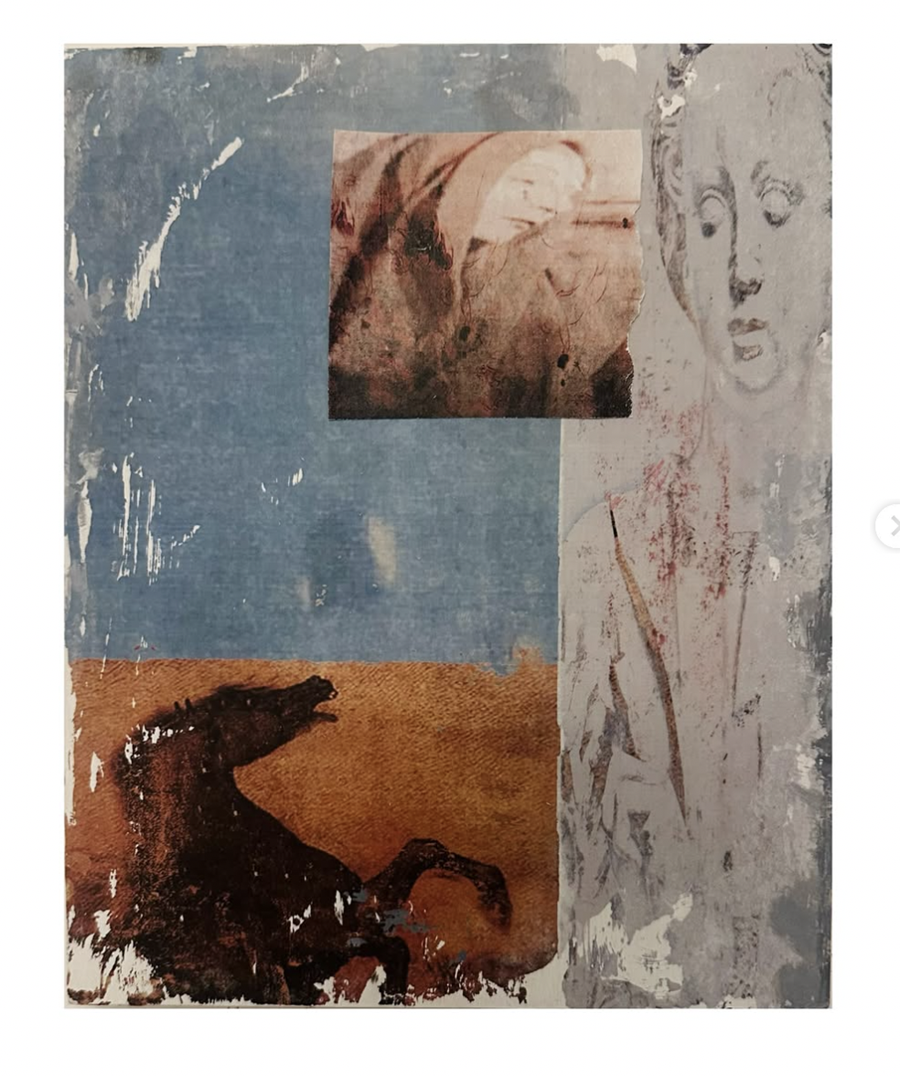
KARAN DHANKANI (b. 2002) is a self-taught visual artist based in London. His practice investigates the psychological spaces of moral ambiguity, internal conflict, and self-awareness.
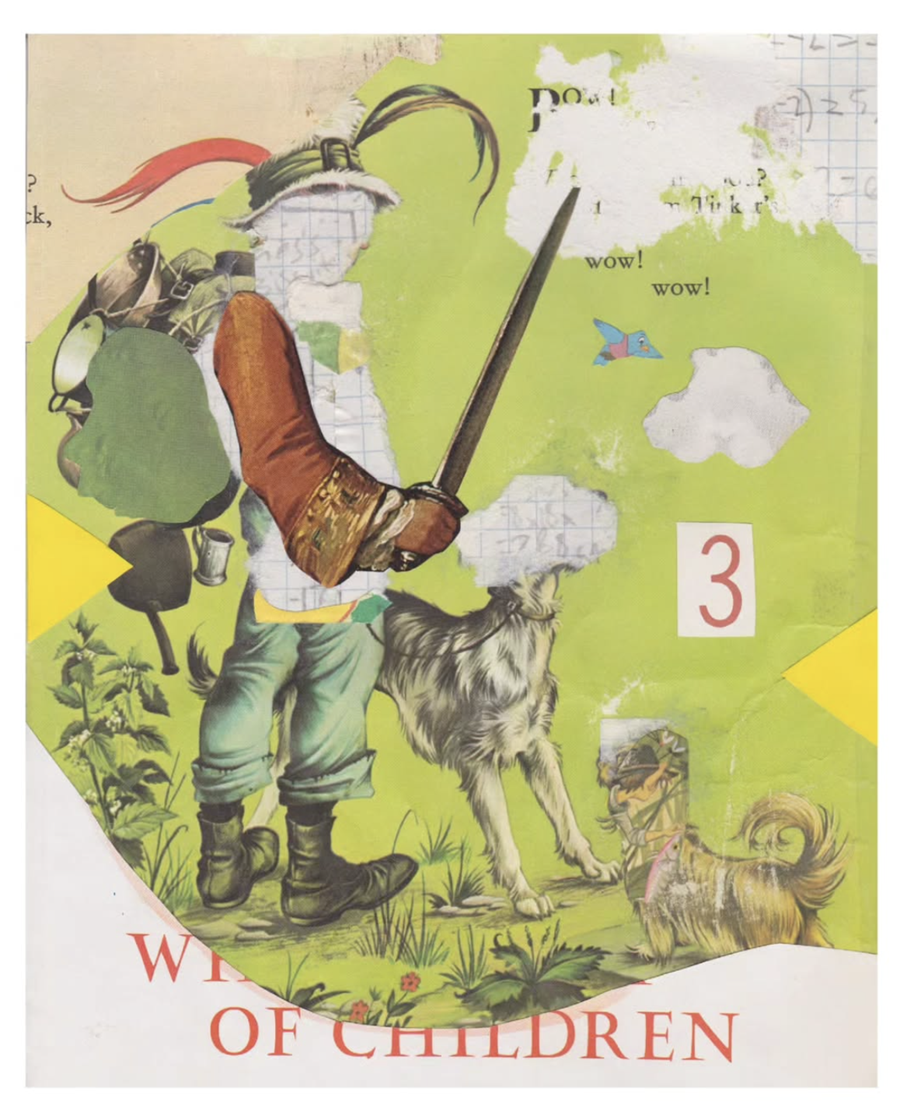
TREVOR SLOAN is a collage artist and musician based in Toronto. Born in Richmond, British Columbia, he works in analog collage using vintage magazines and books from the 1950s through the 1970s, and has made collage regularly since 2017.

ELIZABETH ZVONAR is a Vancouver-based artist working in collage and sculpture. Born in Thunder Bay in 1972, she graduated from Emily Carr University of Art + Design in 2002. She builds her collages by hand from advertising, art history textbooks, and science editorials, then scans and enlarges them.
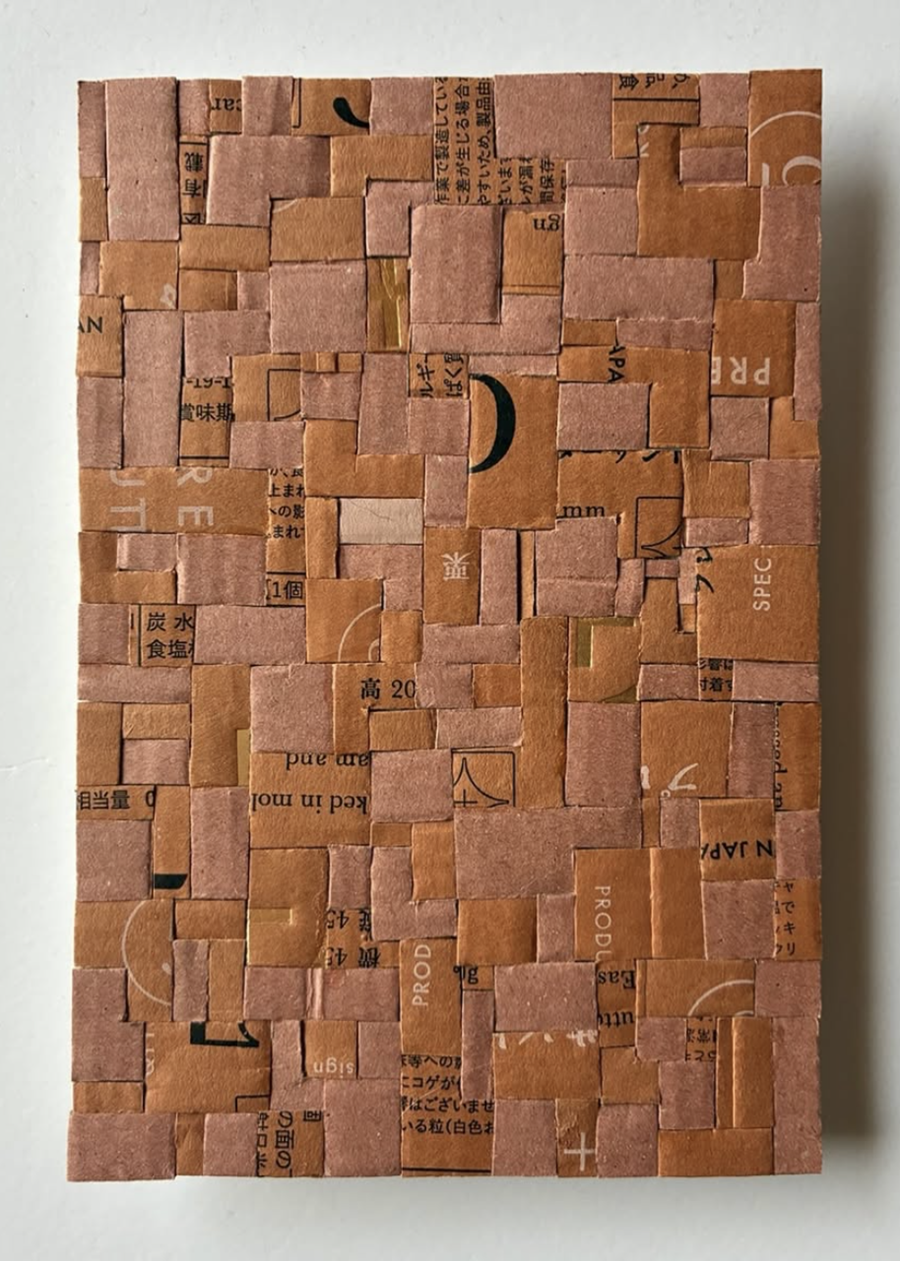
ERI KATO is an artist based in Japan. Born in Aichi in 1967, she has exhibited regularly in Nagoya since the 1990s and internationally in London, New York, Berlin, and Oberhausen. In 2023 the City of Pont-de-Claix, France, acquired her work after the 7th International Non-Objective Art Biennale.
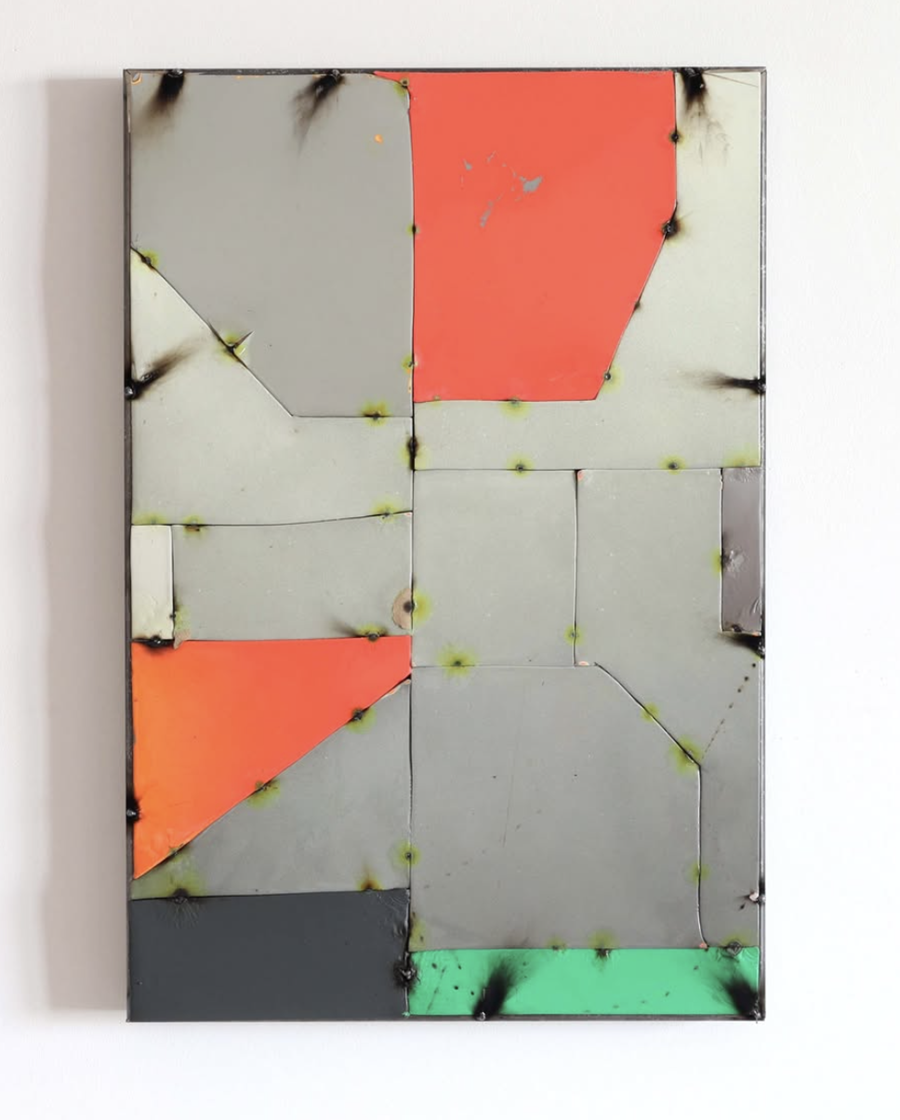
THILO JENSSEN is an artist based in Vienna. Born in 1984 in Daun, Germany, he studied sculpture at the Kunsthochschule Kassel, then painting with Daniel Richter at the Akademie der Bildenden Künste in Vienna.
Out and About
What to watch, read, and experience, as curated by the Collé team.
▼ ATTEND
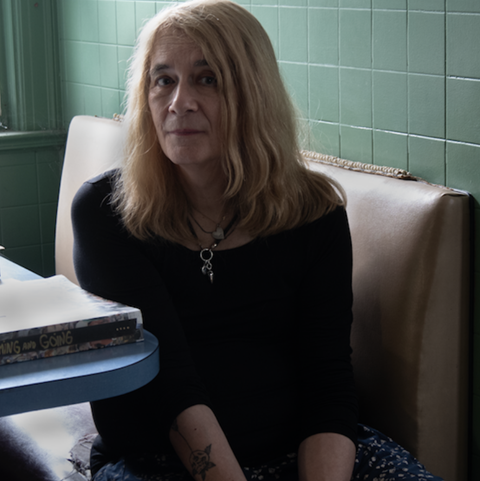
Visionaries: Lucy Sante
Wednesday October 7, 2026
The New Museum presents the 2026 Visionaries, honoring writer and artist Lucy Sante. For over three decades, Sante has written on photography, history, music, and her life, shaping our understanding of NYC's cultural landscape and the intersections of memory, identity, and place.
▼ VISIT
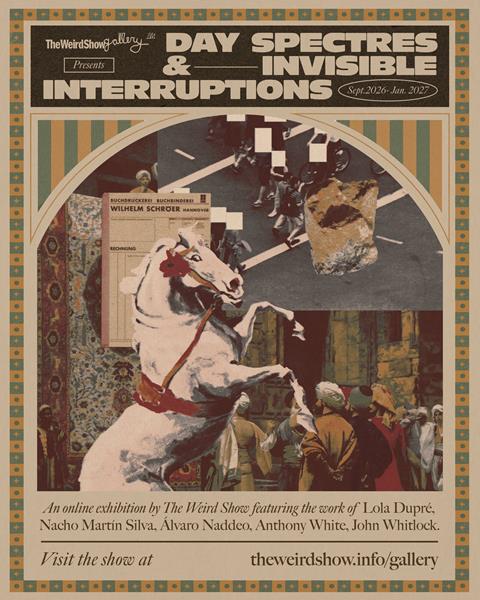
Day Spectres & Invisible Interruptions
The Weird Show Gallery's second online exhibition opens in September 2026, bringing together five artists who work at the point where painting and collage stop being separate
practices. The exhibition brings together five artists: Alvaro Naddeo, Anthony White, Lola Dupré, John Whitlock, and Nacho Martín Silva.
▼ LISTEN
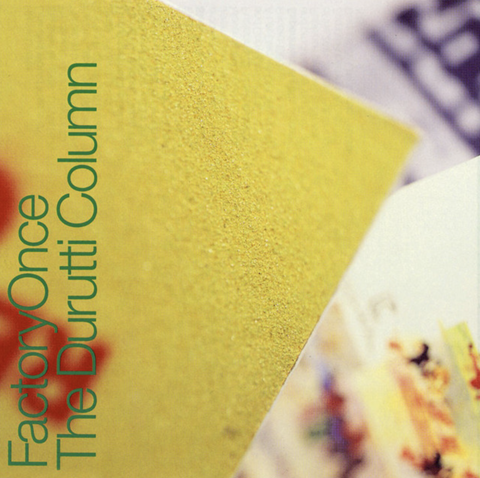
The Return of The Durutti Column by The Durutti Column
This 1979 album is instrumental, built from Vini Reilly's clean, chiming guitar, drum machine pulses, and Martin Hannett's echo pedals. It's quiet, melodic, strange, closer to ambient than anything else on Factory.
