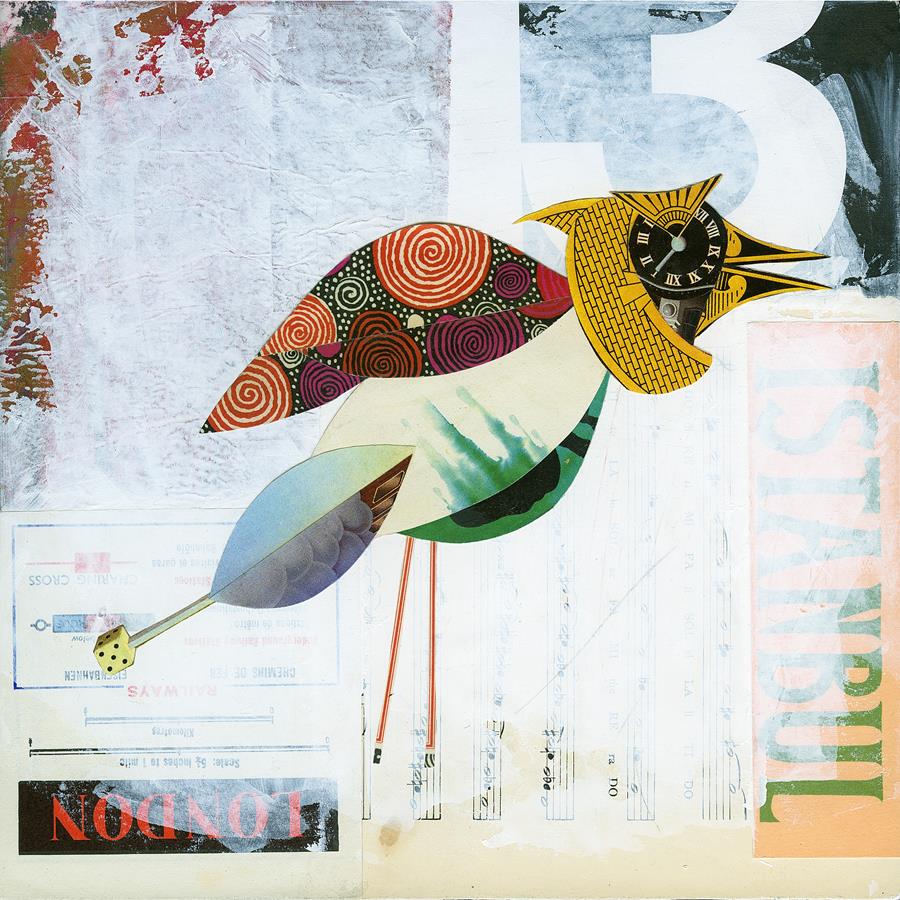
Found papers and acrylic on wood panel
8 x 8 in.
Craig Howarth
Craig Howarth makes birds that do not exist. Each one is built from a single source, a page or two from a vintage book. The names are half taxonomy, half punchline; the Latin is made up, same as half the field guide. The birds sit on washed-out backgrounds, faded back so the creatures hold the frame. Up close, the parts give themselves away. A clock face for an eye, a die at the tip of the tail.
In the Words of the Artist
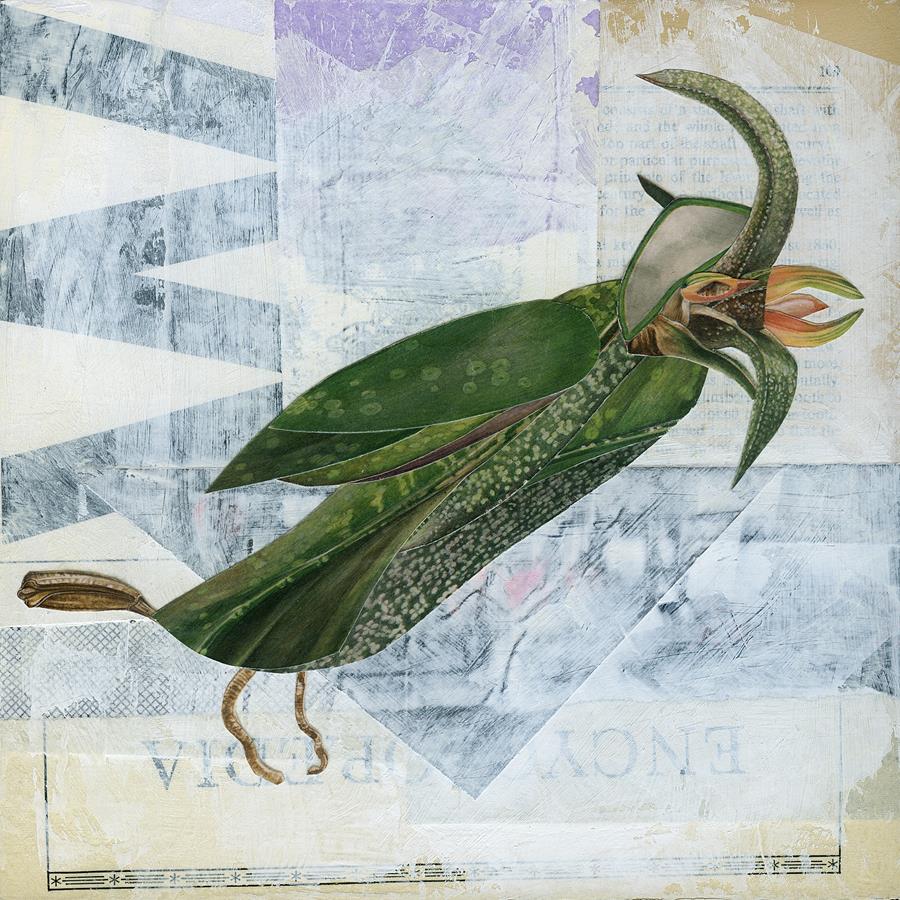
Found papers and acrylic on wood panel
8 x 8 in.
I like to work intuitively within a structure of constraints that I’ve defined for a particular project. Some of my work is constrained by only using scraps left over from previous work, while others are constrained by starting with a single strong element and then building the composition from there. For my bird series, the constraint is that I create a bird using only one source for the elements of the bird. That source could be a page or two from an old art, history, or science book, anatomical drawings, or illustrations from a magazine. I build the bird only from elements that I cut from this source. However, one constraint that I do not give myself is to make my bird resemble any real birds. These are fanciful, kooky, and odd whose only purpose is to make me, and hopefully the viewer, smile.
Collage is the excavation of material and its resurrection into something new. Reviving old stuff and giving it new life and meaning through knife work, ripping, and glue. Collage is the excitement of seeing some new reality emerge from the old, tattered, foxed, and forgotten media of the past. Juxtaposing images that were never intended to be together and making them work. These, to me, are the essential elements that make collage such an exciting medium that continues to inspire me.
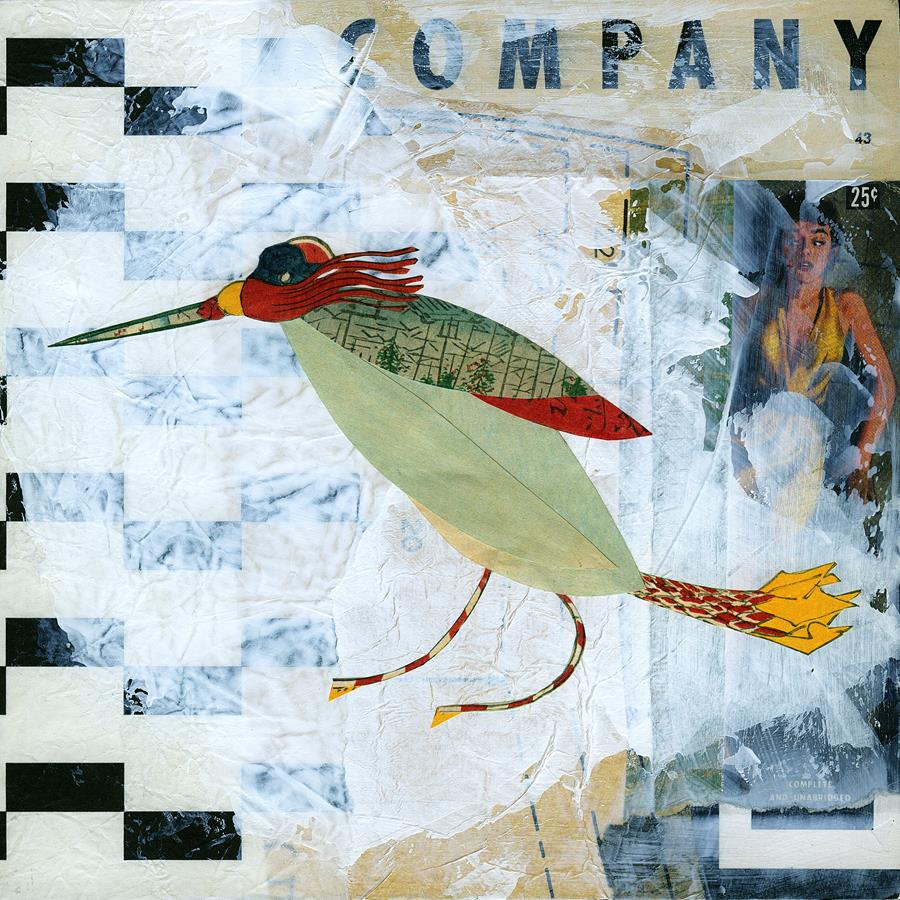
Found papers and acrylic on wood panel
8 x 8 in.
I don’t really have an overarching theme that I am trying to convey with my work. Much of what I create is intended to be humorous or otherwise delight the viewer. I want to create work that would be welcomed into the home of a collector, so I am conscious of aesthetics and beauty. Still, serious messages do creep in, maybe not literally but in the subtext of the imagery or text selected. Often these are a side effect of the combination of materials that I am using and are not necessarily intended. Happy surprises sometimes emerge.
I have a daily habit to create a quick collage using scraps from previous work, which I save in a big bin. This is an exercise to loosen me up in my studio before tackling more involved projects that I may be working on. For my bird series, I have a rhythmic process which involves creating the background panels in batches of six and then creating six birds as stand-alone collages which are matched to panels at a later time.
For the backgrounds, I gather materials and somewhat randomly glue them down onto the panels, which are painted with a scrim of transparent paint to deemphasize the background so as not to compete with the bird that would come later. Then I make six birds, a time-consuming process of finding a page or two from a single source (a book, magazine, other ephemera) and building a bird from just that material. Once I make six birds, I match them with a background panel that seems to work and glue the bird to the panel. Despite not making a background for a specific bird, it always seems to work out that each bird finds a good home.
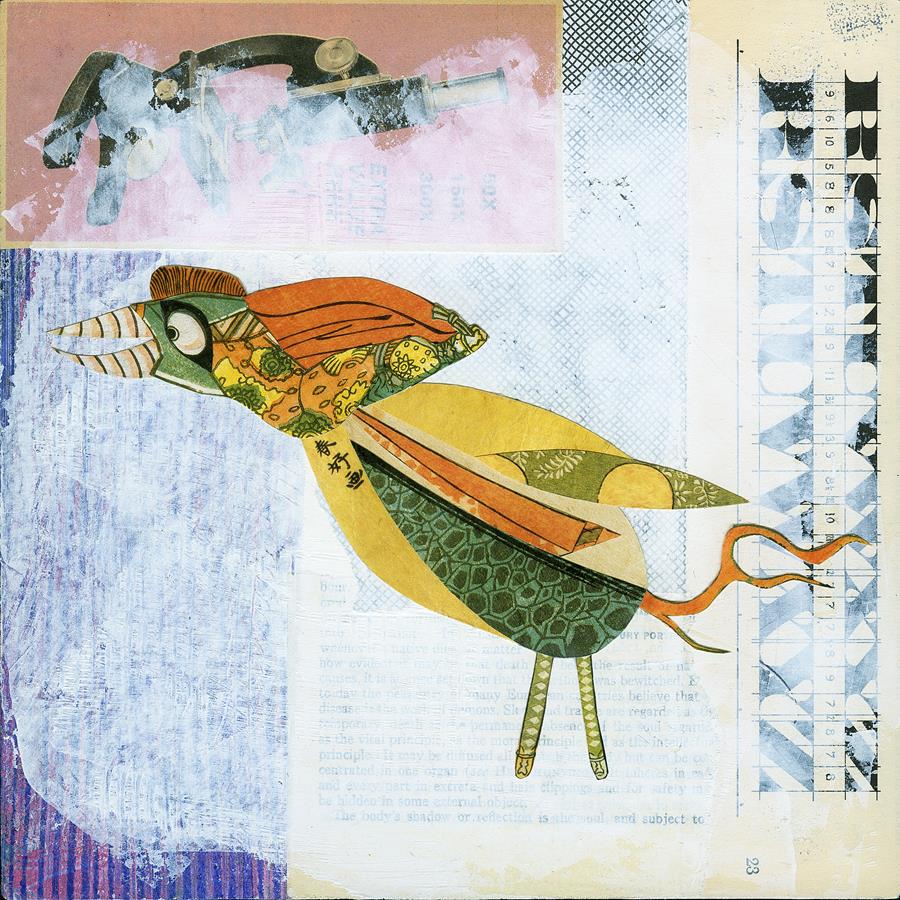
Found papers and acrylic on wood panel
8 x 8 in.
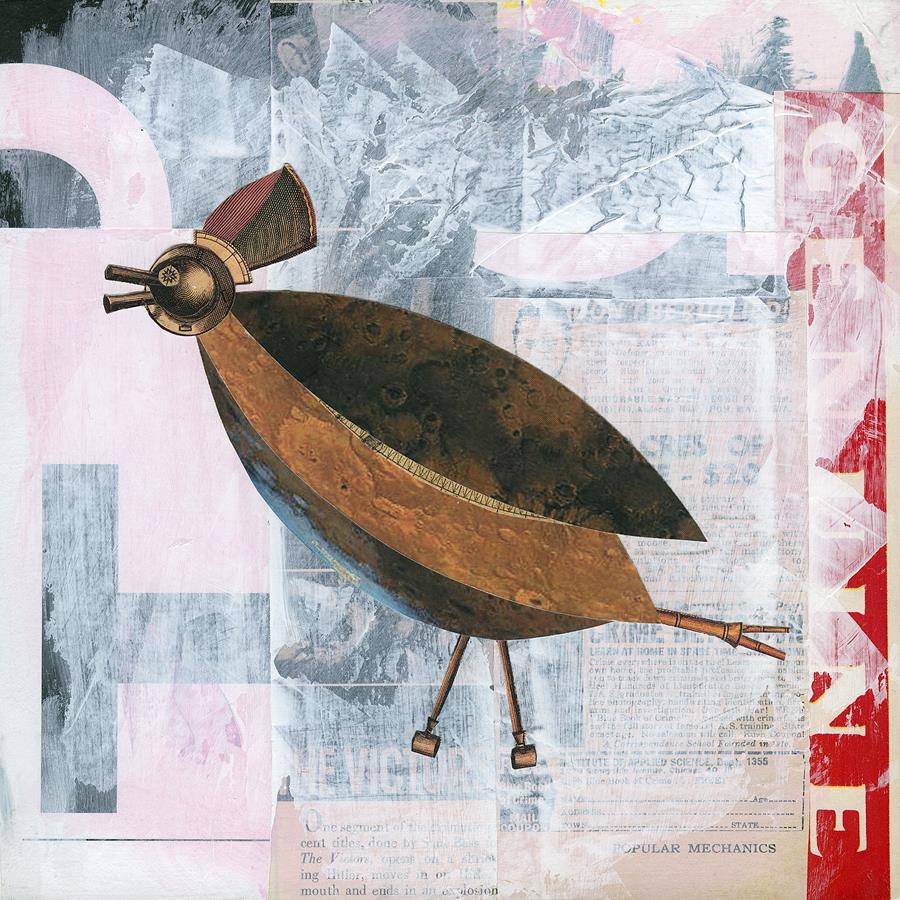
Found papers and acrylic on wood panel
8 x 8 in.
I first gather material that feels like it will yield something interesting. Once I have an ample selection of candidates, I study each carefully, looking for the elements of a bird to emerge from imagery. The body and wings of the bird are easy to find in just about any image, but the head (especially the eyes and beak), legs, and tail are more elusive. My most successful birds use elements from the image directly in a new context and are not just paper cut to the appropriate shape.
Sometimes I can’t make it work within my constraints; I find a tail, but the head will just not present itself. Those papers end up in my scrap bin. More often than not, though, delightful details emerge, such as a small phallus from a Kama Sutra book that becomes an element of a head (Kalighat's Bawdy Strutter) or a couple of Penguin book covers yielding a tail made from dice and a head from a clock (Pip Tail Ticker). The viewer may have an easy time identifying the source; others not so much.
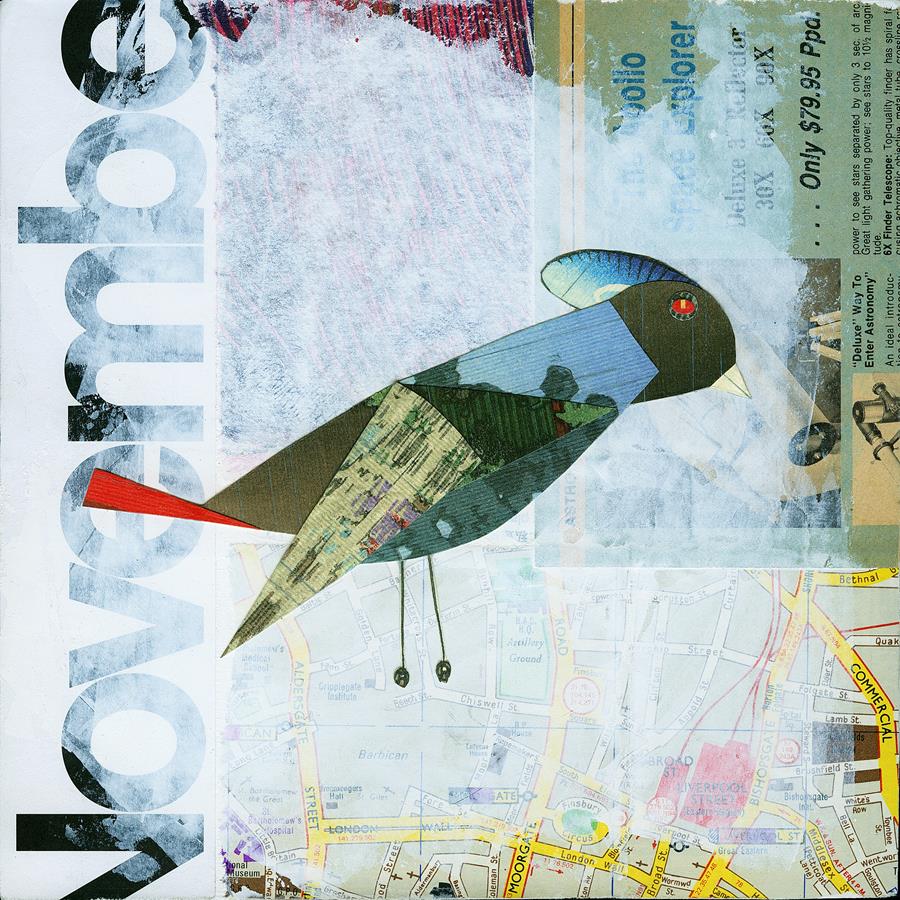
Found papers and acrylic on wood panel
8 x 8 in.
Most of the birds were named after the entire series was complete. By the time I finished the series, I realized that I should give each bird a common name and scientific name, just like any real bird you would find in an avian guide. The names emerged naturally from the papers used or a distinctive feature of the bird that I had created. I researched the source material to find facts about the painter, the subject of the painting, or other elements in the material.
A ukiyo-e print from Hiroshige’s One Hundred Famous Views of Edo became Wobbly Nobori-Tail (Flexicrurus banneracauda), referring to the unstable-looking legs and the tail made from the flowing banners from the print, or two pages from an astronomy book became Hven Lenswatcher (Uranoscopus hvenensis) because one of the images was a reproduction of a painting of astronomer Tycho Brahe in his observatory on the island of Hven. Google Translate was used to create Latin words that fit with the source material and the common name.
Much of the Latin is complete nonsense, which seems consistent with actual binomial nomenclature, which commonly contains Latinizations of non-Latin words. In the end, the name is an attempt to add another layer of whimsy to each collage and clues to the origin of the images used to create the bird.
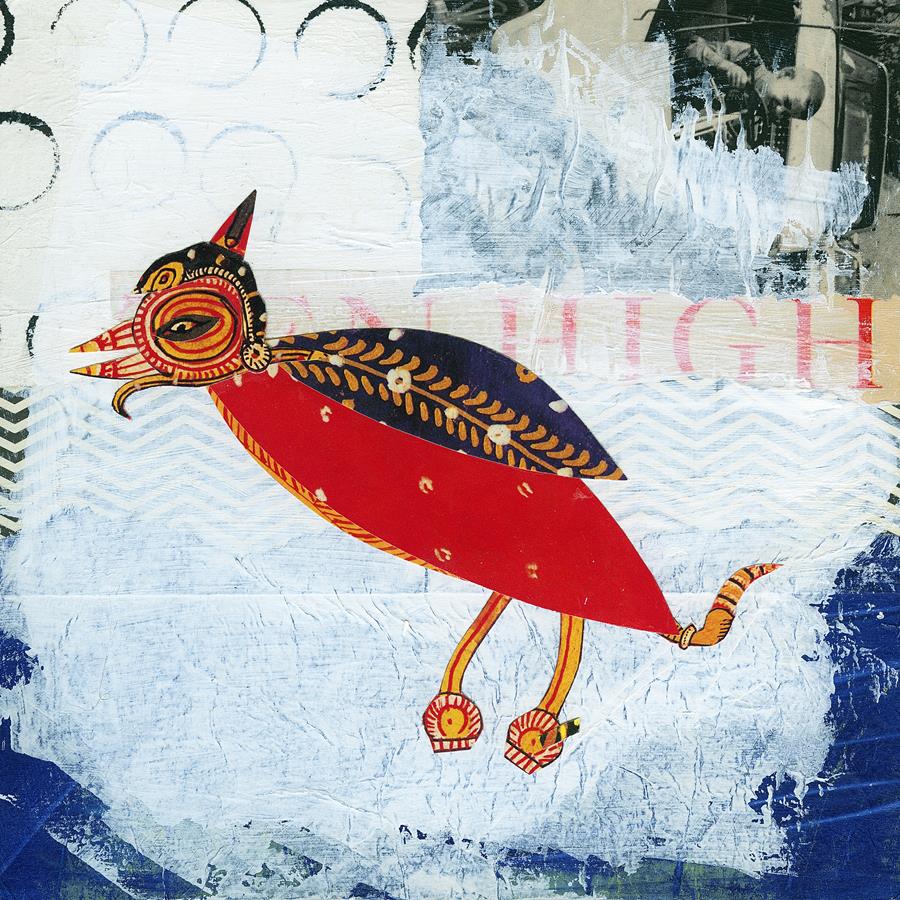
Found papers and acrylic on wood panel
8 x 8 in.

About the Artist
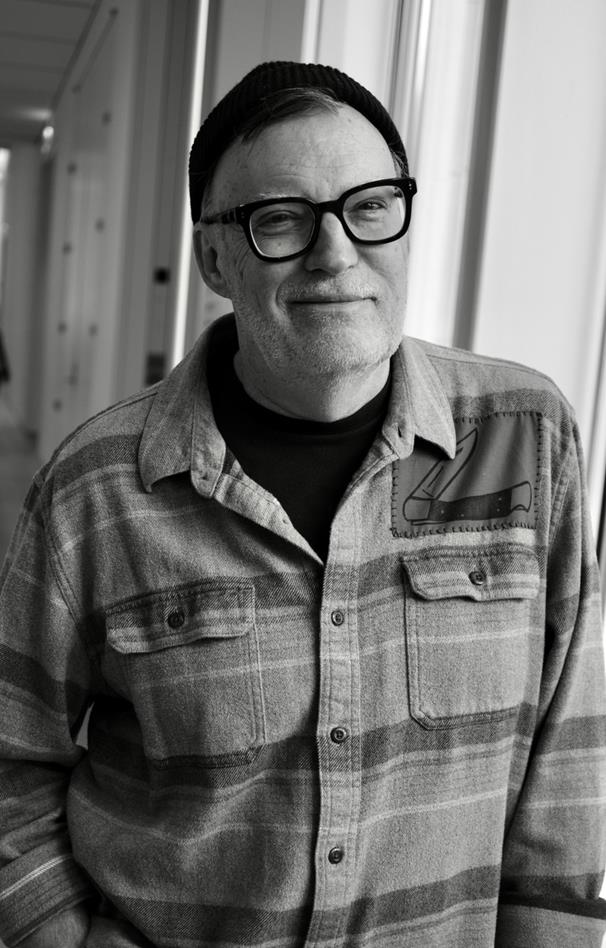
Craig Howarth is a self-taught collage artist based in Philadelphia. He creates analog collages using discarded print material, with an affinity for mid-century advertisements, science textbooks, comic books, maps, and all manner of discarded and worn magazines. He works intuitively, letting the material guide the process, relying on happy accidents to bring new visual relationships to images that were never intended to appear together. The results are sometimes abstract, sometimes funny, sometimes just plain odd, but always strive to be thought-provoking, entertaining, and rich in detail.
For Your Viewing Pleasure
What to watch, read, and experience, as curated by the Collé team.

OLGA MARTINEZ is a New York-based analog collage artist. She builds quiet, layered compositions from weathered paper, print fragments, vintage ephemera, and her own photography.

RICH BROWD is a Los Angeles-based artist, working across printmaking, collage, mixed media, and soft sculpture. His work explores the tension between the beauty of the natural world and the darker realities of modern life.
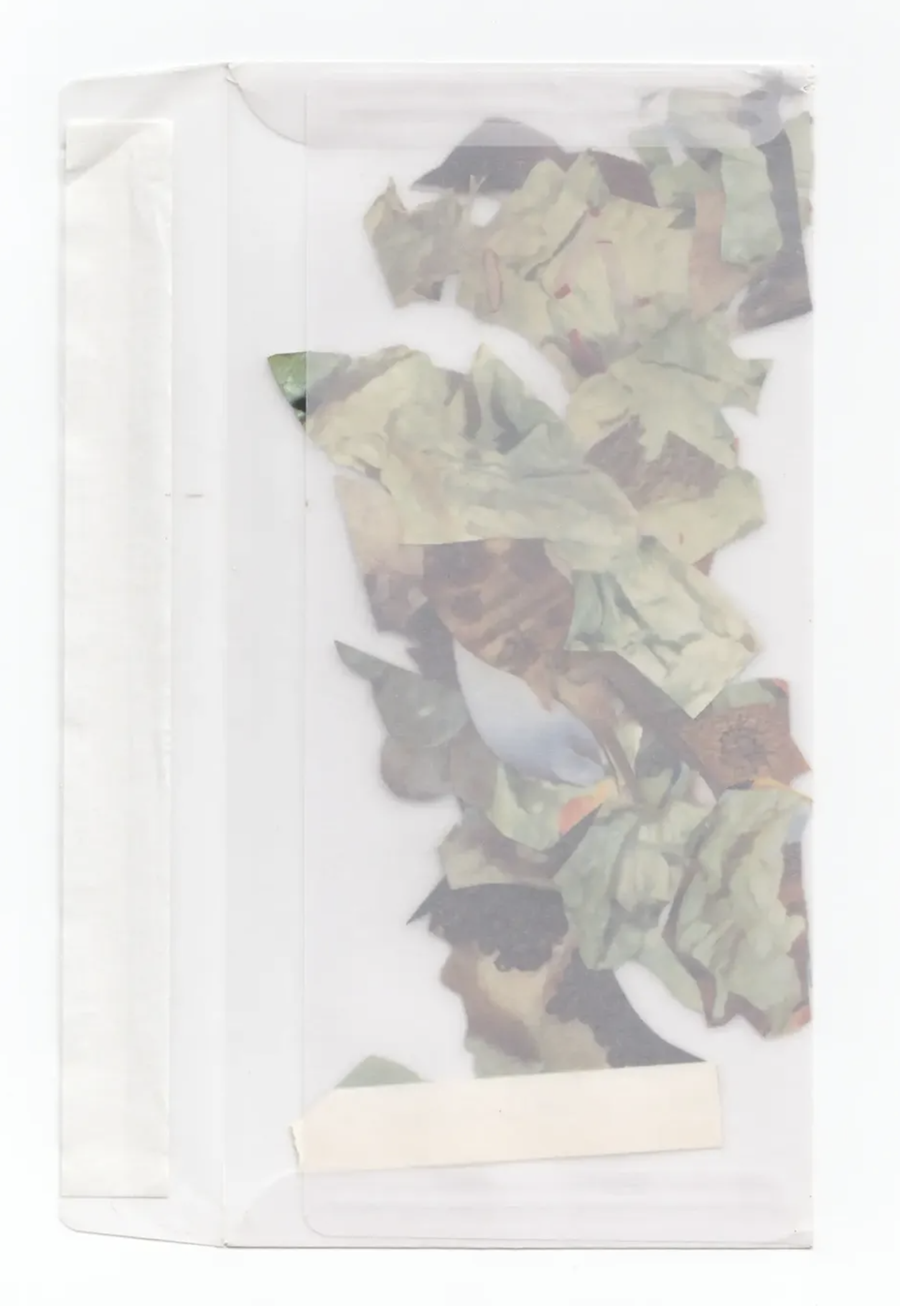
DENNIS EICHMANN is a Berlin-based artist and photographer with a background in Fine Arts and Fashion Design, specializing in analog and still life photography. His series Sea, Sun, and Soil is a meditative study of Crete’s landscapes.
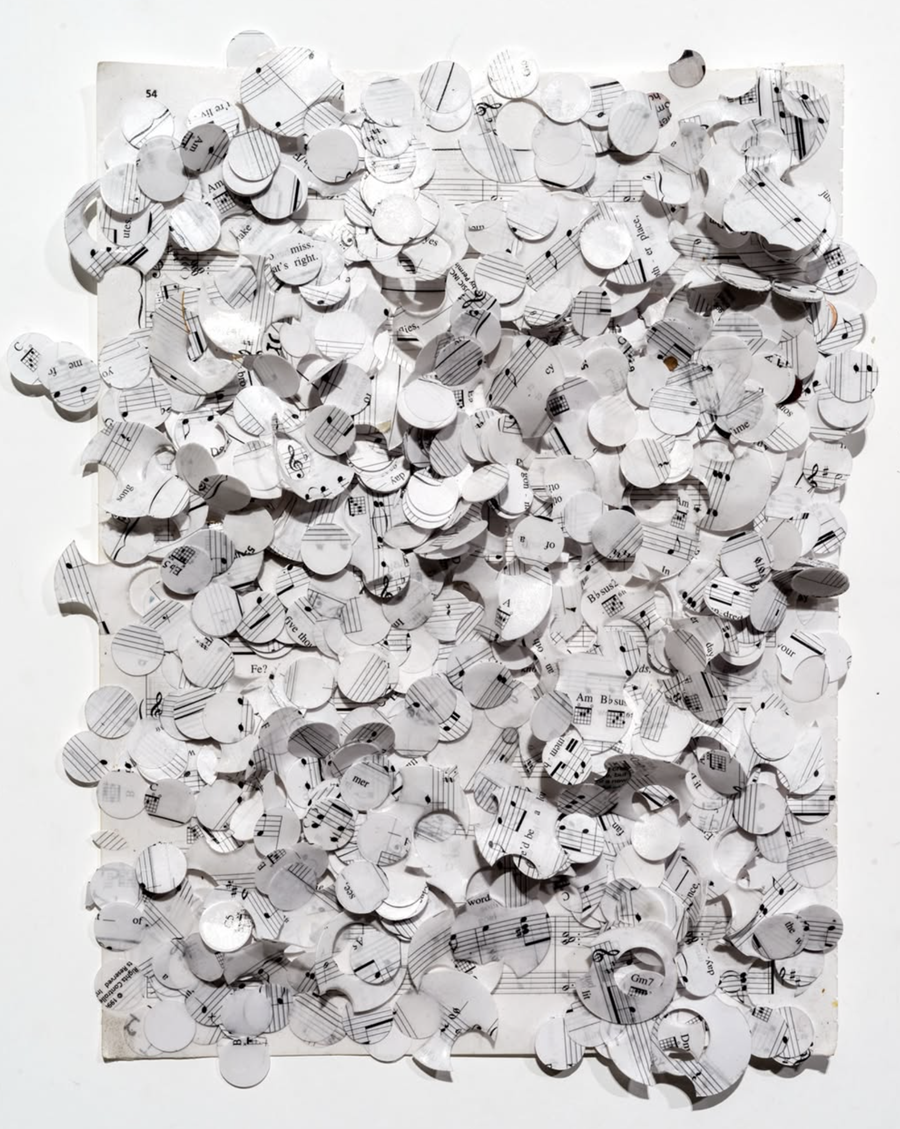
DAVID DAIGLE is a Los Angeles–based artist, photographer, and educator. He received a BFA in Media Arts from Hampshire College, where he studied with photographer Jerome Liebling, and an MFA in Fine Art from ArtCenter College of Design, where he studied with Diana Thater, Stan Douglas, and Lita Albuquerque.

MARIE POMME is a Dutch based graphic designer and artist. With her love for high quality paper, architectural shapes and color she designs contemporary art.
Out and About
What to watch, read, and experience, as curated by the Collé team.
▼ APPLY
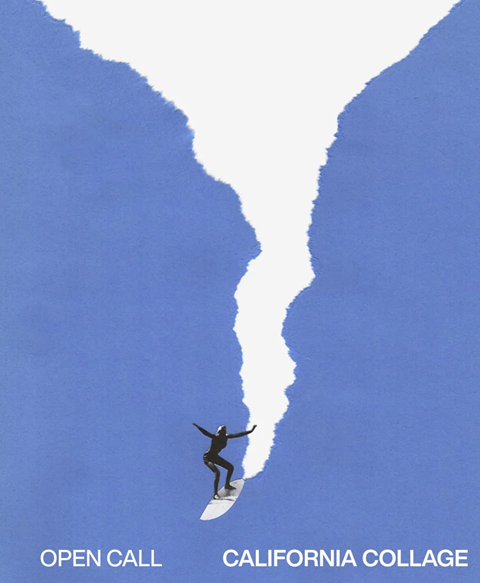
COLLÉ OPEN CALL
California Collage, a forthcoming Collé exhibition, surveys collage made across the state. Open to California artists working in collage. Email curator@revuecolle.com with: CV, artist statement, and website or press links. Images with title, year, dimensions, and materials. A short note on how the work fits the exhibition. Deadline: October 23, 2026. Artists notified mid-November.
▼ VISIT
Modern Things at NOON Projects LA
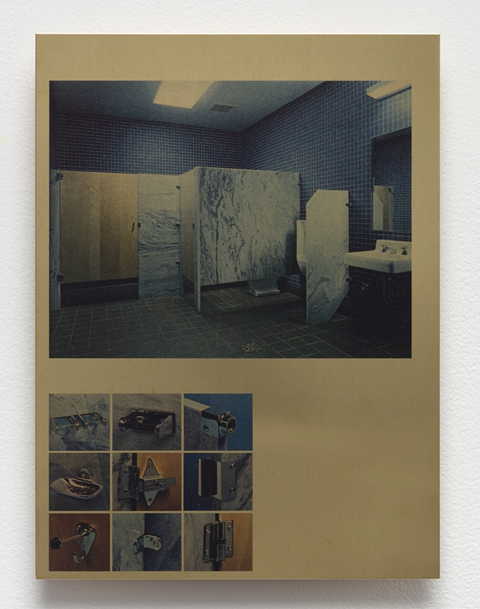
This show includes photographic works by Tanya Brodsky printed on metal using images sourced from vintage issues of Progressive Architecture. Isolating corporate drop ceilings, bathroom systems, and other once-innovative design features, these pieces consider architecture’s recurring promise to improve daily life. On view through October 24, 2026.
▼ LISTEN
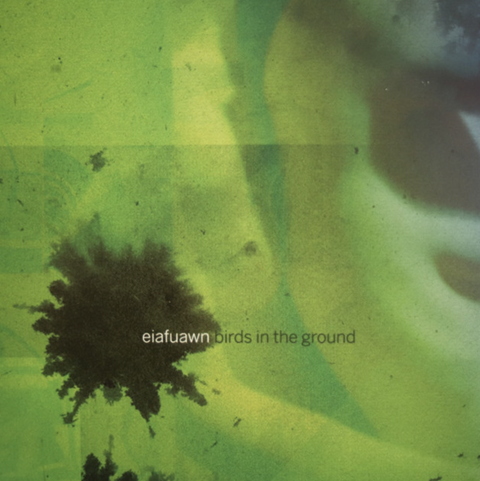
Birds in the Ground by Eiafuawn
This 2006 album from the Oregon duo Eiafuawn sounds like it was recorded in a quiet house in the country with the windows open. Soft vocals, minimal guitar, songs aged in dust. Perfect soundtrack for the Autumn.
