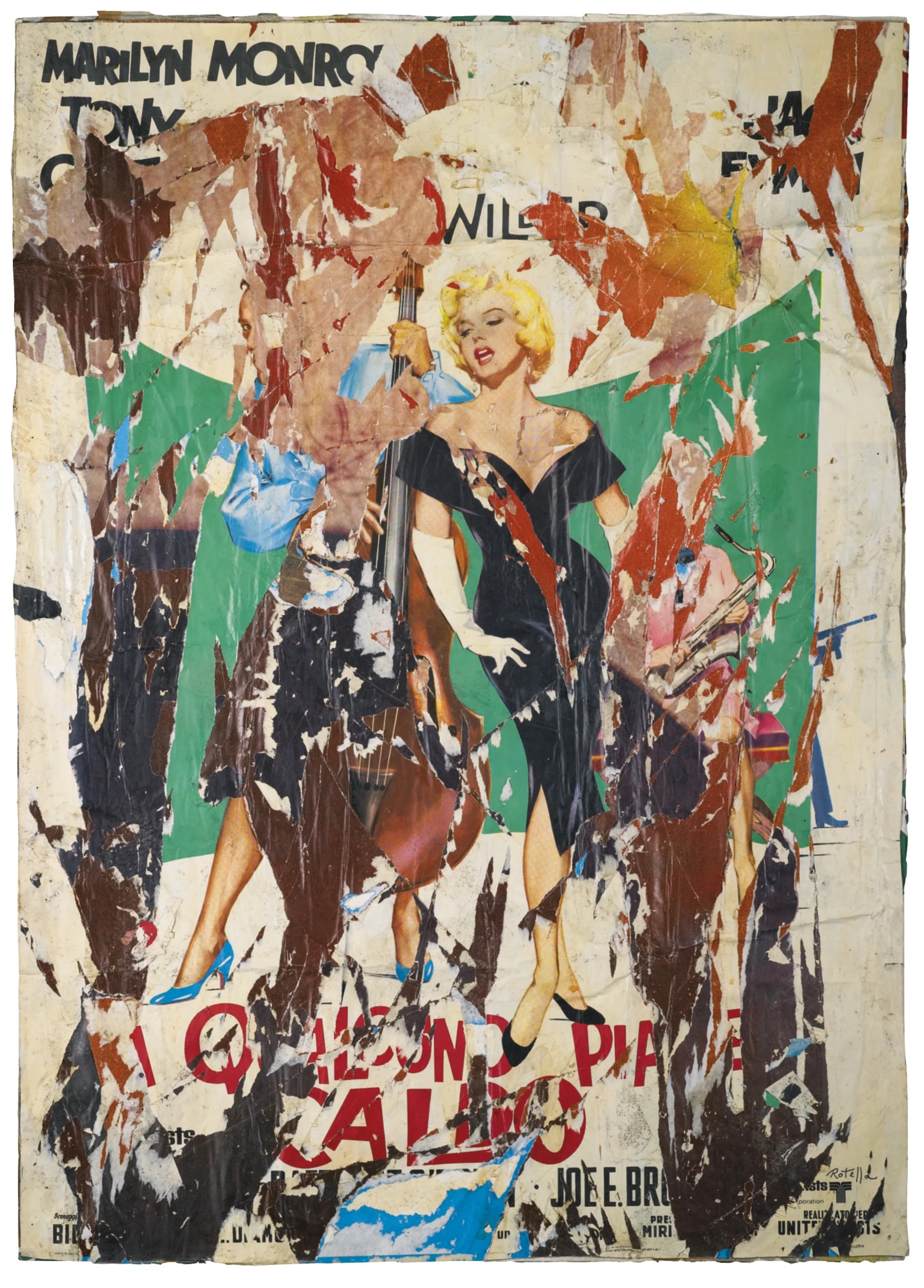
If you are fortunate to live in an urban center with any degree of walkability, you’re likely to come across walls covered in layers of torn advertising posters: concerts, movies, mobile phone providers, fashion. The myriad of poster types you find in dense urban centers runs the gamut; activists recently hung posters in typical commercial size and style all over New York City in protest of the “Bezos Met Gala.” Sometimes a single city wall will contain years worth of print advertising, one advert summarily wheatpasted upon another in a continuous battle for wall real estate. I’ve countlessly come across these walls in my frequent walks around Brooklyn. Usually I give them a passing glance and continue to my destination, but once in a while I encounter a wall so thick with layers of posters that I have to give a tug on the peeling corners to peek at the layers of printed stratigraphy.
Mimmo Rotella surely had a similar experience over 70 years ago. An Italian artist and key figure in post-war European art, Rotella trained as a figurative painter, but in the early 50s, after a trip to the U.S., he’d fall into an artistic crisis, and upon returning to Rome in 1953, “discovered” the torn posters of the city. This discovery would fuel the works he is most known for. Rotella collected layers of posters from the walls in Rome and reglued them directly onto canvas. He would tear them more once affixed, producing a “double décollage” technique; décollage the French word for de-glue. His walks around Rome for source material were a visual treasure hunt, looking for serviceable layers of posters for more double décollage. He was quite prolific, with the number of Rotella décollage works totalling in the thousands. Clearly the wheatpasters of his time were just as expeditious in their duties as those working in NYC today. It’s possible that Rotella’s artistic crisis was ignited when he met members of the nascent Neo-Dada movement, as during his U.S. trip he encountered Robert Rauschenberg, Claes Oldenburg, and Yves Klein. These artists were moving away from the material emphasis of abstract expressionism, and bringing objects of the everyday world back into their works, much like Rotella bringing common commercial advertising into his own practice.
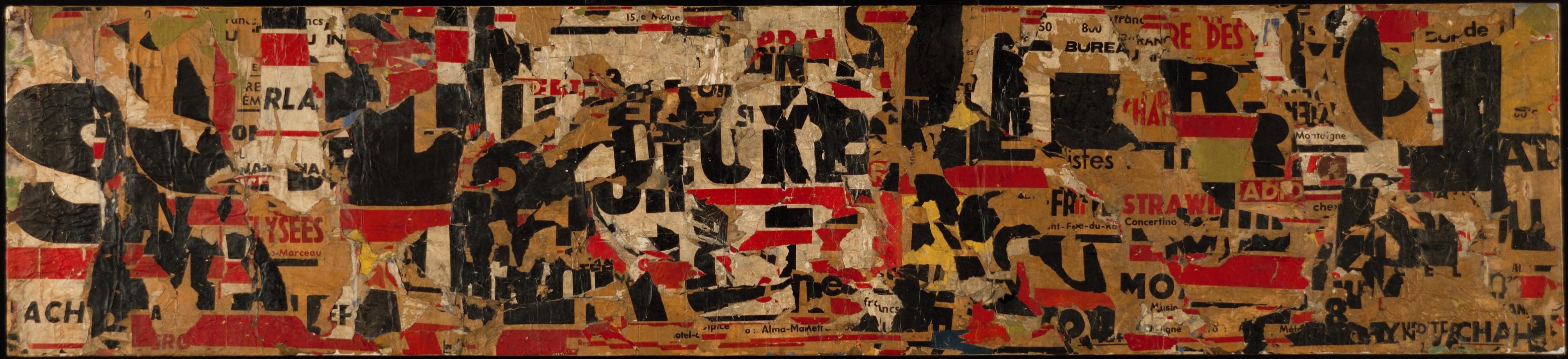
Across the Alps and unbeknownst to Rotella, however, two French artists had already embarked on similar material explorations: Raymond Hains and Jacques de la Villeglé. The duo’s journey that led to affiches lacérées (French for torn posters) was not too dissimilar from Rotella’s. Hains was fashioning his own photographic lenses in the 1940s that would refract and disrupt images - heavily influenced by the Dada and Surrealist works he’d consumed decades prior and was already primed to see art in the commonplace. Villeglé introduced Hains to the works of Camille Bryen, a poet and painter, who was sporadically involved with the Cercle et Carré abstractionists and had his own fascinations with Duchamp and Dadaism. Together, Hains and Villeglé would produce conceivably the first “fine art” example of décollage in 1949, Ach Alma Manetro, a joint work of torn off-white and red paper interspersed with black letters deconstructed so as to not represent any legible words - the source of the papers from torn concert posters. Previously, the two had deconstructed Bryen’s poetry in a similar way, photographing the printed volume Hepérile with Hains’s “hypnagogoscope” camera, fragmenting and rearranging the words into a new visual poem.
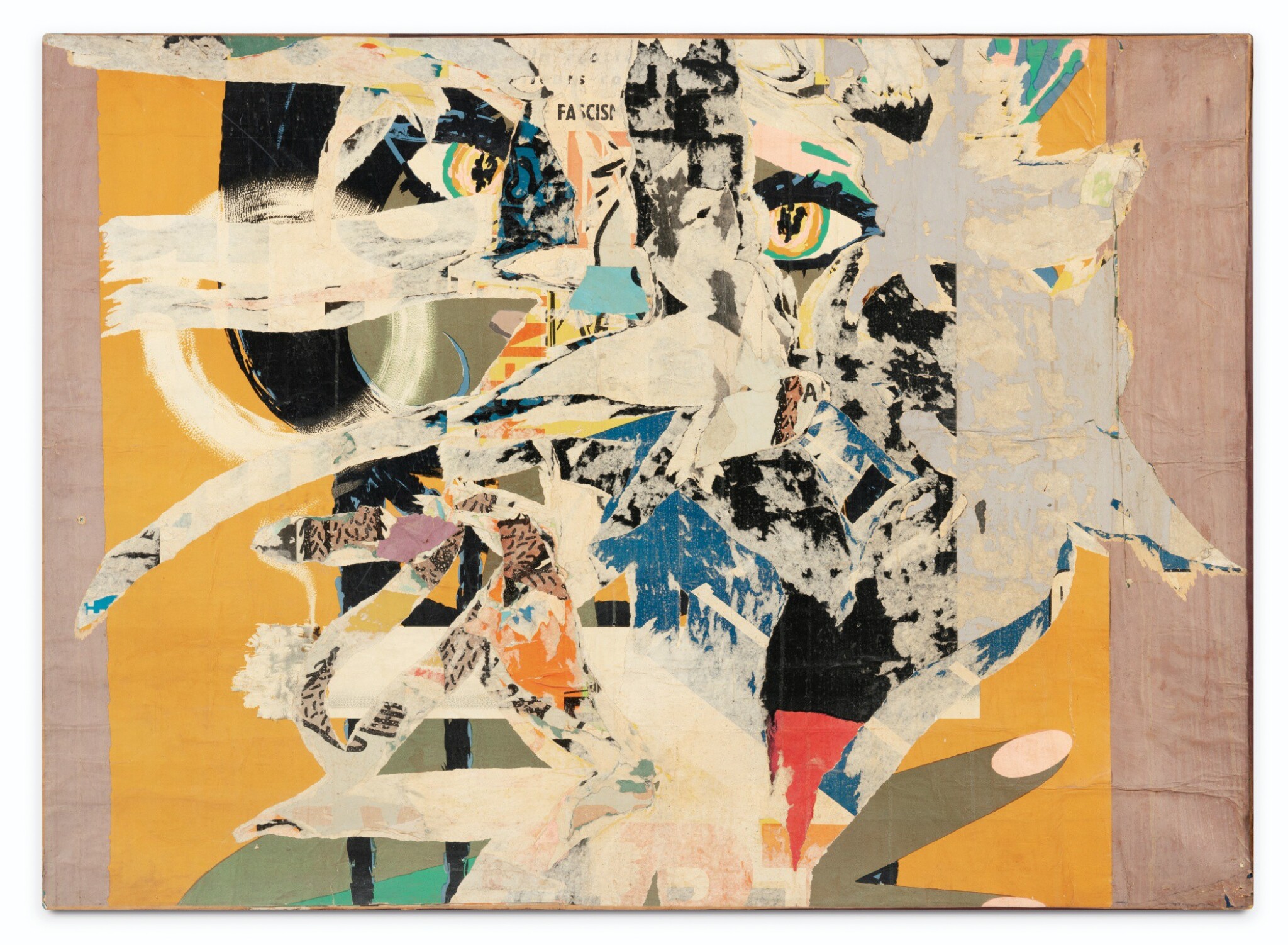
Their sensibility contained an irreverence toward traditional art forms. Hains was known to have rejected the art business and felt that his décollage works were not created by him, but existed as a “poetry of the walls,” the works’ final composition a byproduct of both their original visual design and the city conditions they were subjected to. I’ve conversationally referred to the processes disturbing street posters as a form of urban “bioterbation” - a term borrowed from my earliest undergraduate times as an anthropology student. Bioterbation is the reworking of soils by animals and plants, the churning of ecosystems, which is not radically dissimilar from the urban wear and tear a paper poster is subjected to; the elements, graffiti, subsequent posters pasted on top - a short but active lifecycle.
The rationale that pushes an artist to produce works of art lifting directly from an urban landscape is in opposition to the special reverence historically applied to fine art. As I write this, fresh in my mind is the absurd video of Nicole Kidman flailing around a Brancusi bust that sold for $107 million at Christie’s during their May 2026 auctions. The work, titled Danaïde, I viewed in person only days before, displayed in a darkened cylindrical room, lit like the Golden Idol in Raiders of the Lost Ark, a grandiose display aimed at realizing top auction dollars. This pervasive deification of art objects is a sensibility that the Dadaists and neo-Dadaists rejected - a sensibility that Rotella, Hains, and Villeglé rejected as well. The poetry of the street, bioturbation, these are the commonplace, the byproducts of daily life; anthropological interests that were in opposition to the classist exaltation of the wealthy art patrons and gallerists.

A third Frenchman with comparable sensibilities but independent origins would come into the mix in 1954, François Dufrêne. Dufrêne met Hains and Villeglé that year. He was already acquainted with Yves Klein, and had his own influence on the burgeoning neo-Dada movement with his experimental poetry. He’d create his first décollage works several years later in 1957, and was already a largely impactful figure among the neo-dadaists. Dufrêne’s earlier forays into phonetic poetry mirrored the experiments of the other Frenchmen. Influenced by the early musique concrète recordings of the 40s, the trio of Frenchmen would create Ultra-Lettrist poetry together that broke the structures of conventional poetic forms. The parallels and synergies across mediums here are not incidental, and hinted at what was to come in the Nouveau réalisme and Fluxus movements of the following decade.
By the mid 1950s, the four aforementioned Europeans were exhibiting their décollage works in Europe, but it was a German named Wolf Vostell who would broaden the scope of décollage. Vostell was born in 1932 in Leverkusen; his mother was a Sephardic Jew, which led his family to flee Germany in 1939 to Czechoslovakia. The tale widely told about Vostell, but hard to find primary sources for, is that his family walked back to Germany in 1945, the trip taking three months and exposing the adolescent Vostell firsthand to the destruction of the war. He’d work as an assistant a few years later under poster artist A.M. Cassandre, likely instilling a commercial art sensibility that he would later deconstruct. Despite the term décollage already being in use at the French exhibitions, Vostell would begin using the term décoll/age to describe his process after encountering the word décollage in a newspaper story of a plane crash in 1954. While Vostell did create his own versions of deconstructed posters, his décoll/age scope and philosophy would expand far past printed materials.

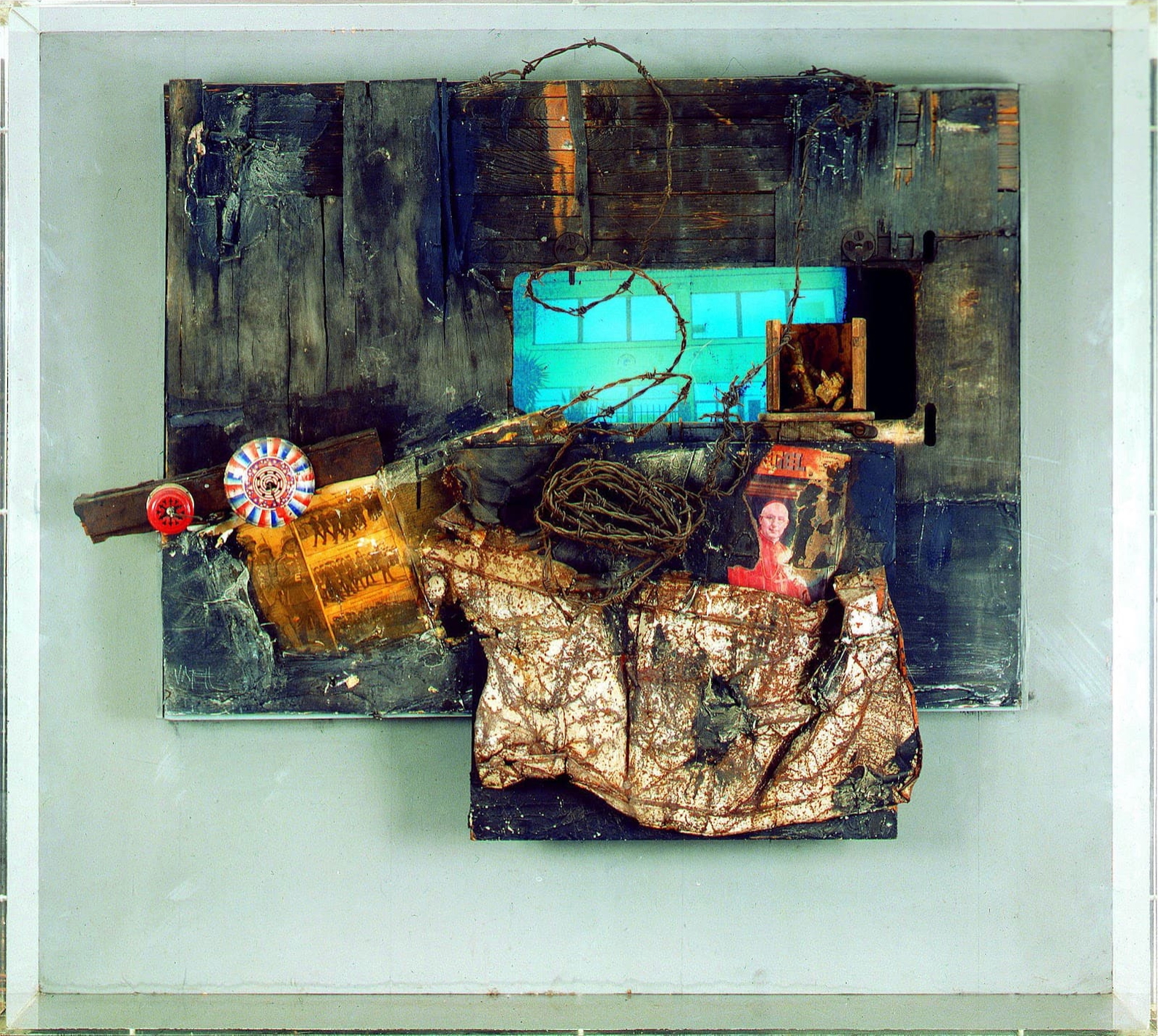
Vostell’s décoll/age was about fragmenting reality and experience as much as it was about deconstructing art and objects. He began with the material; his Deutscher Ausblick work from 1958 looks like one of Rauschenberg’s combines, distressed barbed wire, a children’s toy, discarded industrial material, but embedded in the canvas, the glowing cathode ray tube of a television. Vostell would make a number of similar works, deconstructions of both mass consumer goods and the instrument of a new information age: the television. Concurrently with these works, he’d begin staging “happenings,” part public performance art but also social critique, a form of décollage not just disassembling the material, but targeting the behavioral. In Cityrama I, he sent mailers to Cologne residents directing recipients to city ruins to perform specific actions, such as waiting at a site until an accident occurred. He was pushing his audience as participants to see the city as art, within the context of the post-war reality of the time. This wasn’t a flippant exercise in participatory art; he was challenging the collective memory and experience of the time. By asking residents to engage with the features of a city still encumbered physically and psychologically with the ruins of war, he was confronting the institutional narratives of post-war Germany, asking the participants to find their own meaning in the chaos.

Vostell would co-found the Fluxus group in the early 1960s, staging more happenings in New York, Berlin, and Cologne, but now with a collective of multidisciplinary artists, writers, and musicians. The Fluxus artists would broaden the scope of Vostell’s décoll/age, further fracturing the boundaries between daily life and art. John Cage expanded the musique concréte of prior decades and created sound collages of city sounds. Alison Knowles destroyed all of her paintings in a bonfire, and began making “event scores” - simple instructions for common tasks. In Proposition #2: Make a Salad, Knowles made salads for the audience, a meditative exercise involving common domestic labor. Yoko Ono turned the audience into artistic collaborators with her performances of Cut Piece, and made dozens of experimental films often focusing on “isolations of events;” a match burning, an eye blinking, a housefly exploring a human body. Nam June Paik disassembled televisions and their physical apparatus into abstract interactive displays and figuratively dismantled the mass information trends of the time. As a group, the Fluxus artists took apart the features of everyday life in the 60s and 70s, a logical broadening of the material décollage that preceded. This same sensibility could be found in the French Nouveau réalisme, the adjacent movement in which Rotella, Hains, Dufrêne, and Villeglé participated.
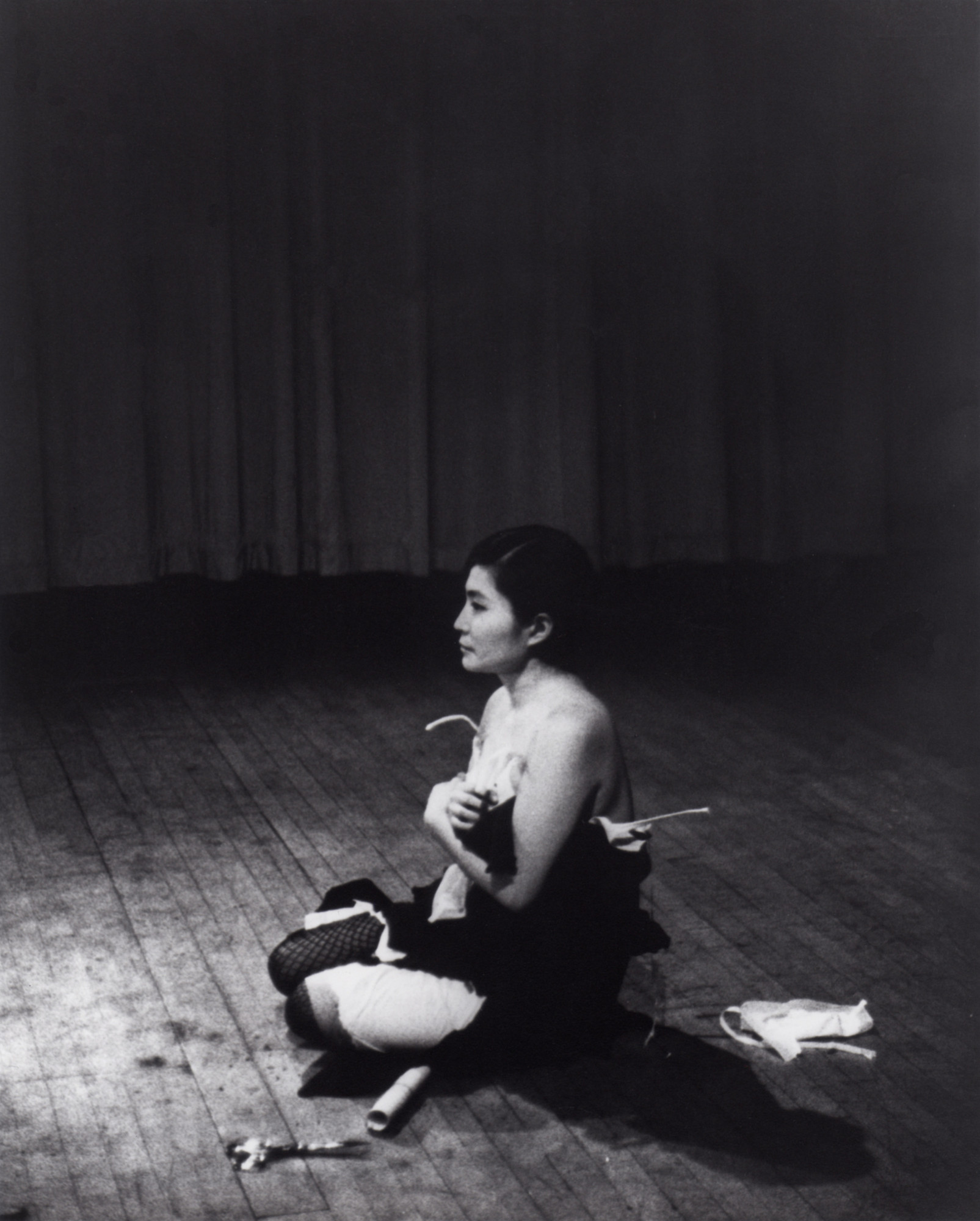
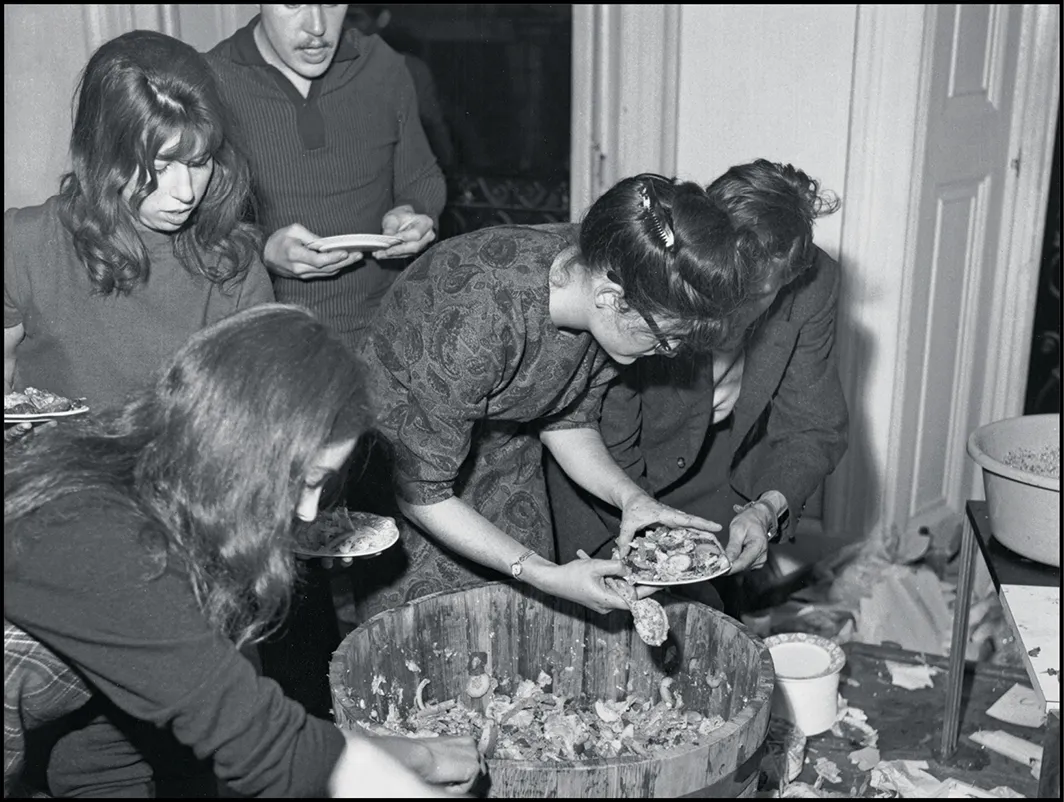
Fluxus would become one of the more influential and radical art movements of the 20th century, giving rise to experimentation in conceptual and performance art. However, many of the artistic trends that emerged in the 80s and 90s wouldn’t deconstruct the everyday as much as they would commercialize it. The commodity and appropriation art of the 80s didn’t aim to deconstruct the emergent hypercommodification of a now globalized economy, but instead presented objects as art in situ or “as is,” to borrow another anthropological term (see: Jeff Koons vacuums, or Haim Steinbach’s shelf works). These new readymades, however, were different from the Dadaist creations of Duchamp; these art objects were turned quickly into new commodities themselves, and perhaps that was the intention. The commodity art trends of the 80s turned the artist into a brand, and while there was still some capitalist critique in this, the shift was a return to the artist as exalted, away from the blurred lines endemic to Fluxus’s décoll/age approach.
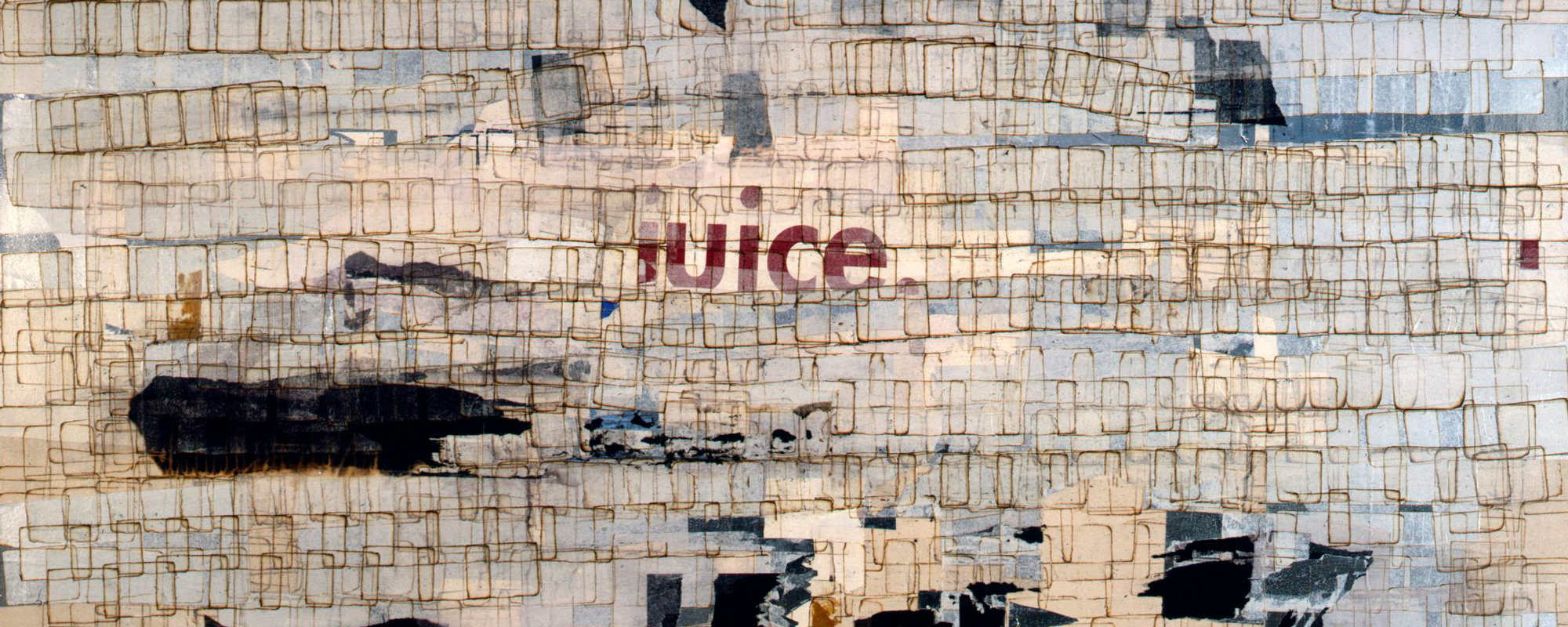
It wasn’t until Mark Bradford in the 2000s that we’d see a return to décollage as praxis again in the art mainstream. His works discuss urban decay, class, and America’s tragic racial history. The materiality of Bradford’s work is familiar; his large works are replete with merchant posters gathered from South Central Los Angeles, but they feel entirely new in the context of the preceding half century of décollage. His canvases are quite thick, sometimes with inches of layered posters upon the surface, which he will then add more material to; end papers from salon perms, colored copier paper, or more found detritus, before working the surfaces with electric sanders, scrapers, and razors to produce patterns and textures that sometimes look like a map or grid of the urban environment where he acquires his materials.
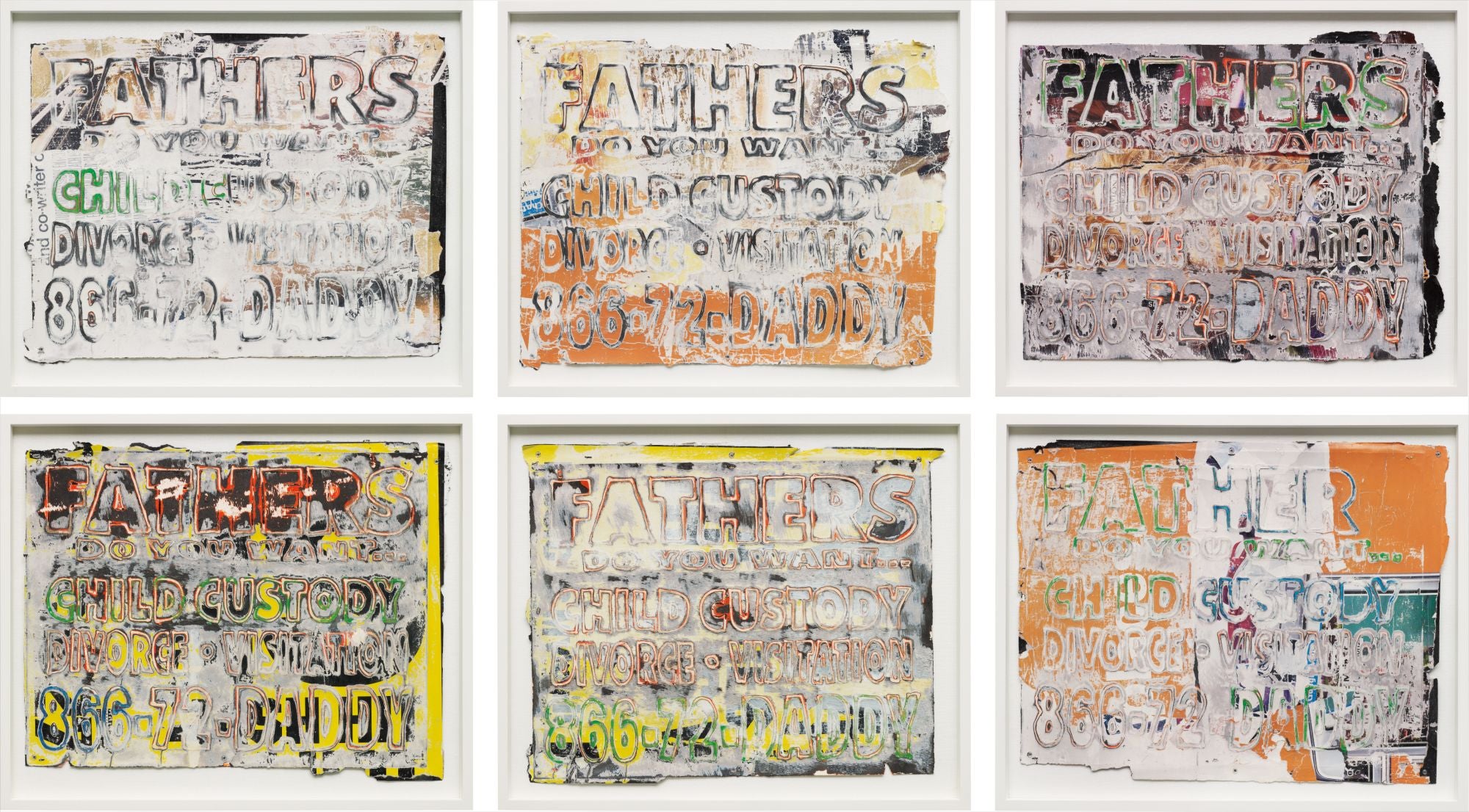
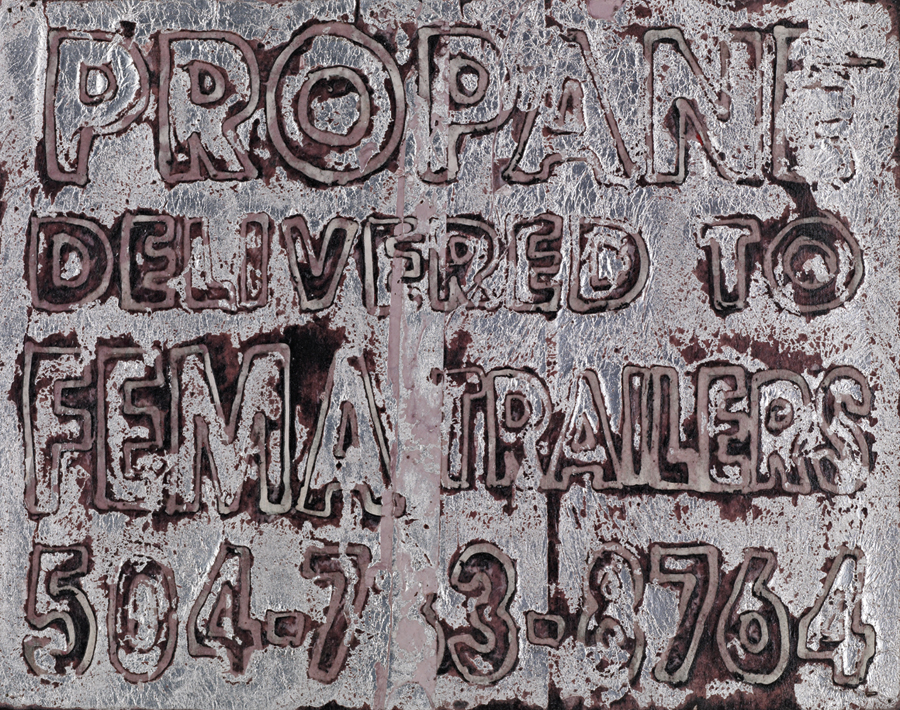
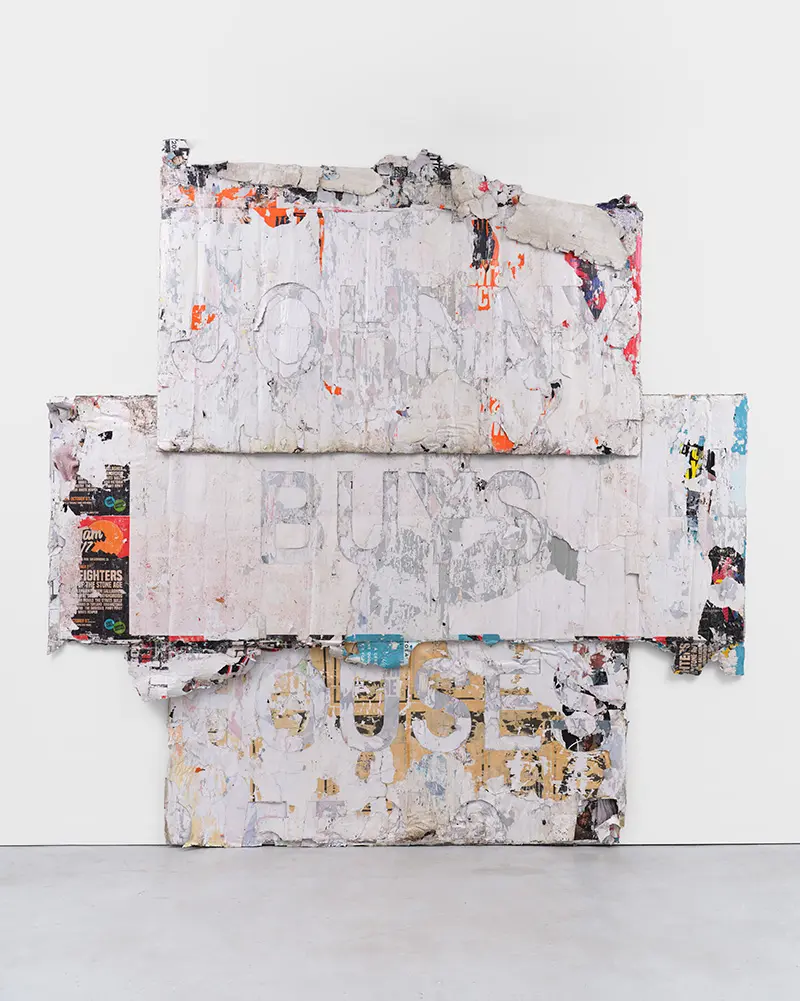
While Rotella pointed at the inherent visual interest of torn advertising while also critiquing mass consumer culture, Bradford deconstructs the socioeconomics that create marginalized groups using the more predatory forms of advertising that arise in poorer urban centers. In discussions with art friends, I’ve referred to Bradford’s Merchant Posters as the “Johnny Buys Houses” series - referring to a specific work in his oeuvre that serves as an elegant coda to the merchant posters: Manifest Destiny. This work from 2023 is a large cross-shaped array of torn refuse and ripped merchant posters. Cut from the surface in all caps is the phrase “JOHNNY BUYS HOUSES,” its typeface resembling Helvetica. It was produced later in this series, and summarizes the insidious nature of the merchant advertising Bradford is commenting on. Johnny, a character in the urban landscape, is here, ready to purchase your distressed property, no questions asked; just dial the 10-digit number below. Behind on your payments? No problem. House needs a serious renovation? We got you… for 50 cents on the dollar of current market value. The merchant posters series is filled with ads of this nature, ads targeting the vulnerable: “FATHERS, DO YOU WANT CHILD CUSTODY” “PROPANE DELIVERED TO FEMA TRAILERS” “PROMISE OF SOBER LIVING” - each with a ten-digit phone number at the bottom.
Like Vostell, Bradford’s décollage practice extends past the deconstruction of print advertising. Perhaps his most ambitious dismantling to date, Bradford’s exhibition at the Venice Biennale of 2017. Bradford saw the American pavilion as “Jeffersonian,” an archetypal type of building you see in U.S. state capitols, with all of the baggage those structures carry. To deconstruct the pavilion, Bradford first had to build it, creating a 1-to-1 scale replica in his Los Angeles warehouse where he’d test out different approaches to curating his show. What he arrived on was a scathing snapshot of the present day; the circular rotunda looked like a ruin, covered with decaying merchant posters in black and white, the marble floor littered with fragments of the peeling walls. The rest of the exhibition contained equally hard-hitting works, like his Spoiled Foot - a giant black and red sculpture that bulges from the ceiling, forcing viewers to stay near the walls of the room, the margins. Its surface is disturbed like Bradford’s previous décollage but with a porous and almost organically rotting quality not seen in his earlier works. Further into the show, more décollage, large pink and baby blue canvases with a similar texture and feel to his merchant posters, but more abstract and equally ominous.

Sometimes the torn advertising compositions you find on city walls, happenstance in their origin, exposed to the elements, possess a certain honesty in their rawness - and inadvertently produce a cogent wholeness in their compositions. Bradford manages to retain some of this compositional soundness by stripping intact large sections of merchant posters from Los Angeles walls, sometimes tens of feet wide, preserving the footprints of the economies that birthed them. In some sense, the completeness of a weathered, postered wall is the point. Just as the Dada movement asked us to contemplate the art in the everyday with readymades and Fluxus turned viewers into participants, finding a cogent composition on a street corner is the same ethos.
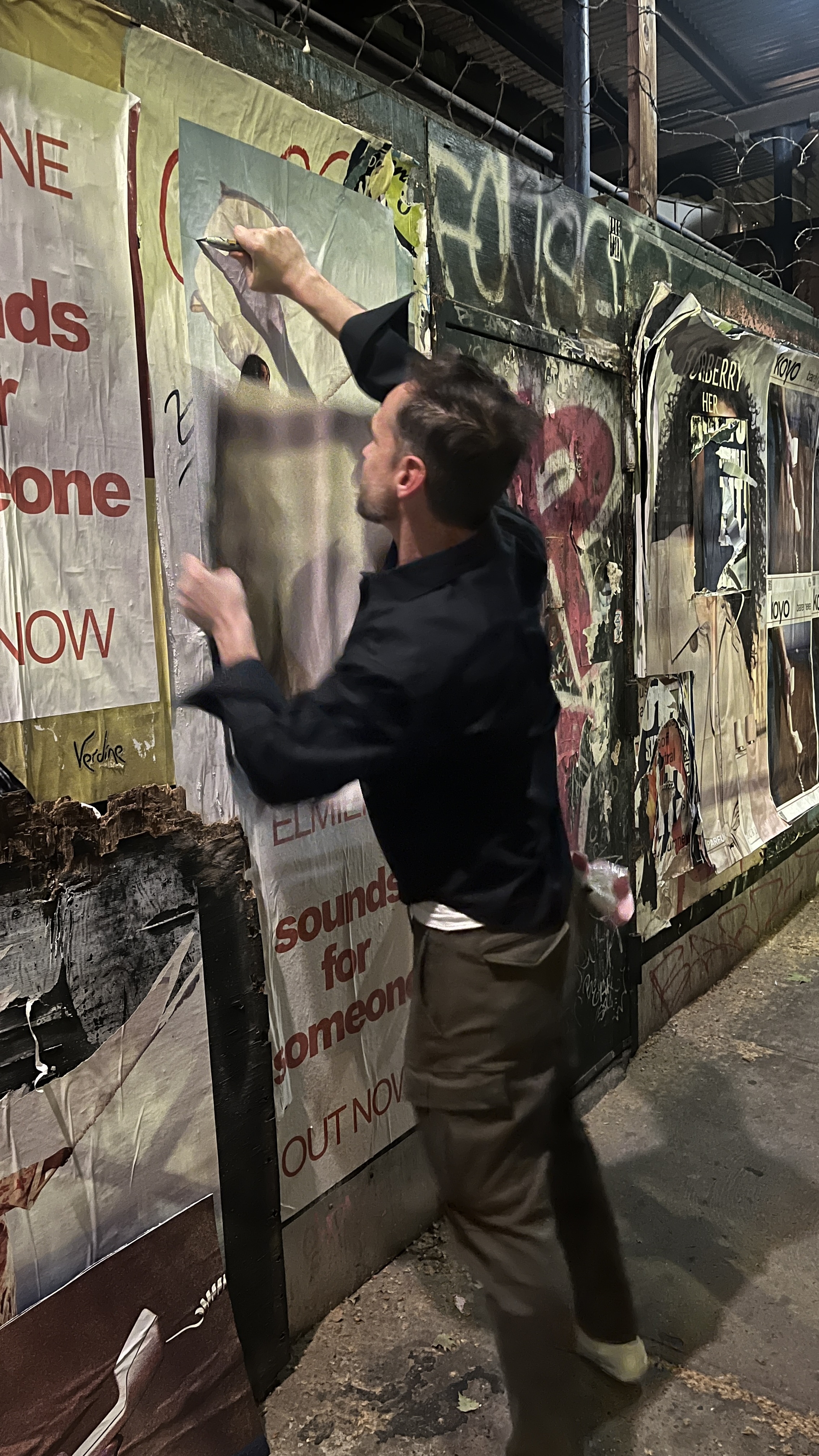
My own artistic practice is almost purely additive: silkscreens of my photography, glued paper ephemera; I take elements of the world and layer, but never appropriate materials directly from a city wall. While working on this essay one morning, it felt necessary to go and claim one of the walls I’d passed the preceding day. I first made the trip to a local hardware store in Greenpoint and bought a box cutter and large palette knife. I’d wait until after dark to return to a wall of posters on Lorimer Street that I’d passed many times and started cutting and prying, taking several multicolored layers of wheatpasted bounty back home with me in a plastic trash bag. Whatever works come from my urban archaeology will probably be more of an exercise than artworks I intend to share; as it is my belief that for modern décollage to be effective, it can’t just deconstruct materially; it must also deconstruct sociologically, culturally. Perhaps these early forays of mine will evolve into something that meets my criteria, perhaps not. Also, while writing this piece, I found myself wondering what members of Fluxus and Le Nouveau Réalisme would deconstruct today at the quarter mark of the 21st century. The commercialization, conflict, and classism that gave rise to Rotella, Vostell, and Bradford’s décollage output is still as evident as ever, but now with a digital hyperdissemination. My cursory thought is that they might find this new digital landscape to be the most fertile ground for décollage deconstruction yet.
