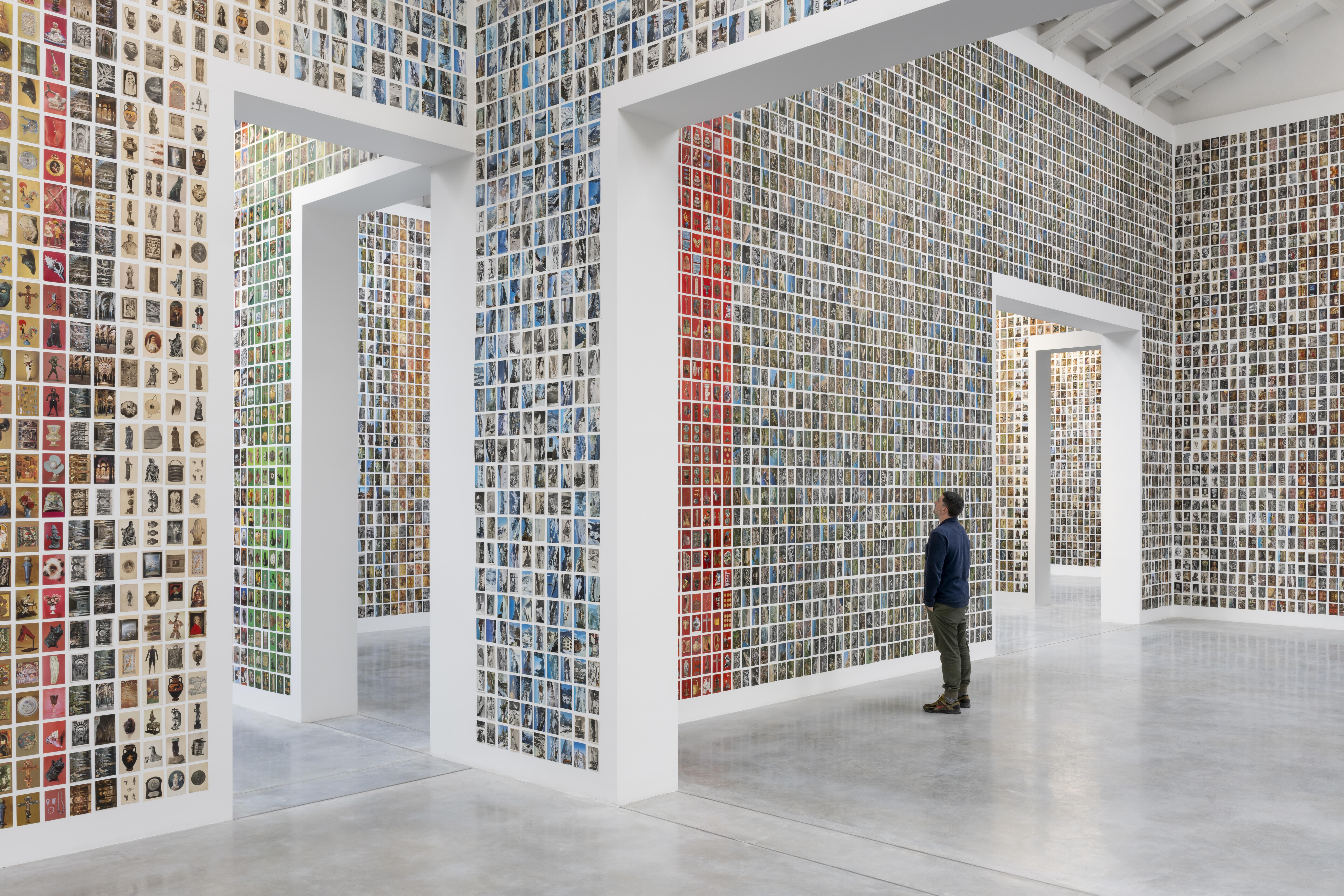
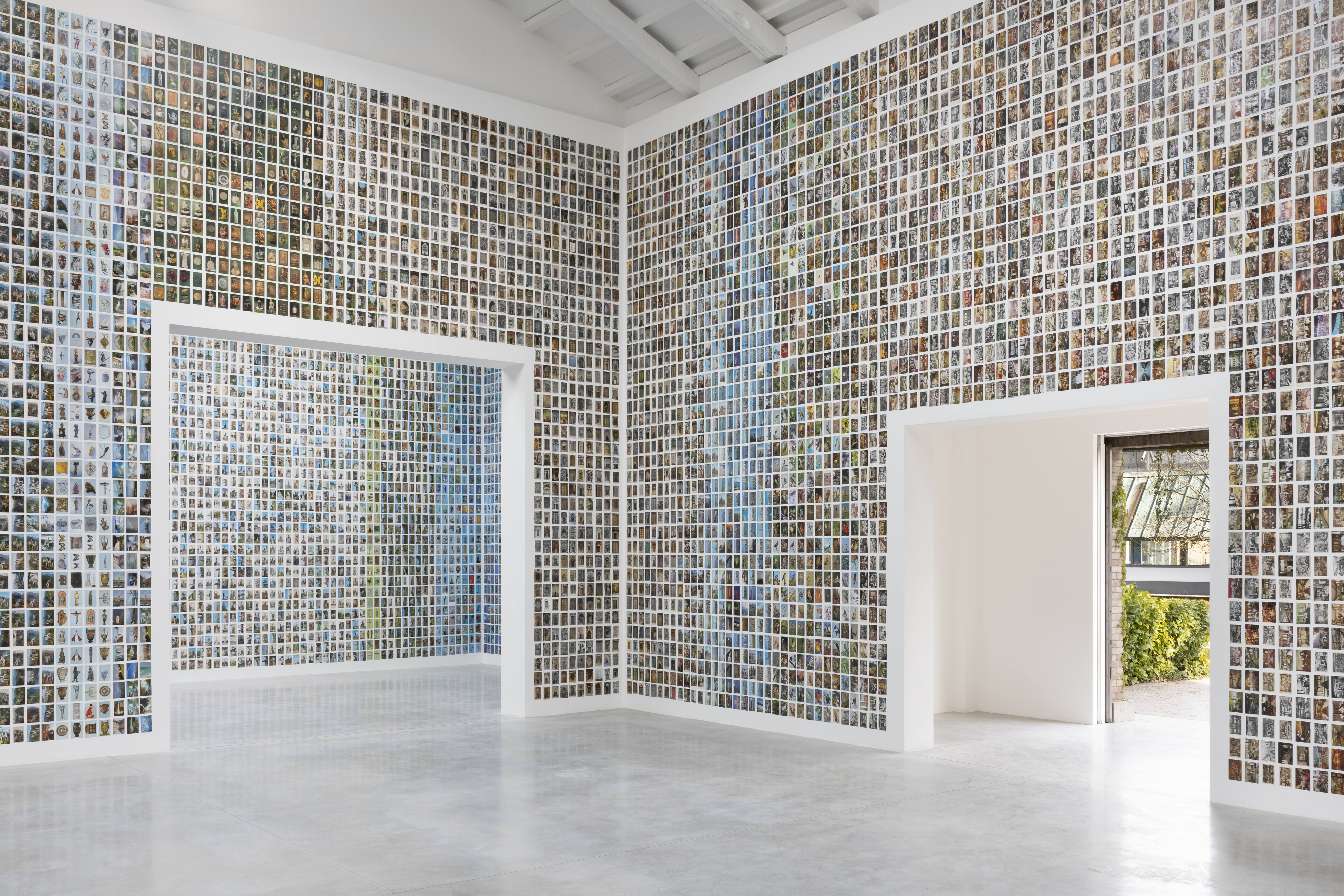
Like a teeny drop that piles into a majestic ocean, Oriol Vilanova’s installation, Los restos, at the Spanish Pavilion in this year’s Venice Biennale immediately absorbs visitors. And not unlike a mad sailor awash in blue seas, we at first feel disoriented by how 50,000 postcards wrap the building in Venice’s storied Giardini. Napoleon commissioned this grand site as a public garden in 1807 and it eventually became the main venue for the world’s largest and most prestigious international art exhibition; in the show’s 61st edition, which runs through November 22, Vilanova’s outing for Spain imbues with a kaleidoscopic radiance.
Photography by Roberto Ruiz
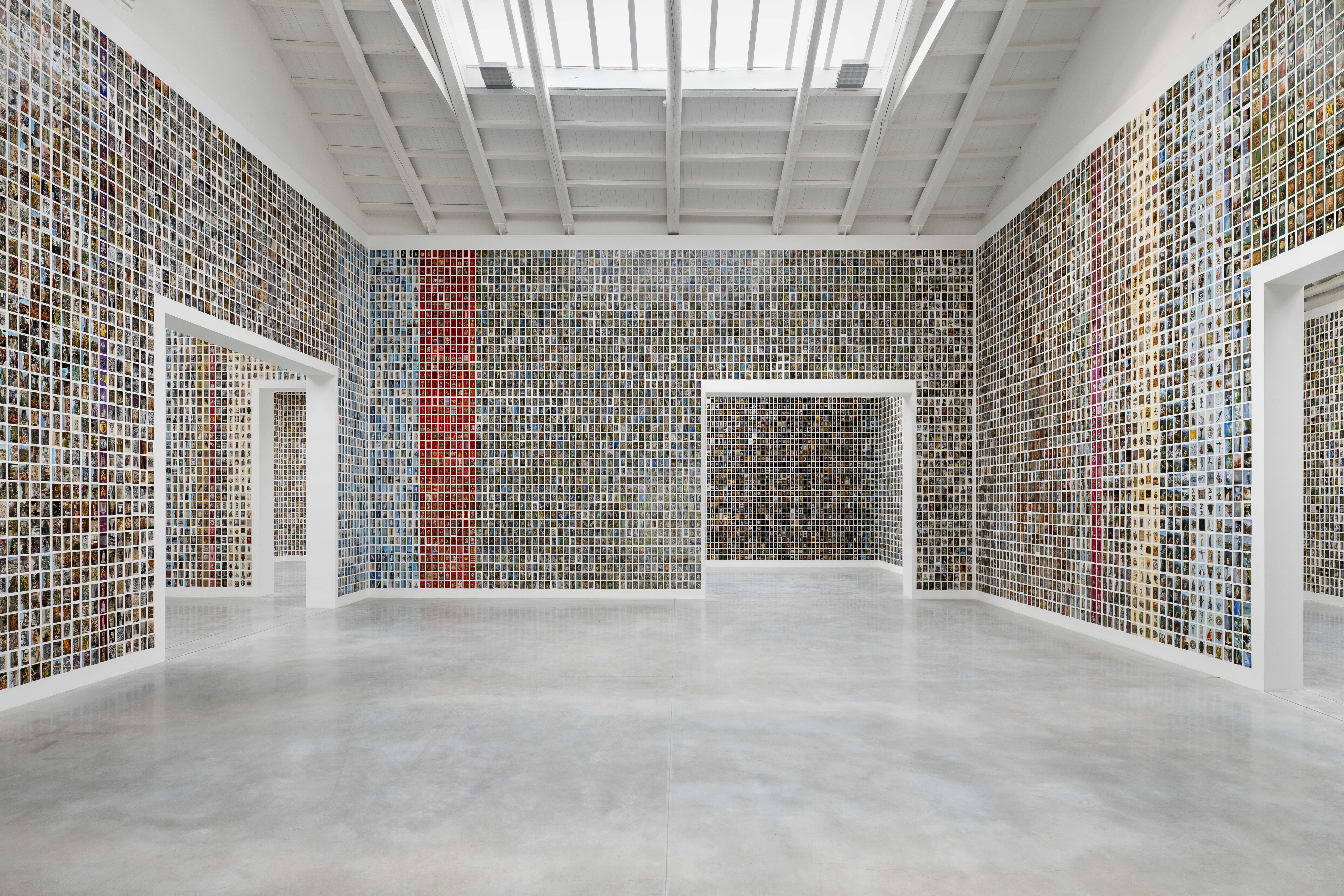
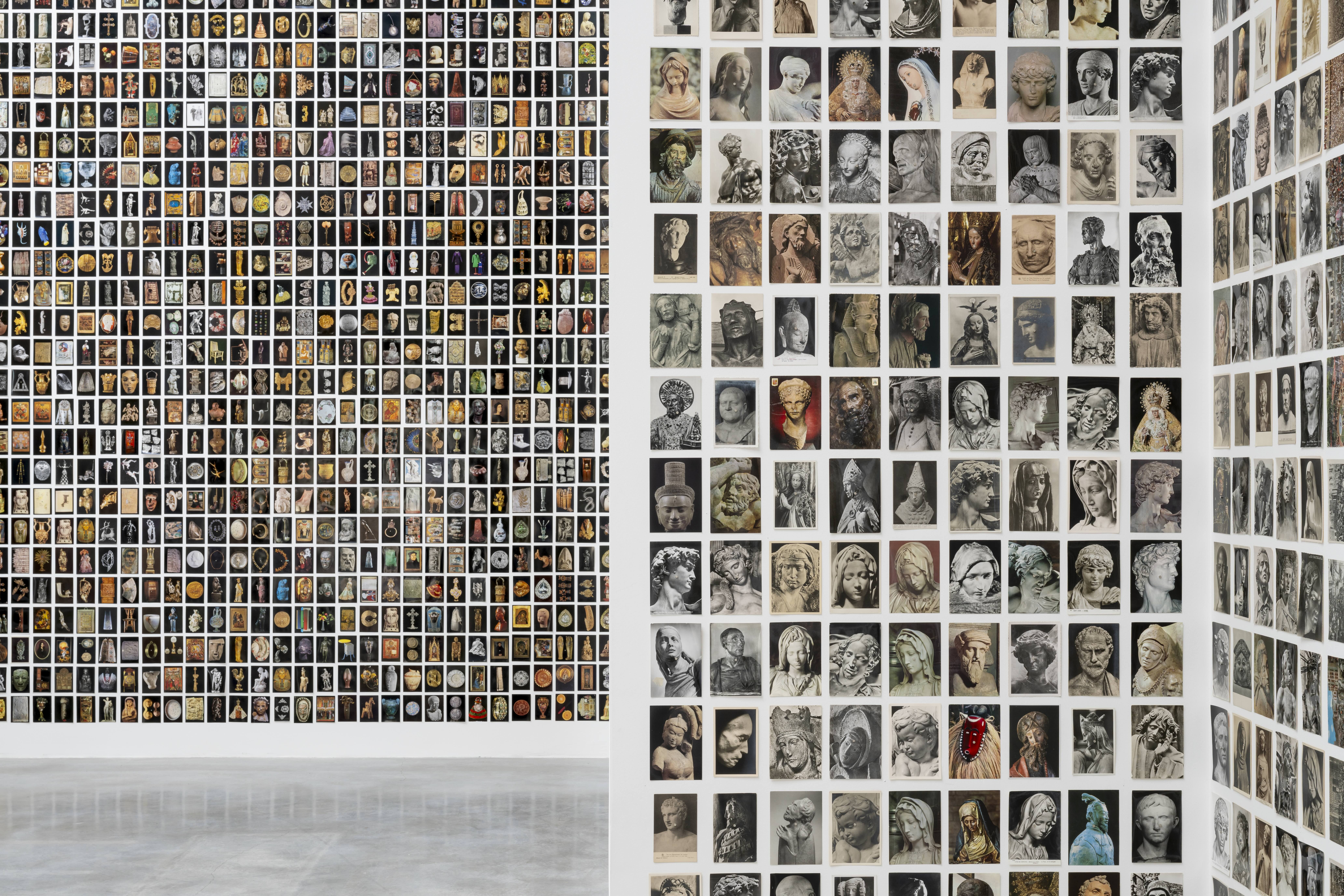
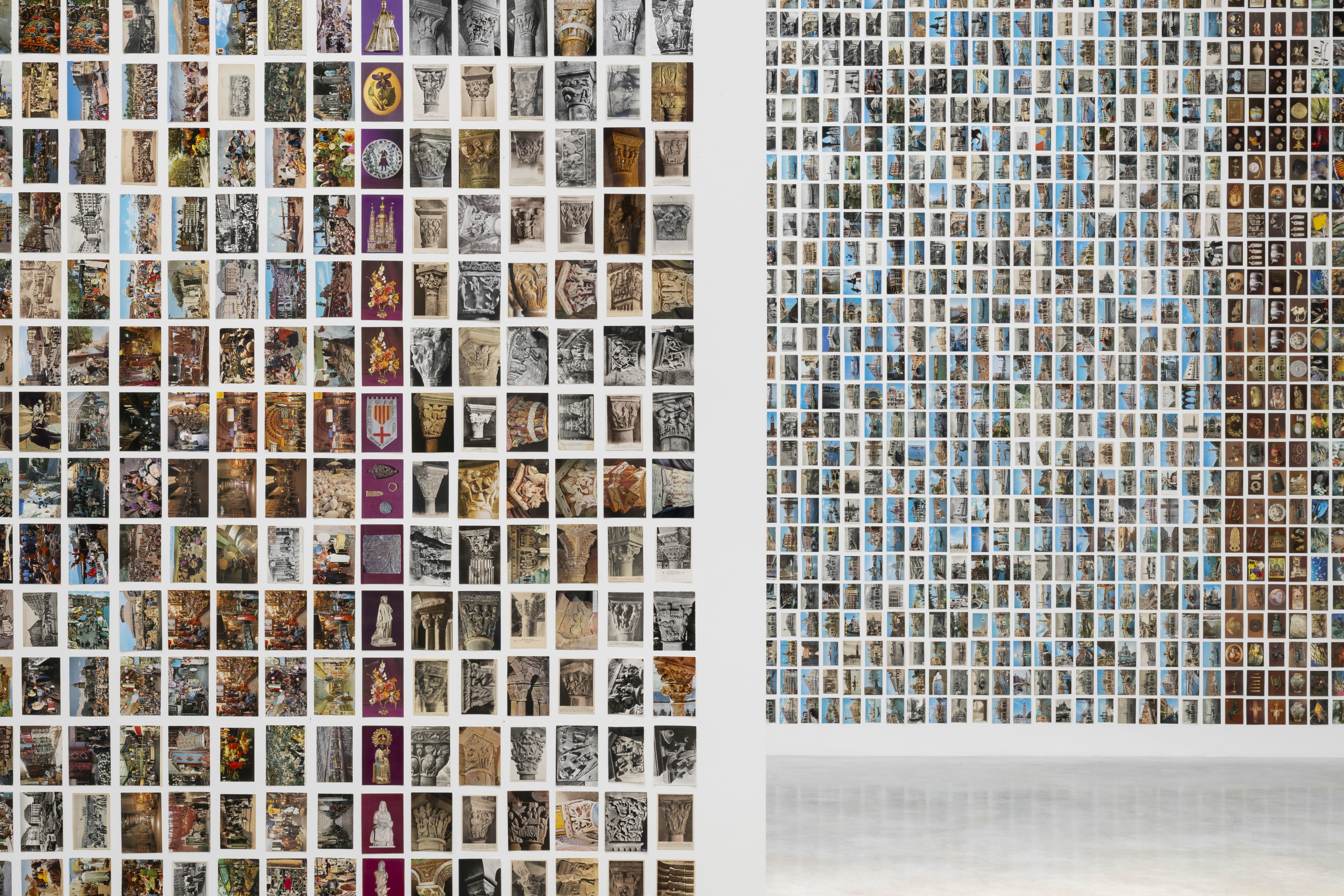
The artist has covered the Francisco Javier de Luque-designed pavilion’s interiors entirely with postcards which he has collected from flea markets, mainly Barcelona’s Sant Antoni and Jeu de Balle in Brussels where the artist currently lives. China’s The Forbidden City is on the walls, as well as Centre Pompidou in Paris, or just a bunch of oranges, Grecian busts, and a huddle of pink flamingos. You could get a glimpse of a Han Dynasty vase, not far from a herd of sheep or a fountain glistening with lights on a city square at night.
Photography by Roberto Ruiz
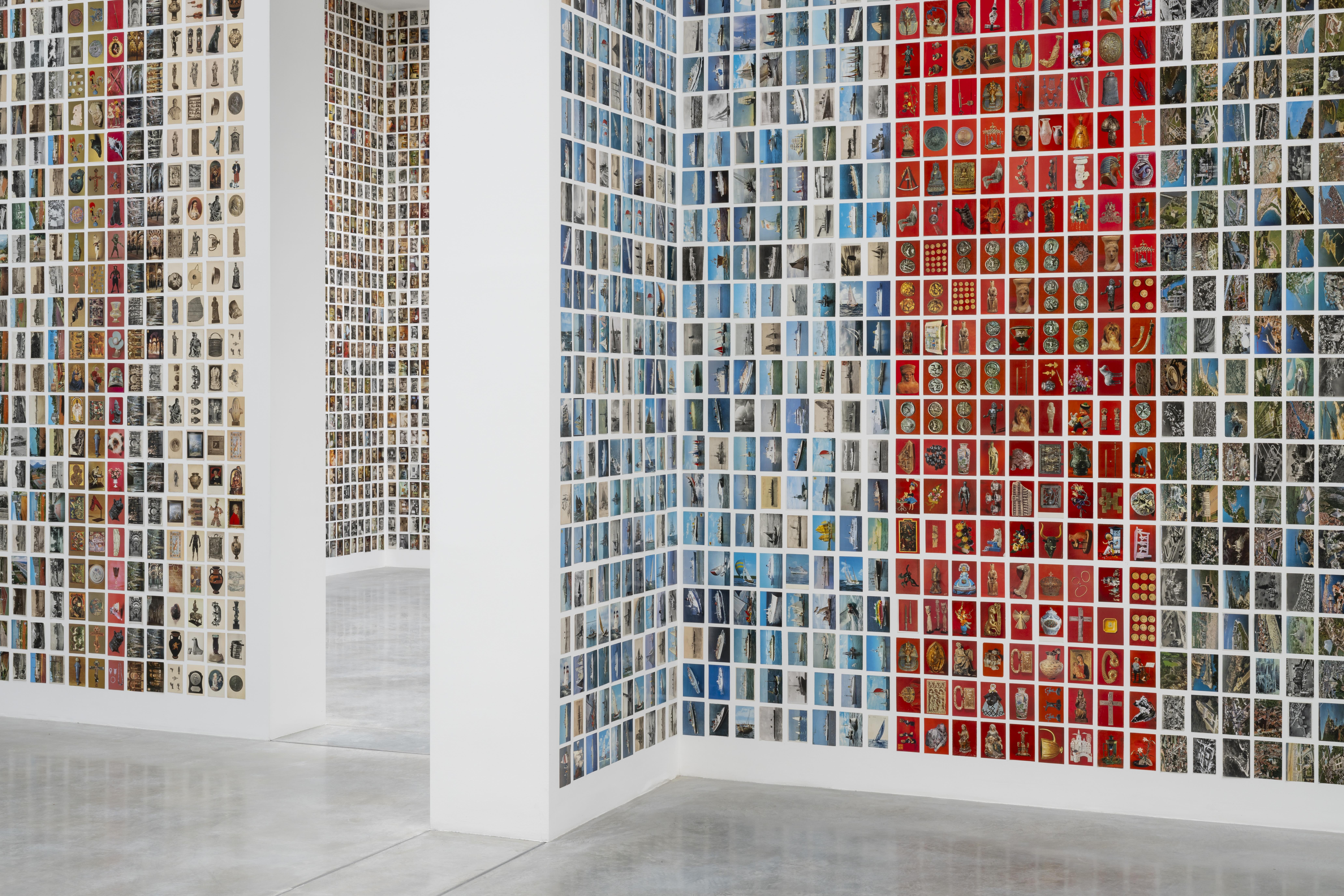
Often worn out and consistently immediate, the tokens of travel and memory dress the walls within an extremely neat grid layout. Adjacent rooms open up to more and more postcards fastidiously installed in a systematic order based on various categorizations. The pictures sometimes unite in their color spectrums, such as a wash of cards in a fiery red show scenes of serene sunsets and fresh fruits, or a bright azure wave stems from pictures of sun-washed beaches and endless skies. Different groupings of subjects—think antique masks, bridges, or opera halls—collage a set of postcards which yields blinding repetitions of faintly similar stills. We feel amused by the magnitude of accumulation and the artist’s physical ambition. The immense quantity lends itself to a visual poetry in which each postcard assumes a new meaning when placed next to another. Massive rock formations each looks bodily when viewed en masse; sailboats on choppy seas altogether resemble kites gliding in air. Overall, they orchestrate a monument for the bygone, traits of inhabiting places in long-fled times of the past.
Photography by Roberto Ruiz
The viewers can step back to embrace the soaring views in which cards resemble pixels of a monstrous screen—but each postcard also begs for a closer look, a feat possible for those hung at a manageable scale for the human height yet unlikely for those mounted many feet above the eye sight. The beauty is in fact in this awareness of not knowing: past owners of these souvenirs are painfully impossible to have a clue on, nor their reasons to acquire these cards. We will never know to whom the cards were mailed to or the intentions behind the correspondences—or even whether they were sent to anyone at all. The locales in many of the items are in fact ambiguous—they simply represent an idea of a place or an object. Even when they capture a recognizable landmark or a storied wonder of the world, the image feels detached from the original: a veil of past—anonymous former owners, hands that previously touched them, and intentions they served for—laminates them so that they remain in-between, at a point of belonging and detachment, between singularity and collectiveness.
Photography by Roberto Ruiz
Vilanova has been collecting flea market finds for two decades and has let his practice take many forms which include documentation of haggling between sellers and shoppers or sculptural displays of postcards. Shifts of value and memory usher the artist’s curiosity for what these informal commercial sites offer. Hands are shaken and deals are sealed at these markets, but chance always remains non-negotiable, proven by the pavilion’s grand orchestration of life in all of its complexities and beauty.
Photography by Roberto Ruiz