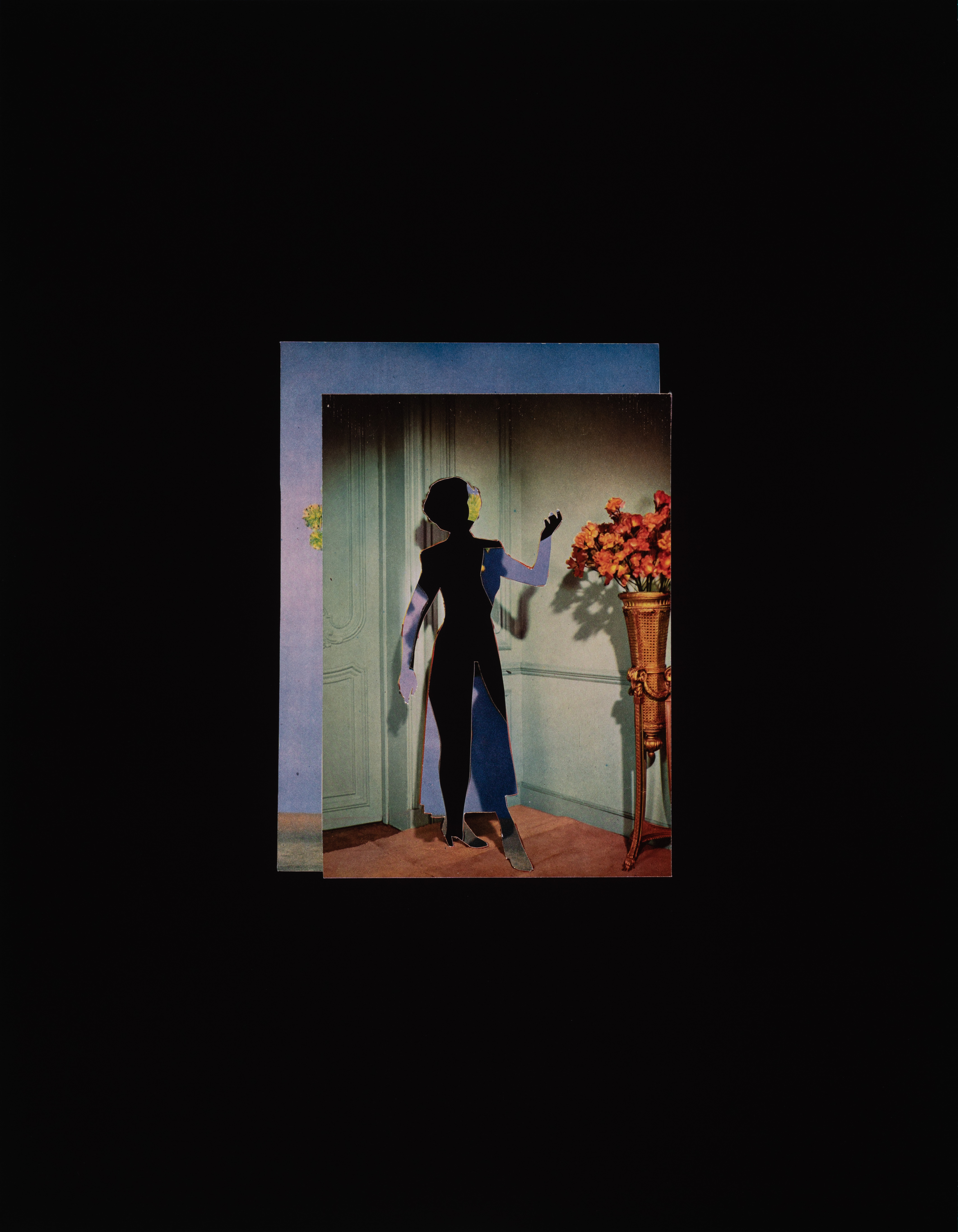
What fascinates us about the unknown? Gaps, holes, and cracks in an image scream possibilities that their outright surroundings lack due to their determined dead ends. With these incomplete deepnesses that we feel invited and compelled. The audacity to leave parts unanswered and dark even disrupts a picture’s grammar and makes explanatory poetic. The realization that there is more to unravel inhabits the viewer in a collage in which the composition reserves room for the enigmatic.
Shadow XVII, 2011
Courtesy of the artist and Petzel, New York
John Stezaker’s work in collage has been daring their onlookers to come face-to-face with the eerie of the unresolved. The British artist’s cinematic vignettes overlap, crop, and reshuffle photographic stills with a moody inquisition. Surgical and obsessive even, he conducts optic symphonies in which figures, shadows, and backdrops constantly shift roles. For over five decades, Stezaker has been repurposing film stills, advertisement, postcards, and other visual archives to dissect their purposeful and unintentional suggestions. Like thinly ajar doors, his collages ask us to push his intentions further to lure us into the next room. There, however, we often realize we are in a labyrinth of optic possibilities that are as ample as one can choose out of, then we speculate on what each juxtaposition tends to whisper. He sometimes layers images on dark backgrounds to convey spectral silhouettes of a third persona—like a pair of eyes nearly adjusting to light after complete darkness, they shiver and boom. In other cases, he literally cuts and pastes two seemingly distinct found images in a singular collage to strip both off of their given narratives, and the results come out as both playful and sinister.
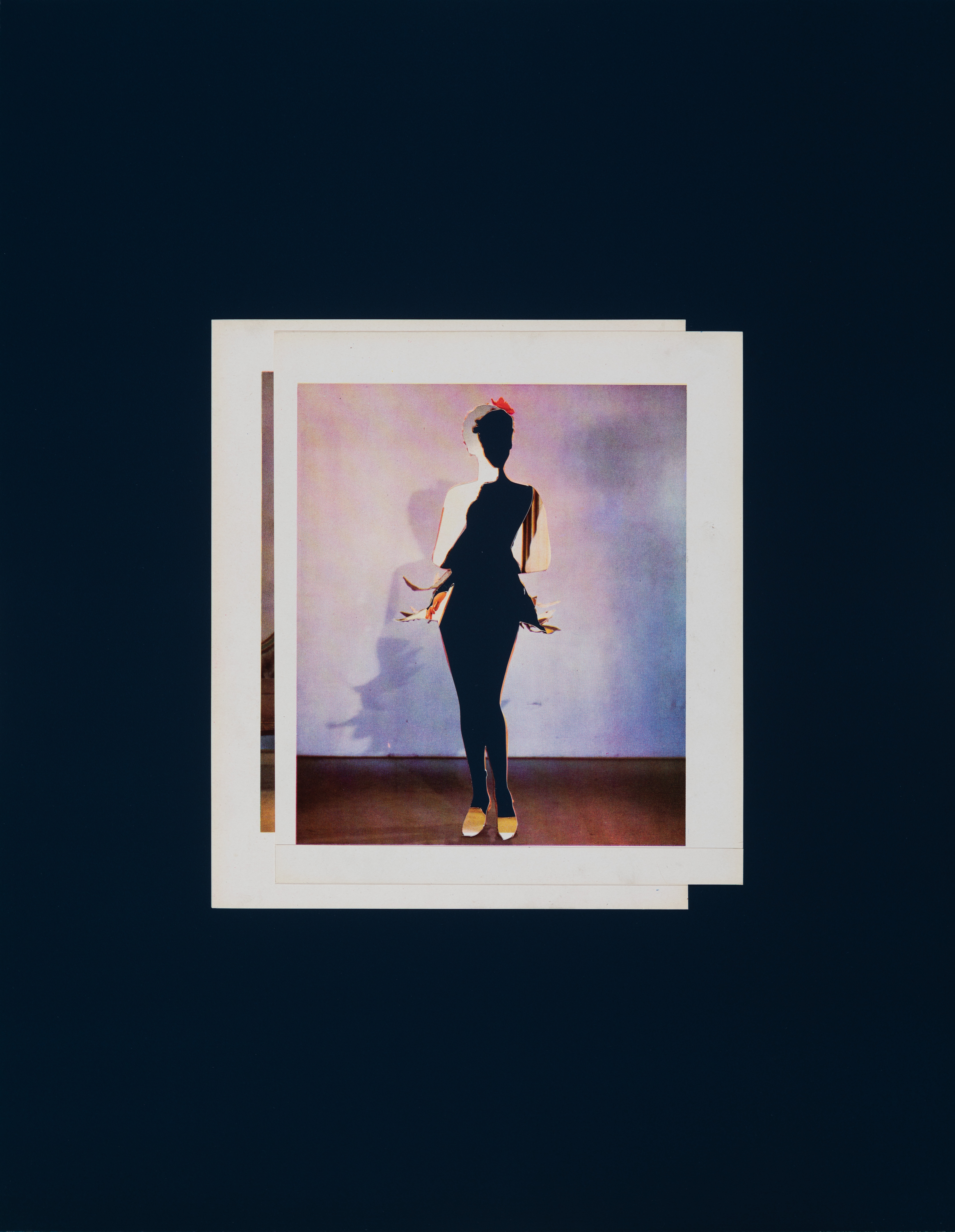
Double Shadow, 2021
Courtesy of the artist and Petzel, New York
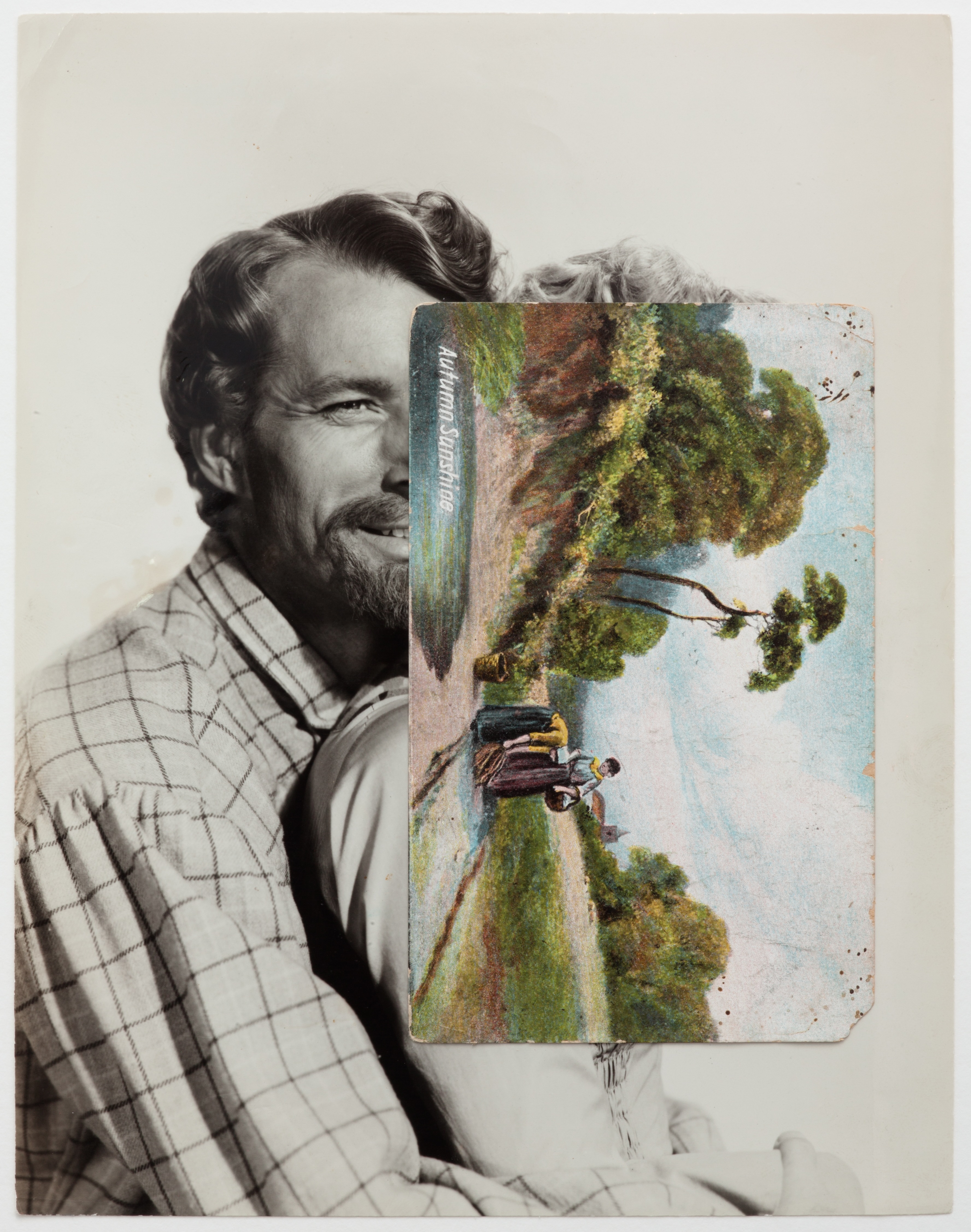
Physically static, Stezaker’s works hold a cinematically kinetic value. They are electrified by the artist’s biting urge to alter an image’s intended language. Not a photographer himself, he operates on the documented, with a curiosity towards its original author’s aesthetic and narrative drives. Stezaker eschews any intention to settle on a finale in his inquiry but instead mines and reconsiders what awaits beyond the visible. He can, through this lens, be considered among the artists of the Pictures Generation which includes lens-based artists, such as Cindy Sherman, Sarah Charlesworth, and Robert Longo. Similar to their wary eyes towards what media was beginning to impose onto us in 1970s, he questions the meaning embedded in a carefully constructed image. Stezaker’s inquiries about why, how, and what of a piece of media—similar to this group of artists—yield visually deconstructed versions of the mainstream. Eerily close to mass media yet unabashedly skewed, his collages defy an immediate purpose or narrative. What makes his practice singular and challenging to categorize, however, is the psychological whirlwind the works pull the viewers into. Like the grandly surreal fall in Alfred Hitchcock’s 1958-dated psychological thriller Vertigo, Stezaker’s compositions flirt with the subliminal and even go to bed with it. They are puzzling in ways that convince us to leave them so and relish their winding visual potpourris.
Pair XX, 2010
Courtesy of the artist and Petzel, New York
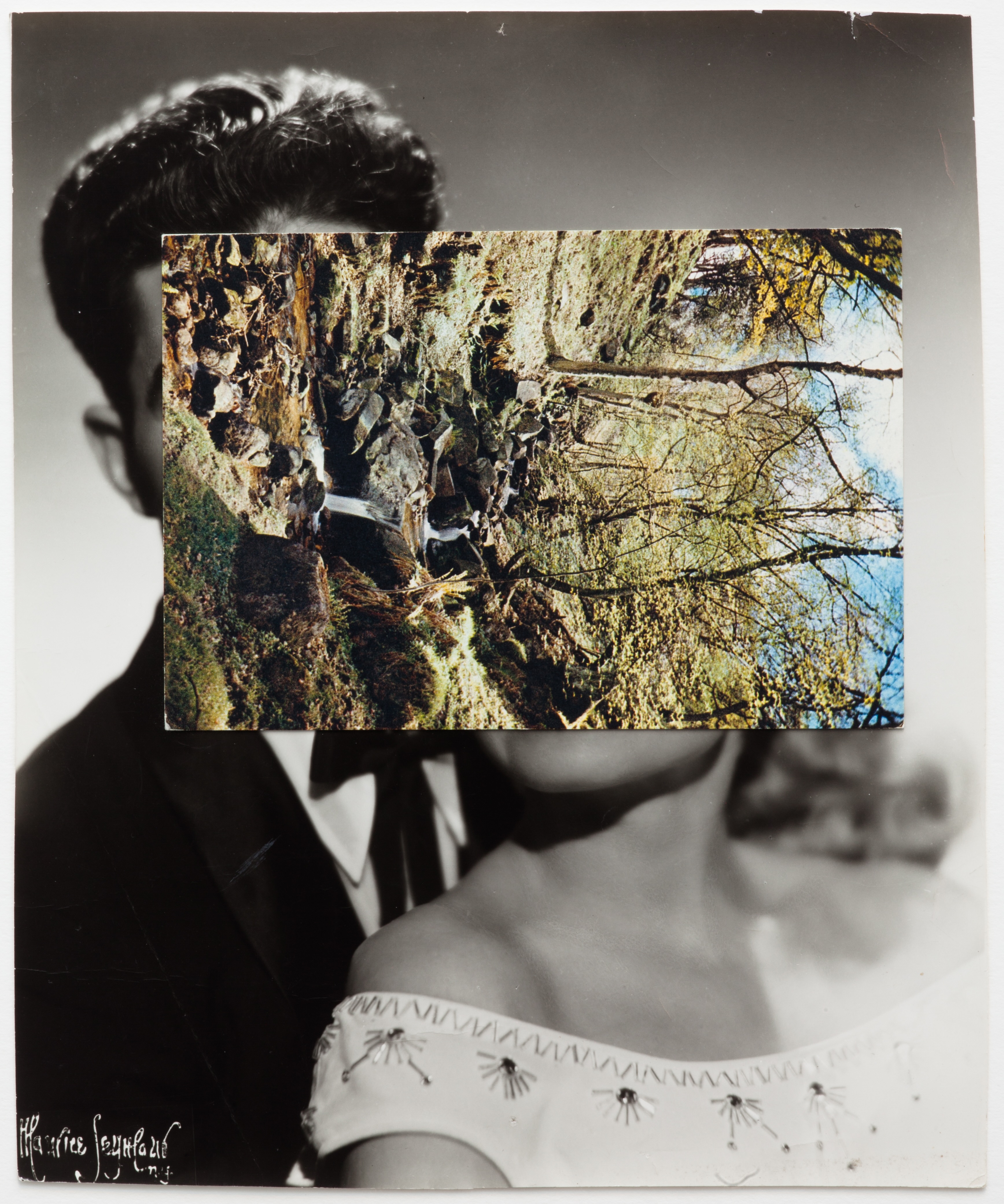
In his Masks series, the subconsciousness is unearthed, bringing a visage on the same surface with the psychology of it. Both an elaboration and performance, the mask he carves for each figure shows both a face and a decoded chart of its emotions. Their sources left vague, he borrows the images’ visual impacts for a final punch. Smoothness and texture often align in these pairings. Flat yet still textured, the end results equally hold the surface and the excavated findings.
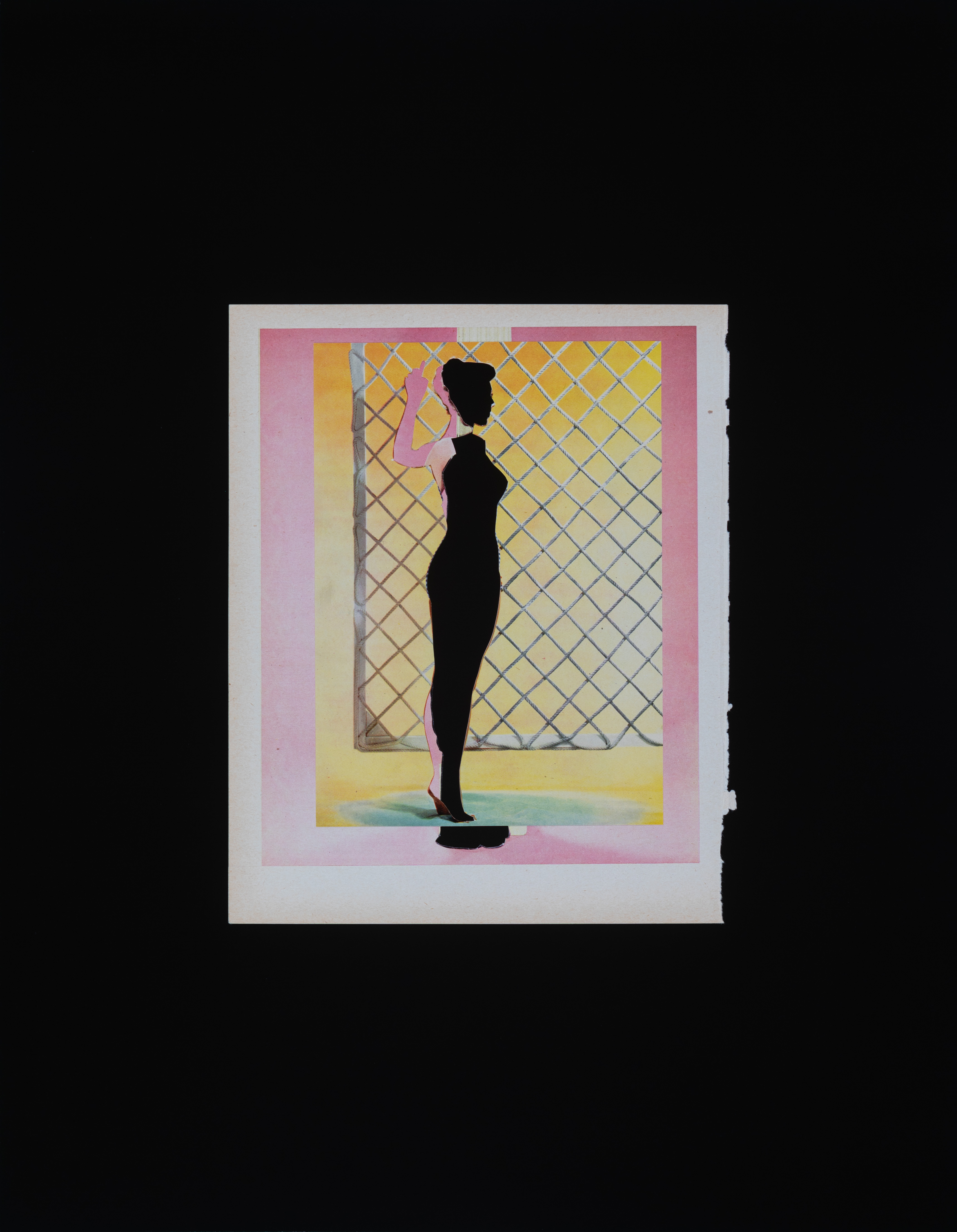
Double Shadow, 2021
Courtesy of the artist and Petzel, New York
The artist places his collages on a rhythm that is manual as much as visual and even sonic. His detective-like hand which tears, cuts, and pastes photographs feels almost audible, with the sharp determination of a metronome almost too clear to hear. Faces engulfed in suspicion or desire are often sliced by earthy surfaces or yet another likeness which holds a deadpan aloofness. When lovers kiss, they are deprived of their caress because of his incision of the paper they are printed onto. Incomplete portraits and trimmed interiors complicate stories that cinema never exhausts. Desire, jealousy, and revenge spill from them, but all cut short and left missing. The crescendo seems to be on hold but the viewer secretly feels thrilled. The protagonists strive to scream their anger or roar their agony, although Stezaker’s tricky hand pairs them with ambiguity. If they are gleeful, their happiness is carved and cut-out by hollow inside; the bodies assume postures akin to sculptures of antiquity but they are paired with an advertorial outlandishness.
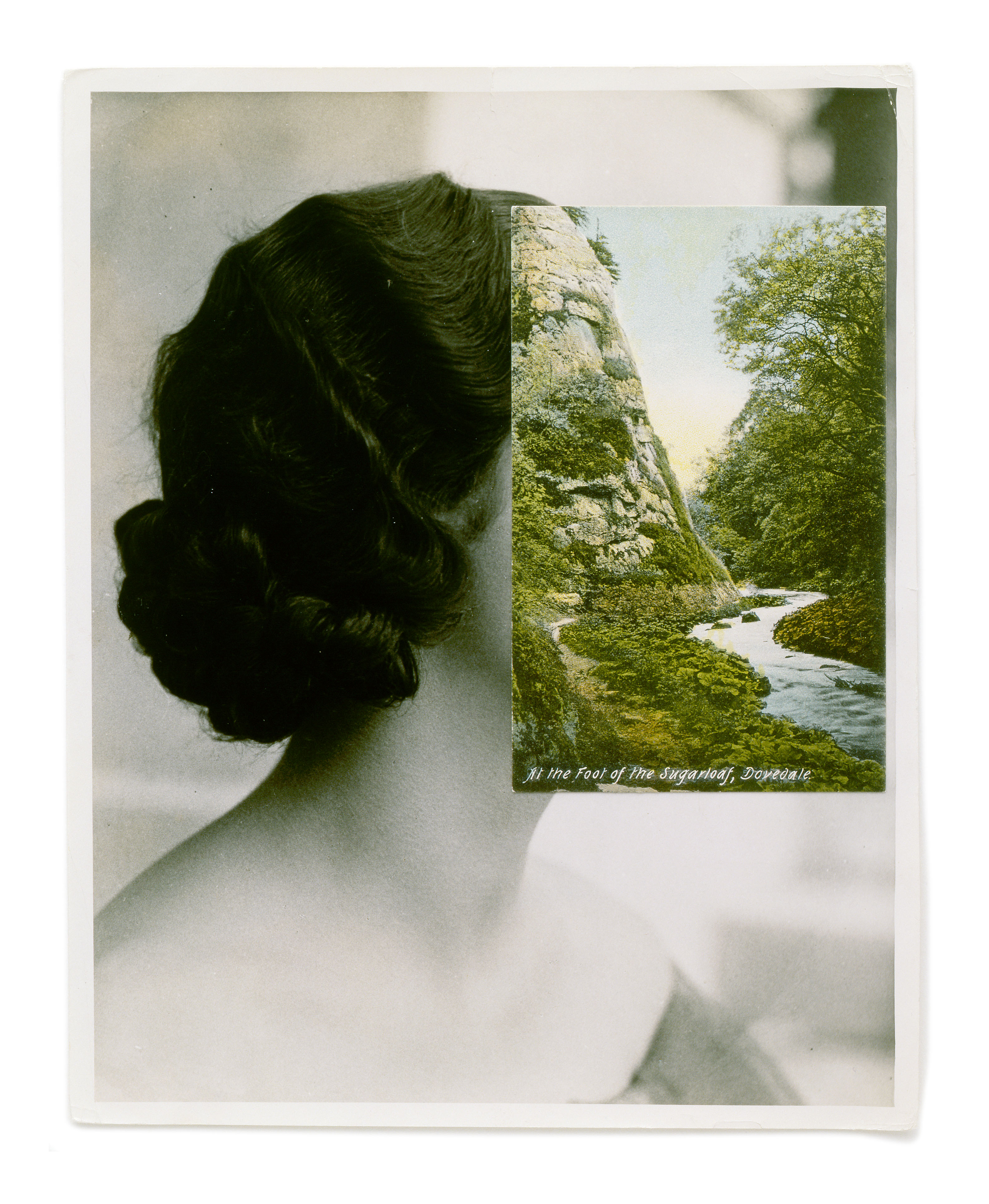
Mask, 2007
Courtesy of the artist and Petzel, New York
Cinema often goes beyond being an homage and grants direct source materials. Often Hitchcock’s, the filmographies which he pulls from result in deconstructed stills. They reframe Hollywood’s cinemascope heydays with a consciousness towards optic slipperiness. Meaning remains on a tectonic ground ready to shift and erode. Noir becomes Dada and glamorous appears conceptual. The indisputable bond between photography and film enters a reshuffled dynamic. What came first becomes irrelevant and moving image suddenly precedes photography. In a series dedicated to nudes and landscapes, he renders the corporal as earthy and the terrain, sensual. He jumps between the two in the rhythm of a children’s game in which repetition feels innate yet unpredictable. Like a memory of a place or a thought of an instant, his arrangements remain just a few steps away. Always fleeting, their physical realities on paper contradict with the artist’s ethereal bearings. Are they embodiments of dreams? The answer perhaps is unclear for Stezaker, too.
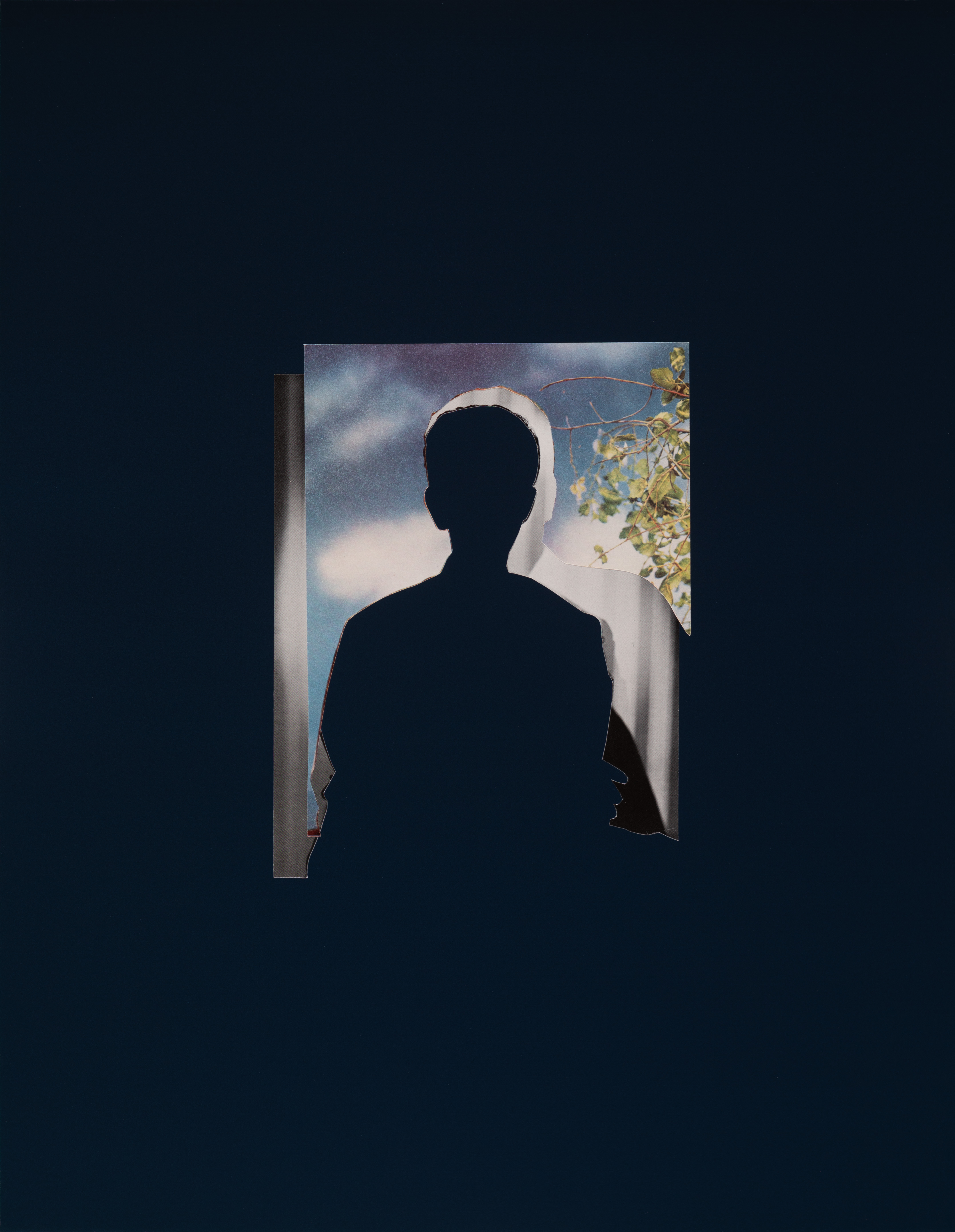
Double Shadow (L’Heure Bleue), 2020
Courtesy of the artist and Petzel, New York
In our age of oversharing and overexposure, the information suspended by the collages baffles any pair of eyes. The inaccessibility they convey feels unfair, and even infuriating. In our time of scrolling through gushes of images, the ingrained incompleteness shatters our perception and reasons for looking in the first place. If the accordance between looking and seeing is gradually thinning, these collages shake us from our shoulders. They don’t just want to be looked at or be seen but also to be read and maybe a little obsessed over. As the author and the authenticity of an image gradually becomes more suspicious today, Stezaker’s collages calm our sights burdened by the excess. When all starts to seem identical, autonomy of an image feels compromised. The artist, however, prompts us to consider the syntax in a composition and show how an artist claims to bear his own visual language. The unknown starts to feel alluring. Compelled, we even decide to let go off the crippling excess. All for the sake of looking, the collages echo as meditations on why we invent stories and even dare to tell them.
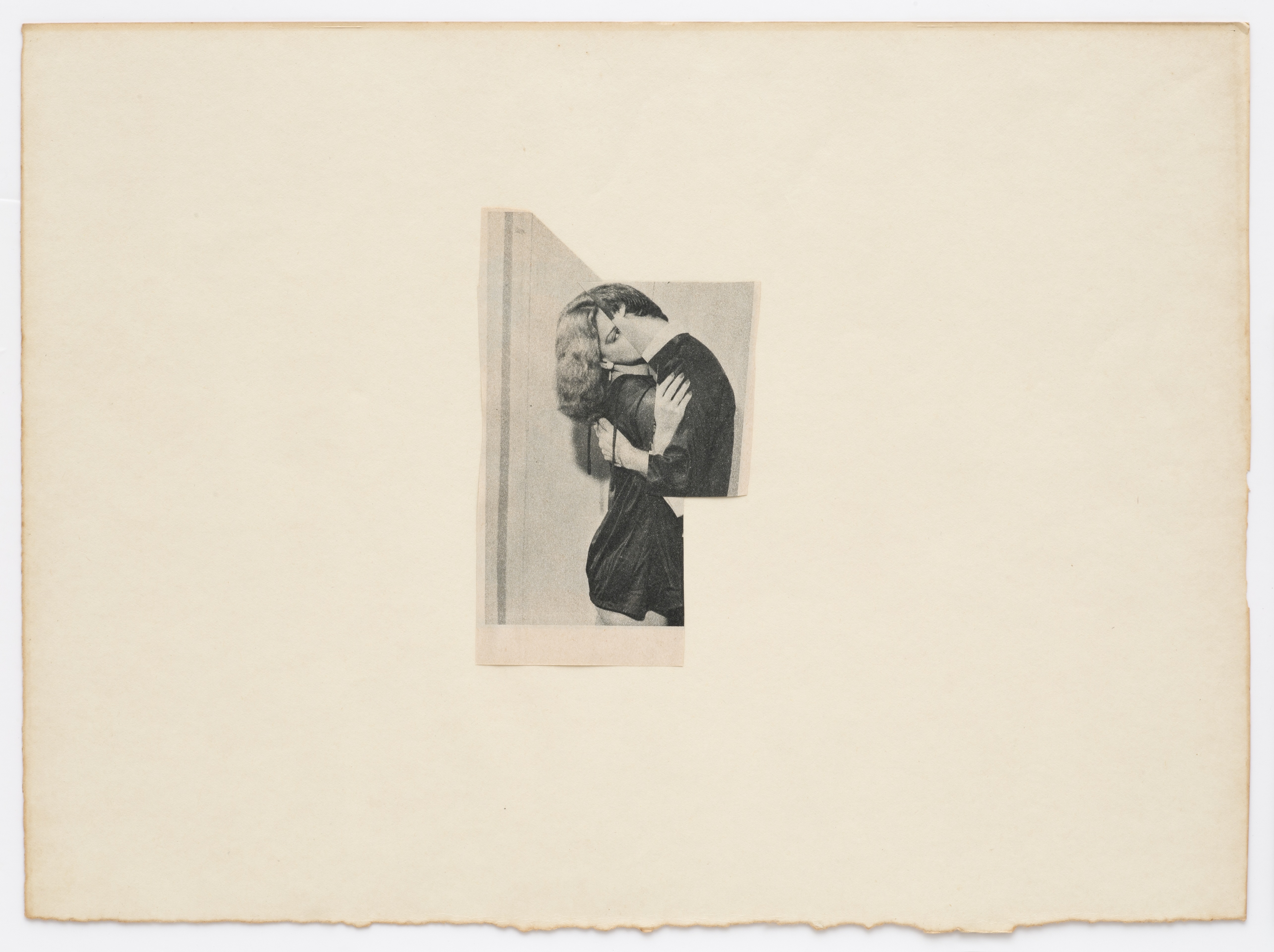
The Voyeur I (Photoroman), 1976
Courtesy of the artist and Petzel, New York
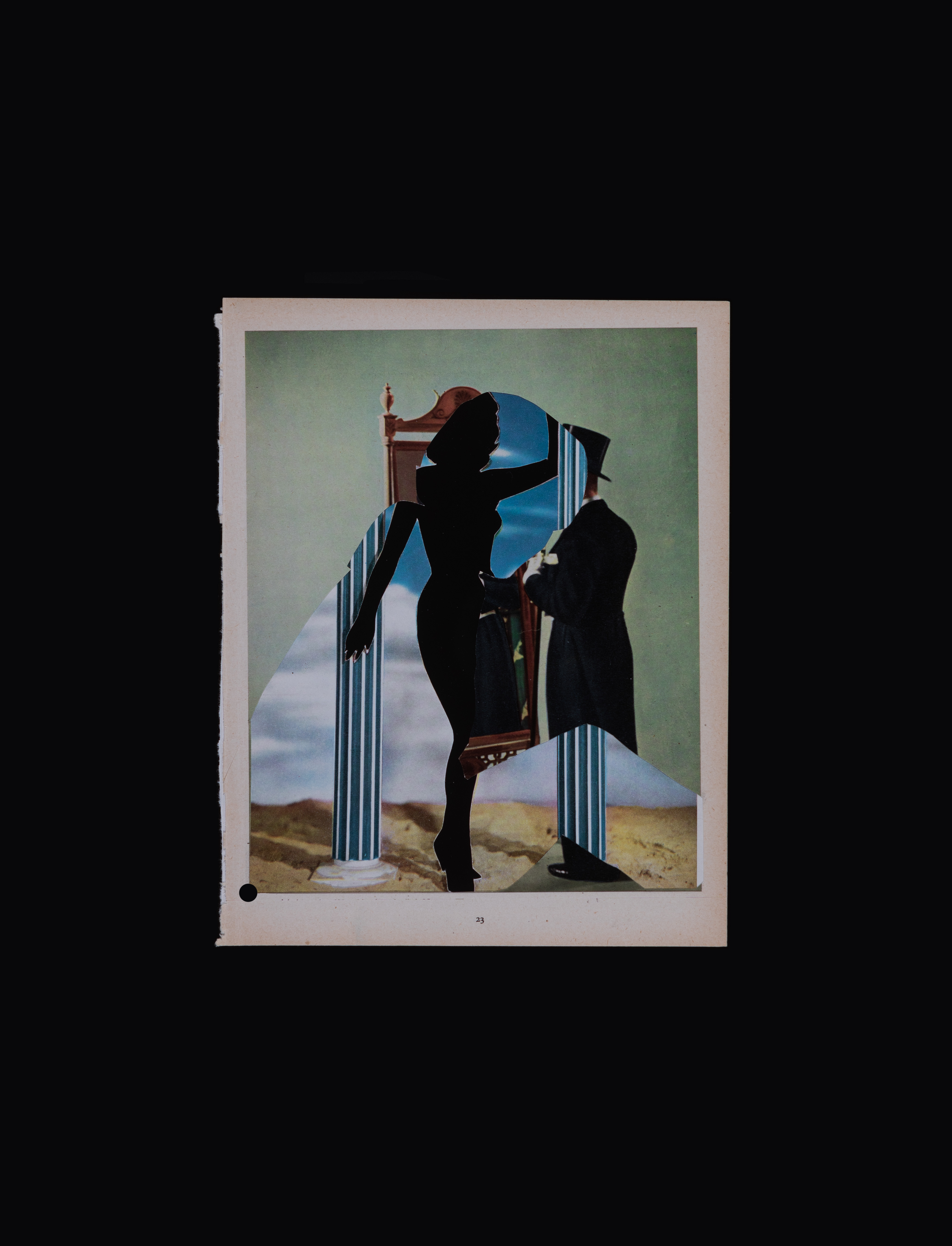
Double Shadow, 2021
Courtesy of the artist and Petzel, New York